
Last updated October 31, 2026
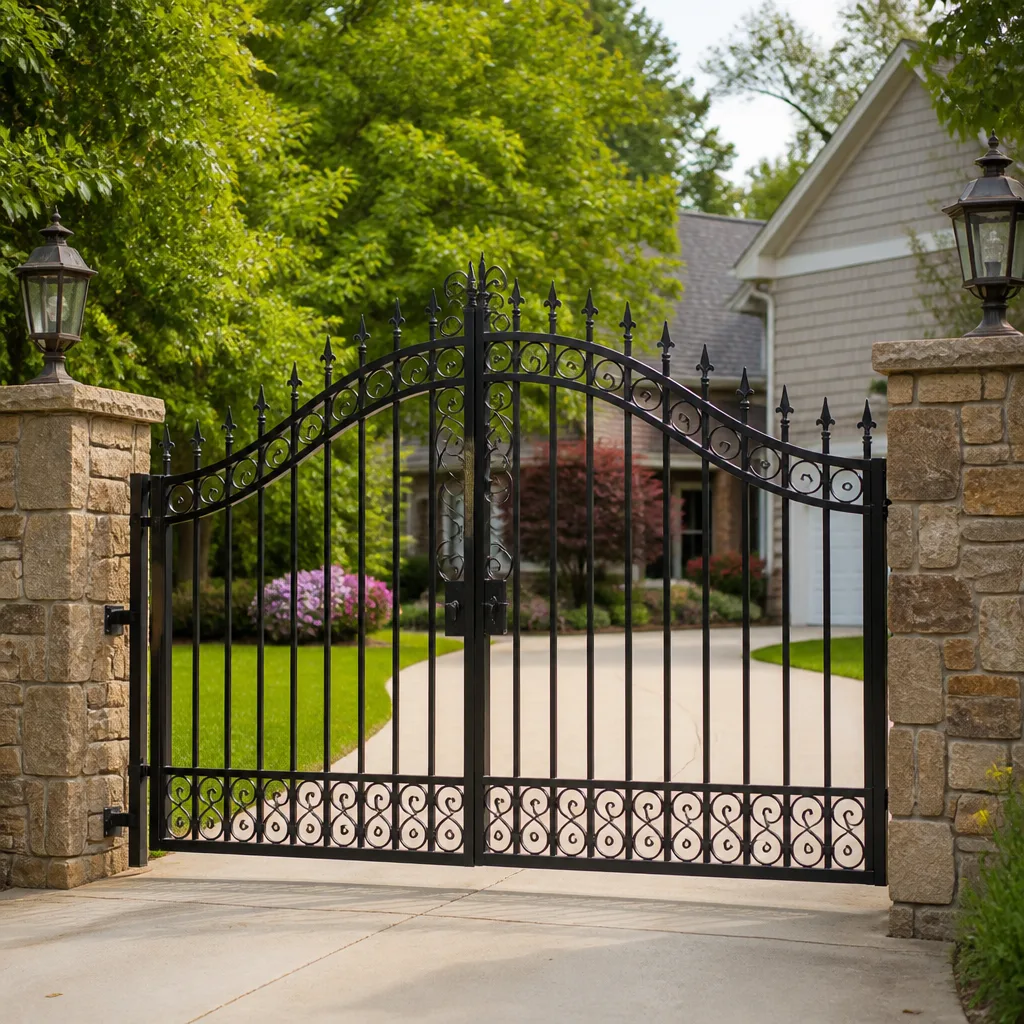 Wrought iron
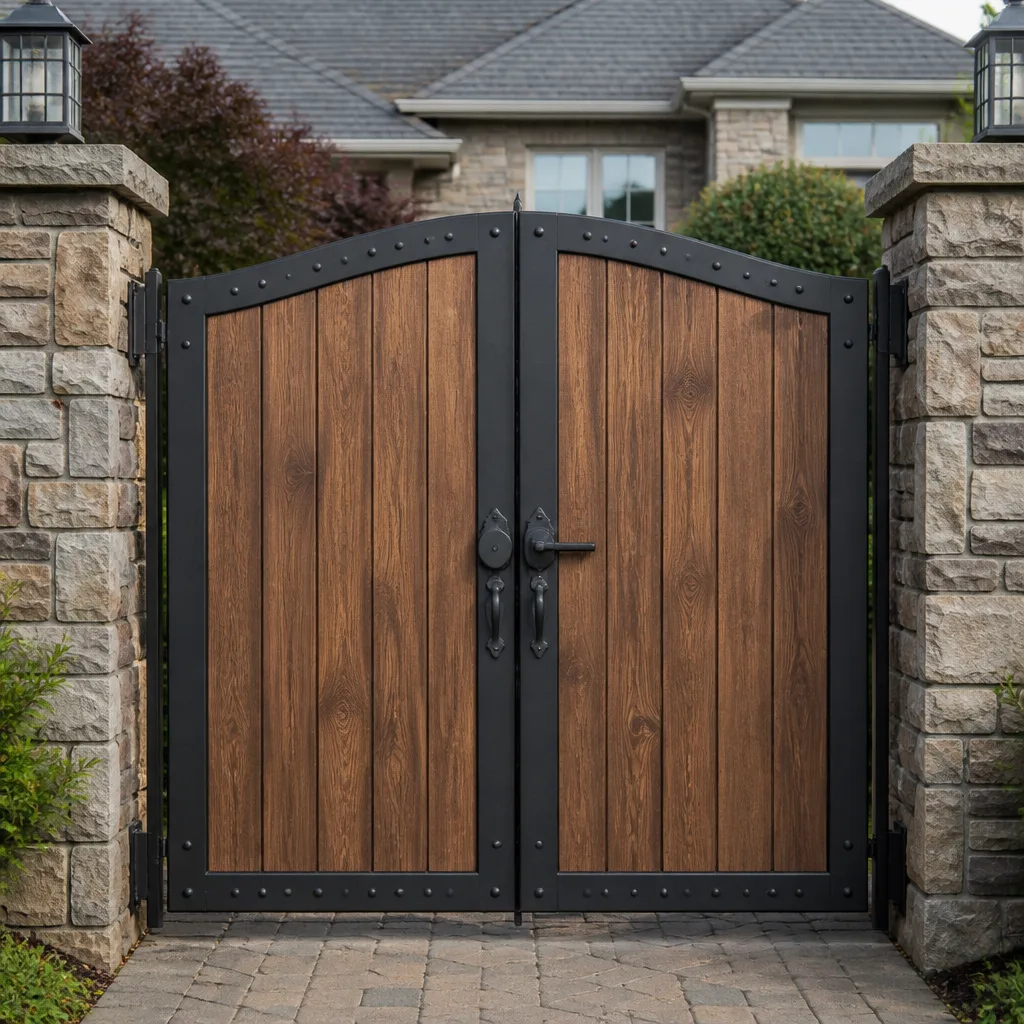 Wood & steel frame
 Farm & ranch
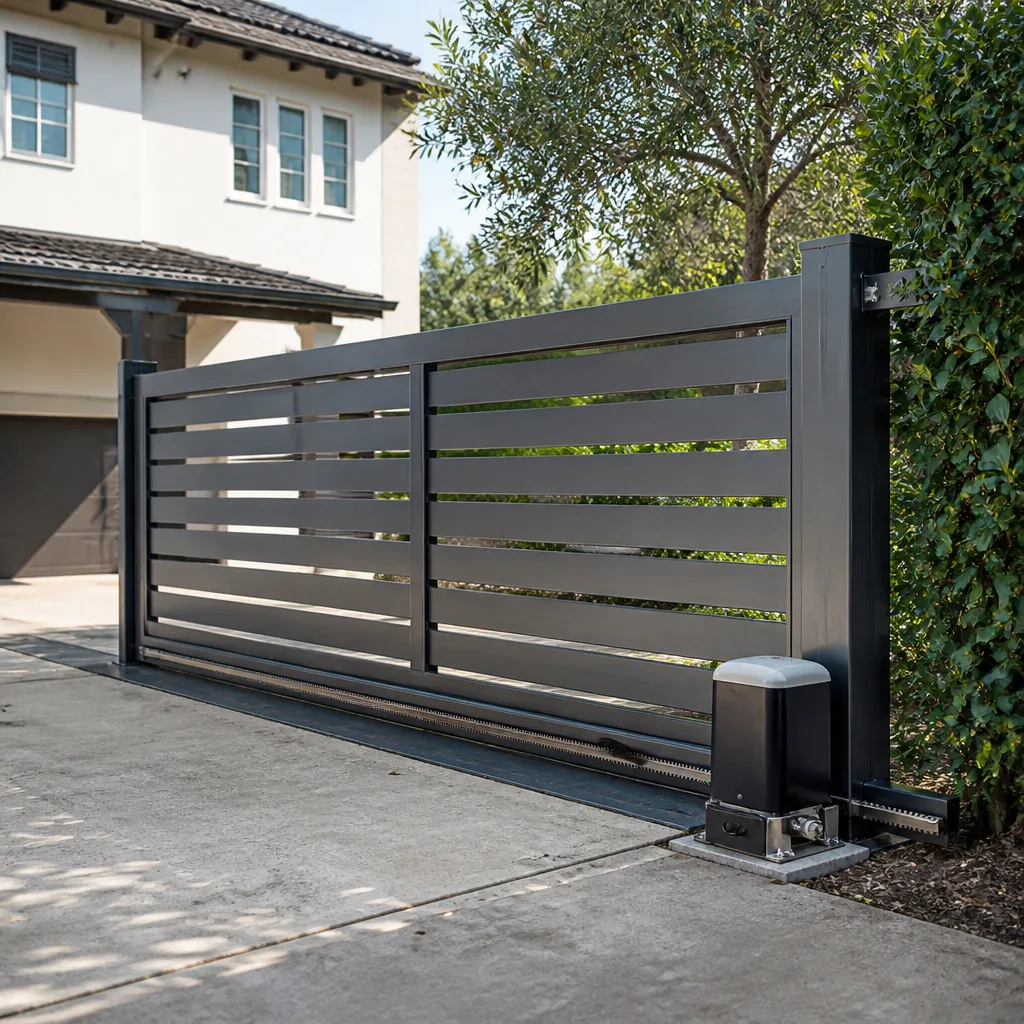 Sliding driveway gates
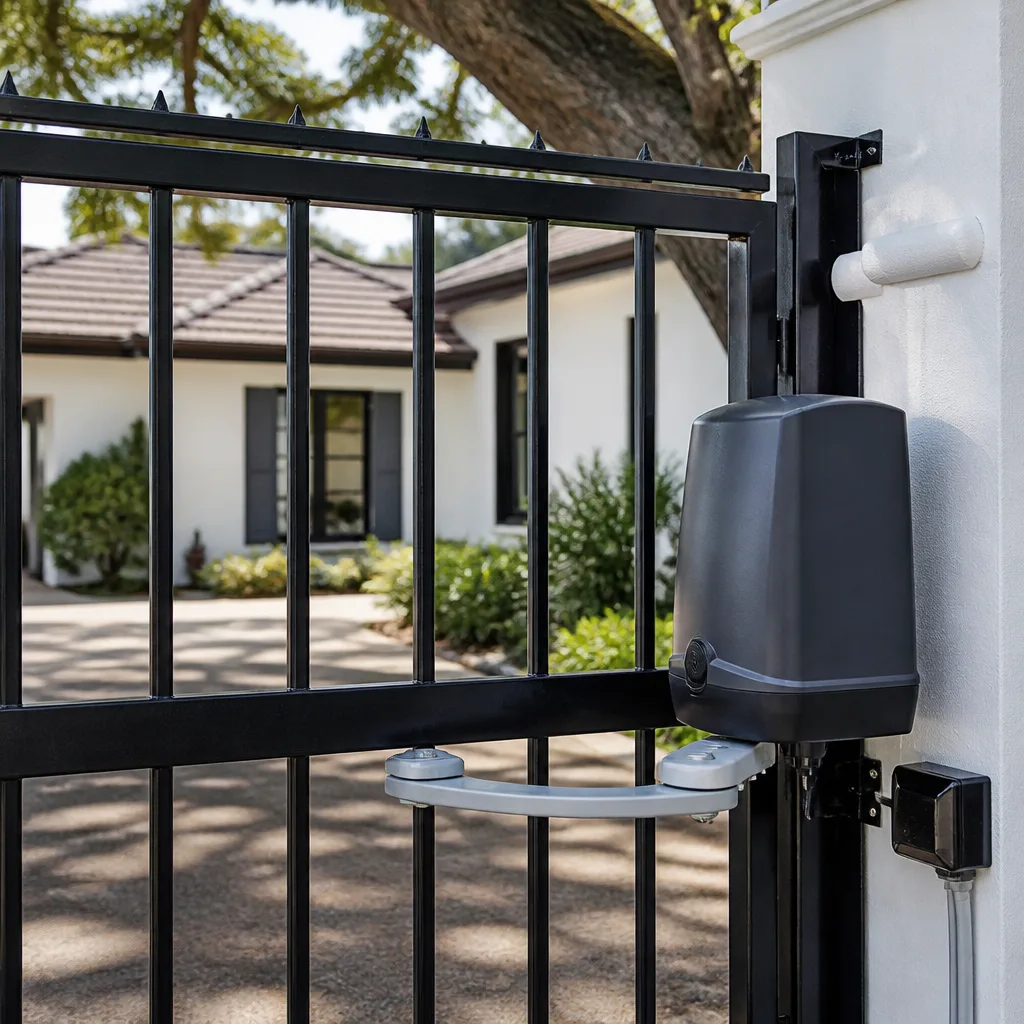 LiftMaster operators
Free on-site gate assessment - hinges, posts, and your LiftMaster or Nice gate operator checked before anything is quoted
The assessment is free and the quote is the invoice.
Get your free estimateThe Complete Guide to Gate Repair in Montclair
Here’s something most people don’t realize until it’s too late: the majority of gate failures in Montclair have nothing to do with the motor. We’ve opened control boxes on dozens of “dead” gates in this city to find perfectly functional operator electronics. The real problem? A gate that’s been dragging on a sagging post for two years, slowly cooking the motor until it gives out. This guide will walk you through the three root causes behind most gate failures in Montclair, how to identify the one you’re dealing with, and what a repair actually involves when a specialist does it right. For DIY vs Professional Gate Repair: The Montclair Homeowner’s Decision Guide, see our companion article. You’ll learn what to check before spending money on parts, what separates a real diagnosis from a guess, and how to think about the repair-versus-replace decision.
Quick Answer
Our Gate Repair services in Montclair typically cost between $185 and $650 for mechanical and electrical fixes, while operator replacement (motor, control board, or full unit) runs $700 to $2,400 depending on brand and access requirements. Most repairs are completed in one visit once the correct diagnosis is made, and the most important step is identifying whether the gate’s frame and posts are still sound before touching any electronics. Professional inspection is the fastest path to an accurate quote.
Styles & brands we work with
Table of Contents
- The Three Root Causes Behind Most Montclair Gate Failures
- Foundation Shift: Montclair’s Expansive Soil Problem
- Operator Neglect: The Slow-Motion Failure
- Mismatched Hardware: When Parts Don’t Belong Together
- The Repair Hierarchy: Structure Before Electronics
- Brand-Specific Failure Patterns We See in the Inland Empire
- Repair vs. Replacement: How to Tell When a Gate Is Done
- What a Specialist Inspection Covers (That a Handyman Estimate Won’t)
- What Gate Repair Costs in Montclair
The Three Root Causes Behind Most Montclair Gate Failures
After working on gates across the Pomona Valley for years, we’ve found that nearly every service call traces back to one of three underlying issues, or a combination of them. Understanding which one you’re facing is the single most valuable diagnostic step you can take before spending a dollar on parts or labor.
The first is foundation shift, which is uniquely prevalent in Montclair because of the area’s clay-heavy soil. It moves with moisture, and it moves enough to shift gate posts out of position over a few seasons. The second is operator neglect, meaning the motor, control board, and power supply receive no maintenance until a component burns out. The third is mismatched hardware, where a gate of a given weight and size was paired with an operator that was never rated for the load, or where parts were swapped in over the years without regard for compatibility.
A gate that drifts open on its own isn’t a latch problem. It’s usually a hinge or post alignment problem that’s been building for months. Most homeowners, and some handymen, fix the wrong thing first. That’s the value of understanding these three categories before you make decisions.
Foundation Shift: Montclair’s Expansive Soil Problem
Montclair sits on alluvial soils with a high clay content, particularly in areas between the 10 and 60 freeways. Clay expands when wet and contracts when dry. That’s geology, not opinion. Over repeated wet-dry cycles, posts set in concrete can heave, tilt, or settle unevenly by as little as a quarter inch or as much as several inches. A quarter inch at the post translates to a much larger misalignment at the latch side of a 12 or 14 foot gate leaf.
We see this pattern constantly: a homeowner calls us because their gate “stopped closing correctly.” They assume the motor is weak or the sensors are flaky. But when we check, the post has moved so the gate leaf no longer sits square in the opening. The operator is fighting gravity and friction every cycle, overheating and eventually failing.
Here’s how to spot foundation issues before they destroy your operator:
- Gap changes at the hinges. Look at the distance between the gate frame and the post where hinges attach. If the gap is wider at top or bottom, the post is out of plumb.
- Gates that drift. A gate that swings open or closed on its own when released from the operator has a frame that’s no longer level.
- Scraping sounds or visible ground contact. If the non-hinge end of the gate drags dirt or scrapes asphalt, the hinges or post have dropped.
- Strain at the latch. A latch that catches hard or misses entirely is often a symptom of post movement, not a bad latch.
The key diagnostic question is this: does the gate swing smoothly and stay wherever you place it (with the operator disengaged)? If not, you have a structural issue. Fixing the operator without fixing the structure is like changing the tire on a car with a bent axle. The new tire will fail the same way. In Montclair particularly, this is the number one cause of repeat failures.
Operator Neglect: The Slow-Motion Failure
Gate operators in Montclair are exposed to heat, dust, and irrigation overspray, and they rarely get any attention until the day they stop working. That’s a problem because operator failures are almost always gradual before they become sudden. The control board doesn’t die instantly. The capacitors degrade. The gearbox wears. The motor bearings dry out. Then one hot afternoon in July, the whole unit gives up mid-cycle.
The most common signs we see before an operator fails entirely:
- Slower cycle times. A gate that used to open in 12 seconds now takes 18. That’s mechanical resistance building inside the unit or along the gate path.
- Humming without movement. The motor is getting power, but the capacitor can’t deliver the starting torque. If you hear this, stop trying to operate the gate and disconnect power, because continuing will cook the motor.
- Intermittent operation. Sometimes the remote works, sometimes it doesn’t. Intermittent problems with electric operators often point to relay or board-level issues, or heat-related component failure.
- Accidental reversals. The gate starts to open or close, then reverses for no visible reason. This is usually a sensor or limit switch problem that gets worse over time.
Here’s the part that matters for Montclair homeowners: almost every one of these symptoms responds to maintenance and component replacement if caught in time. Wait until the unit is completely dead and you’re almost always looking at an operator swap, which costs more than any individual repair. A quick manual check every month takes under two minutes: watch the cycle speed, listen for new noises, and check that safety edges and photo eyes are clean and aligned. These small checks catch 80% of what becomes emergencies later.
Mismatched Hardware: When Parts Don’t Belong Together
Some of the most avoidable gate failures we see in the Inland Empire come from a simple mismatch: a heavy gate on an undersized operator, or a light gate paired with a commercial duty unit that cycles with jarring force. Mismatched hardware wears everything faster, because the system is working outside its design envelope.
Consider the common residential steel driveway gate. A typical 12 foot gate leaf made of 2 inch square steel tubing with aluminum pickets can easily weigh 400 to 600 pounds. That’s not the kind of load an entry-level swing arm operator from Mighty Mule is designed to move for years. Those units are fine for a light tube gate or farm gate. But put one on a heavy Montclair driveway gate with a full steel skin and you’ll be replacing the operator every 18 to 24 months.
Here’s what a proper match looks like:
- Operator duty rating matches the gate’s weight and cycle frequency. A gate that opens 20 times a day needs a different class of hardware than one that opens twice a week. Cycle rating matters as much as weight capacity.
- Hinges and posts are sized for the gate, not the other way around. We see gates hanging on light residential hinges they’ve outgrown. Hinge pins bend, and the gate sags, and the operator gets blamed.
- The opener is the brand and model specified for the gate’s actual configuration. Swapping an operator from one manufacturer to another without reviewing the geometry and power requirements creates problems that show up months later.
The takeaway: before replacing any failed part, ask whether that part was ever the right one. If not, this is your chance to make the correction. A repair that puts back a mismatched component is just renting time until the next failure.
The Repair Hierarchy: Structure Before Electronics
Here’s the sequence any legitimate gate specialist follows, and why it matters if you’re trying to avoid paying for the same repair twice:
- Assess the gate frame and posts. Is the gate square? Are posts plumb? Do hinges move freely with the gate weight on them? If any answer is no, this gets fixed first. Structural problems create every other problem downstream.
- Check manual operation. Disengage the operator and swing the gate by hand. It should move evenly, with moderate effort, and stay where you leave it. Drag, binding, or drift means geometry is off.
- Verify power and wiring. Only after the gate moves correctly by hand do we test incoming voltage, wiring integrity, and connections to the operator.
- Diagnose the operator and its inputs. Control board, motor, sensors, loop detectors, safety edges, remote receivers, and keypads get tested last, on a gate that’s mechanically sound.
This order exists because every layer depends on the one below it. You cannot reliable diagnose a control board on a gate that’s dragging on a tilted post. The board may be having a legitimate fault, but it was likely caused by overcurrent from a motor fighting friction. Fix the board, ignore the post, and the board fails again in six weeks. In Montclair, where soil movement is common, skipping the structural assessment is the single most expensive mistake a repair can make.
Brand-Specific Failure Patterns We See in the Inland Empire
Because we service gate systems from multiple manufacturers, we see recurring patterns that are brand-correlated. None of this means a particular brand is bad overall, but it does mean certain components in certain models tend to show up in our service calls more than others.
LiftMaster operators, which are widely used on residential and light-commercial gates in Montclair, tend to outlive their control boards. The mechanical drivetrains are robust, but the boards are sensitive to power surges, which the Inland Empire’s summer brownouts and utility fluctuations make worse. We regularly replace failed LiftMaster boards on operators that are otherwise in good mechanical condition.
FAAC units, common on hydraulic and high-cycle commercial gates, are generally reliable, but their hydraulic pumps need fluid and seal attention on a schedule, and that maintenance is frequently skipped. A dry or leaking FAAC pump is a classic slow failure that eventually looks like a motor problem.
Elite and DoorKing operators show up in both residential and light-commercial settings. DoorKing’s slide gate operators especially need attention to chain or belt tension, and we see predictable limit switch drift over time. Elite’s swing arm operators are solid, but their limit cams sometimes need adjustment after several years of thermal cycling, and that’s often misdiagnosed as a motor failure by generalists.
The broader point: gate operators are not generic appliances. They have brand-specific failure fingerprints, and anyone who treats them all the same is guessing. We work on virtually every major gate brand, including LiftMaster, FAAC, BFT, Linear, Viking, Ghost Controls, DoorKing, Elite, and Mighty Mule, so we can diagnose what’s actually wrong without being locked into one manufacturer’s ecosystem or parts list.
Repair vs. Replacement: How to Tell When a Gate Is Done
There’s a point where repairing a gate stops making sense, and that point is different for different gates. Here’s the honest framework we use with our Montclair customers:
Repair is the right call when the gate’s structure is sound, meaning the posts are plumb, the frame is square, the hinges are tight, and the gate moves freely by hand. When the operator or a component like a sensor or limit switch has failed, a repair restores the system to its original condition. That’s the best outcome: pay for a fix once, get years more life.
Replacement starts to make sense when you’re facing two or more of these simultaneously:
- The gate frame is rusted through in structural members. Surface rust is cosmetic. Holes through the tubing are structural. A gate that can’t safely support itself isn’t worth automating.
- The posts are moved and need to be reset in new footings. While the gate is off its posts anyway, the labor math shifts in favor of evaluating whether the whole setup is worth it.
- The operator is dead and the gate is heavy and has never had the right operator. You’re about to buy a new operator anyway. Better to buy the right one for the gate, or pair a properly sized operator with a new gate.
- The gate no longer meets its functional need. If the gate is too short, too low, or doesn’t provide the access you need, repairing it just extends your frustration.
A useful rule of thumb: if structural repair plus operator replacement is going to cost 60 percent or more of a new gate and operator installation, replacement deserves serious consideration. A good technician will show you that math. We understand this is a significant financial decision, which is why we always quote the repair and the replacement options side by side when the boundary is unclear.
What a Specialist Inspection Covers (That a Handyman Estimate Won’t)
A gate specialist looks at the entire gate as a system. A generalist looks at the symptom. Here’s what the difference looks like in practice.
When Kensington Gate Repair inspects a gate in Montclair, the first thing we do is check the post footings and frame alignment, because everything else depends on that. We’ll look for tell-tale signs of soil movement, like cracks in adjacent concrete or differing gaps at the hinge points, and we’ll manually swing the gate with the operator disengaged. Then we’ll work through the operator: incoming power, wiring, control board, motor, gearbox, limit settings, and every sensor. We’ll check safety edges and photo eyes for alignment and function. We’ll test remote controls, keypads, and any access control accessories.
A handyman estimate typically covers the visible symptom, like a gate that won’t open, and recommends replacing the operator or the sensor that seems to be at fault. But that’s a guess, and a guess on a defective gate can cost you a new operator that was never needed. We’ve seen gates with perfectly good motors that got replaced because a handyman didn’t test incoming voltage. That’s money spent for nothing.
The advantage of a dedicated gate specialist is that we diagnose one thing all day, every day. Our technicians are not doing a tile job in the morning and troubleshooting a gate in the afternoon. Gate systems are the entire job. That’s why for questions about Gate Repair in Montclair, a specialist is the right call.
What Gate Repair Costs in Montclair
Any pricing guide that gives you one flat number is guessing. For a detailed Gate Repair Cost Breakdown: The Montclair Homeowner’s Reference for 2026, gate repair costs depend on what’s wrong, and knowing what’s wrong requires diagnosis. Here’s what our work in Montclair has taught us about realistic price ranges for common repairs:
| Repair Type | Typical Montclair Price Range | What It Includes |
|---|---|---|
| Hinge or post alignment correction | $185 – $450 | Re-square gate, adjust hinges, reset post if minor movement |
| Control board replacement | $350 – $800 | Board, labor, testing, and programming |
| Motor or gearbox replacement | $450 – $1,200 | Component, labor, and system test |
| Sensor, safety edge, or photo eye replacement | $185 – $450 | Part, alignment, and verification |
| Full operator replacement | $700 – $2,400 | New unit, install, programming, and testing |
| Complete gate replacement with operator | $3,500 – $10,000+ | Depends on gate size, material, and access features |
These ranges reflect what we see in Montclair’s residential and light-commercial gate systems. A heavier ornamental steel gate costs more to repair than a light tube gate. A hydraulic operator costs more than a residential electromechanical unit. And of course, any foundation work adds to a project’s total.
We quote every repair before work begins, and the price is agreed before anything is touched. No surprises, no invoices that look different from the estimate. If you’re planning gate work, Gate Installation in Montclair may also be relevant, depending on what the inspection finds. For a free estimate at your property in Montclair, call (833) 320-4513.
Common Mistakes to Avoid
- Treating an automated gate as a mechanical-only problem. Gates that run on operators are systems. Mechanical problems become electrical problems, and vice versa. If you don’t check both, you’ll miss the real cause.
- Ignoring gate weight changes. Montclair homeowners who add pickets, panels, or a new vehicle gate infill don’t always account for how much heavier the gate becomes. That added weight shortens the operator’s life.
- Buying a replacement part by matching it to the old one without checking the spec. If the original was undersized, replacing it with an identical unit just resets the clock on a known failure.
- Lubricating without cleaning first. Grease on top of dirt and grit grinds bearings and bushings faster than no grease at all. Wipe it clean, then lubricate.
- Running a gate with a known sensor fault “for now.” A photo eye or safety edge that’s disconnected or bypassed is a hazard, and a gate that reverses unexpectedly can injure someone or damage vehicles.
- Forgetting that water and electricity don’t mix. Sprinkler overspray on an operator housing eventually causes corrosion and electrical faults. Check where your irrigation heads point.
- Assuming a gate that’s slow just needs adjustment. Sluggish operation usually means mechanical resistance somewhere. Adjusting speed settings to compensate masks the problem until something breaks.
See the difference
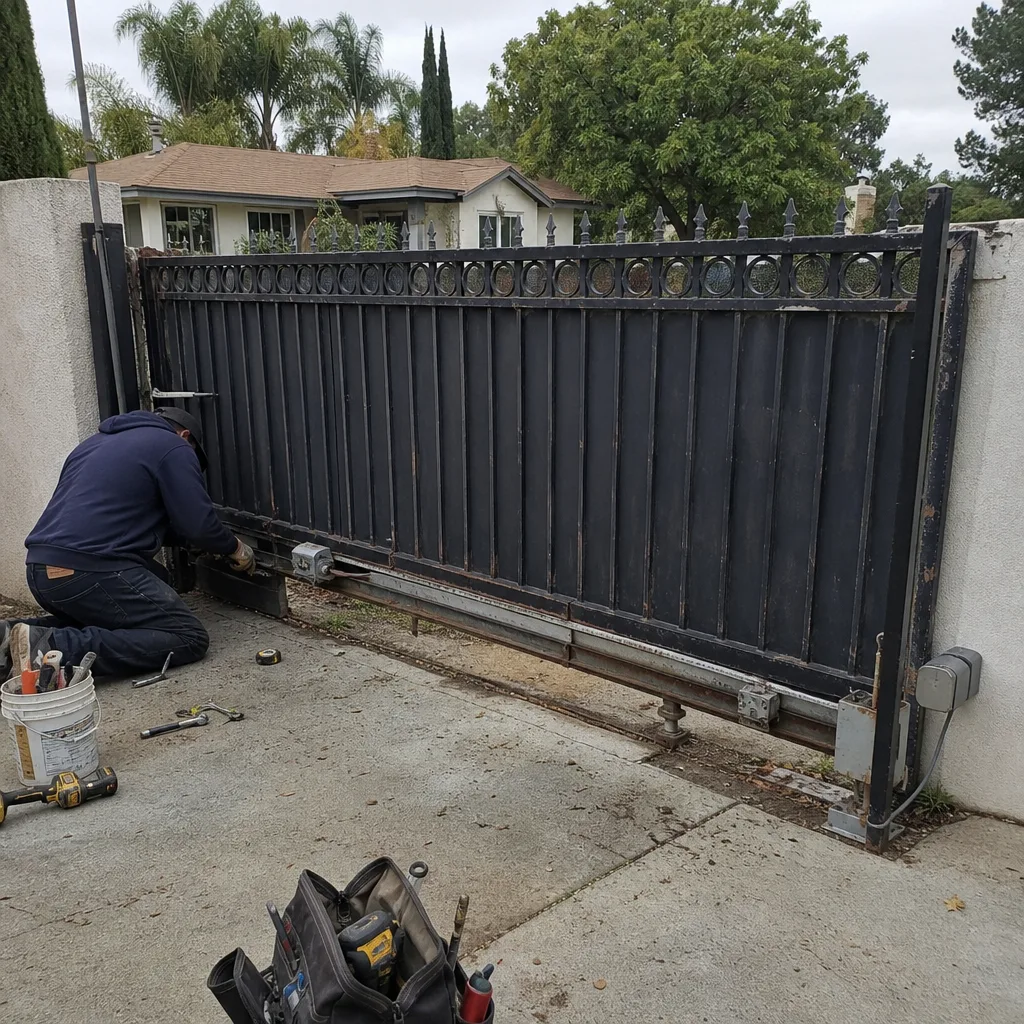 Before
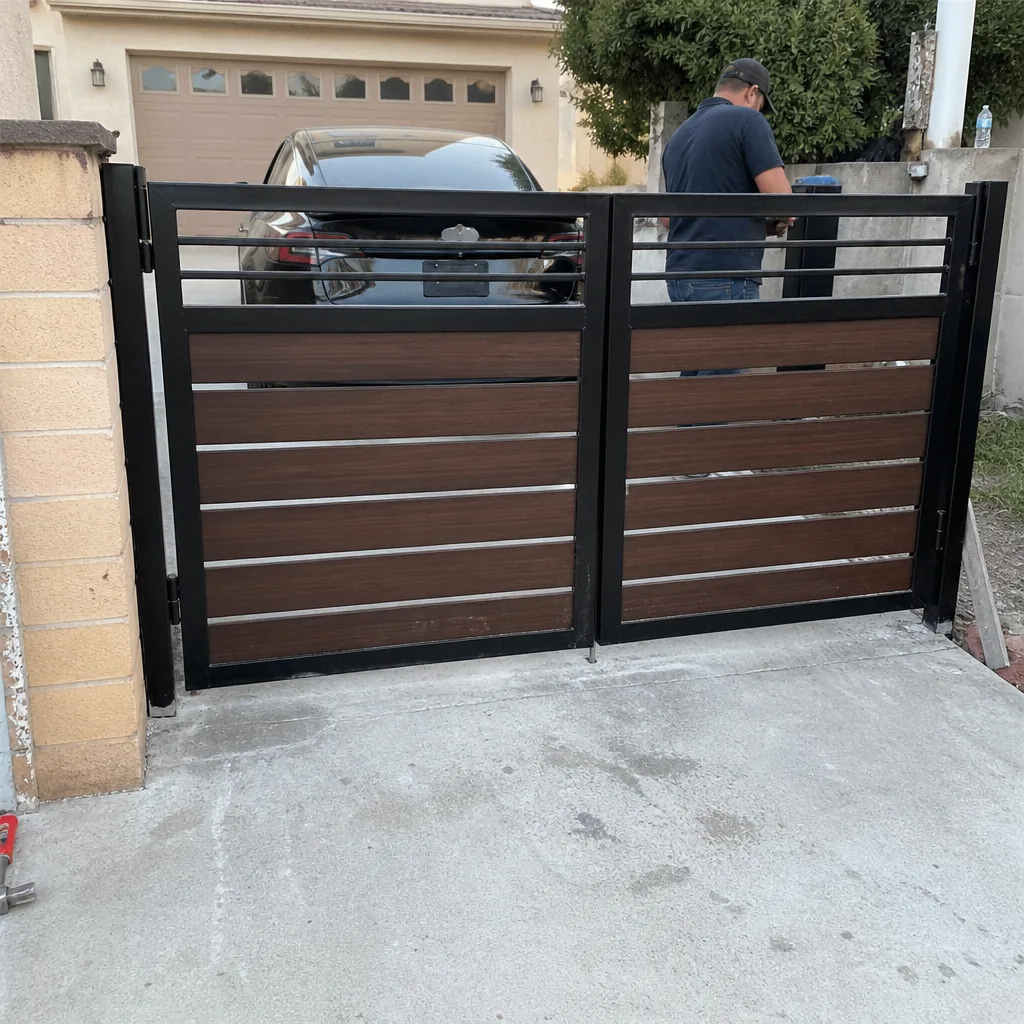 After
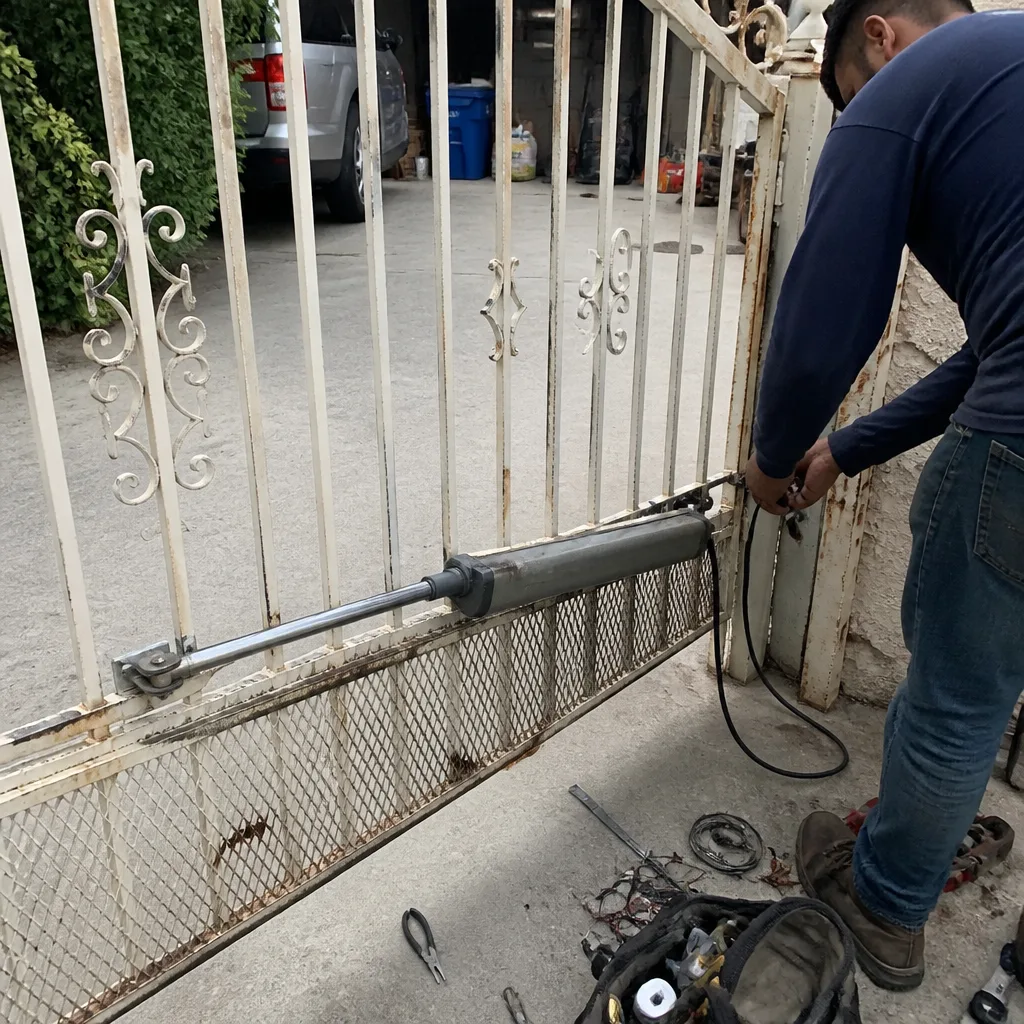 Before
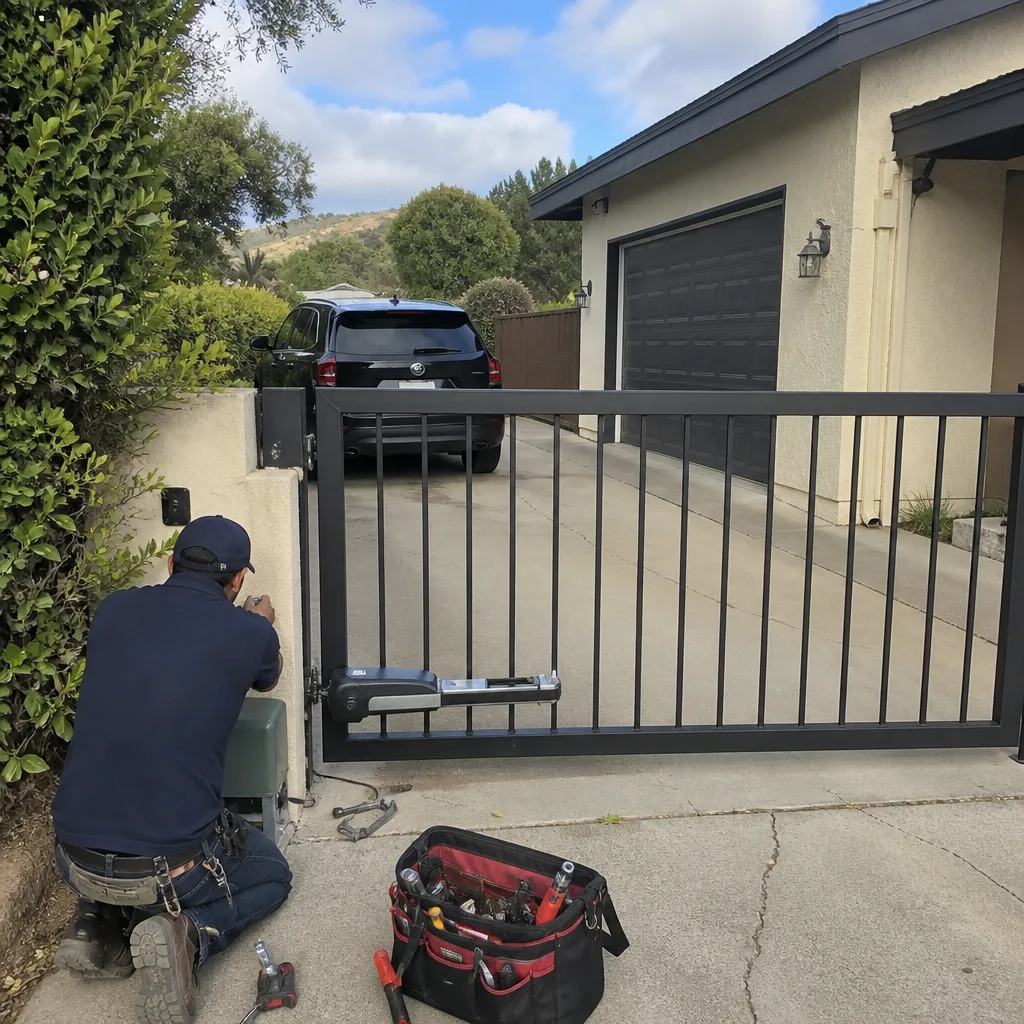 After
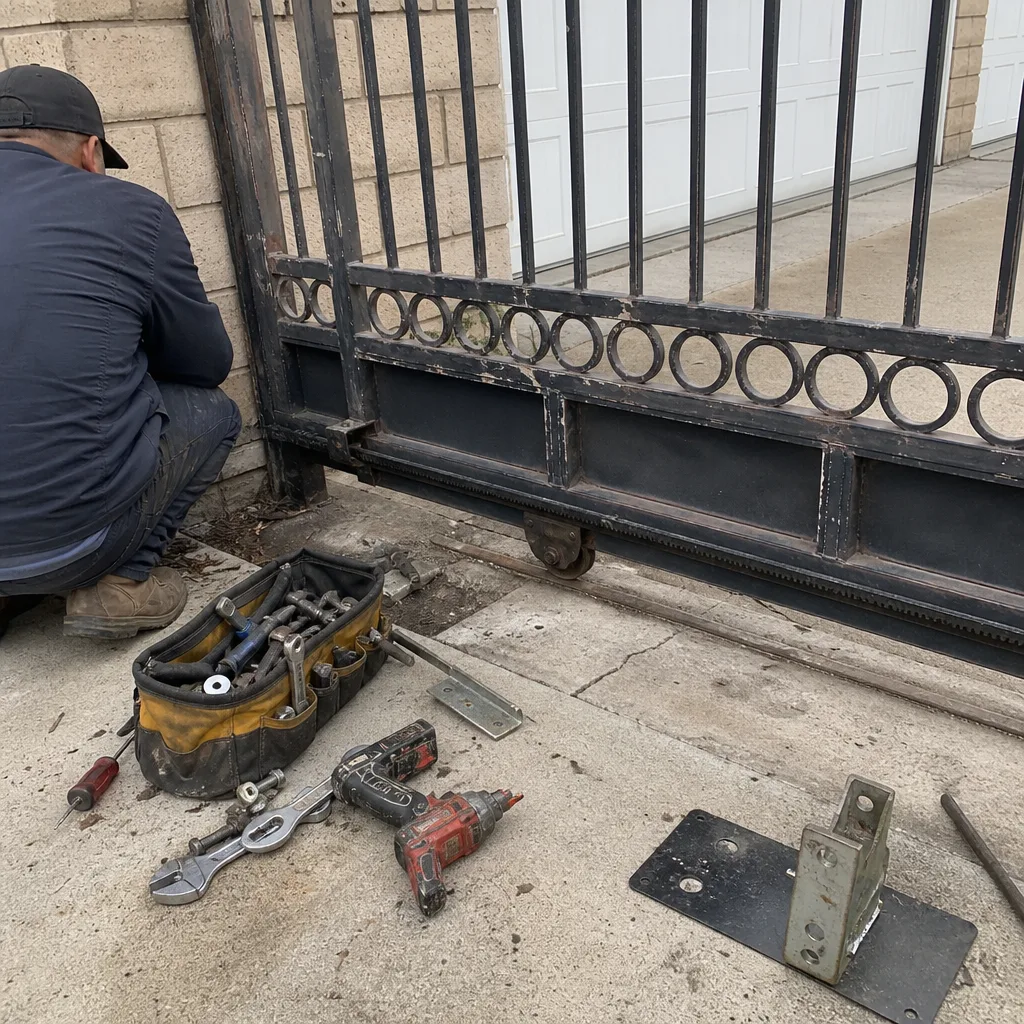 Before
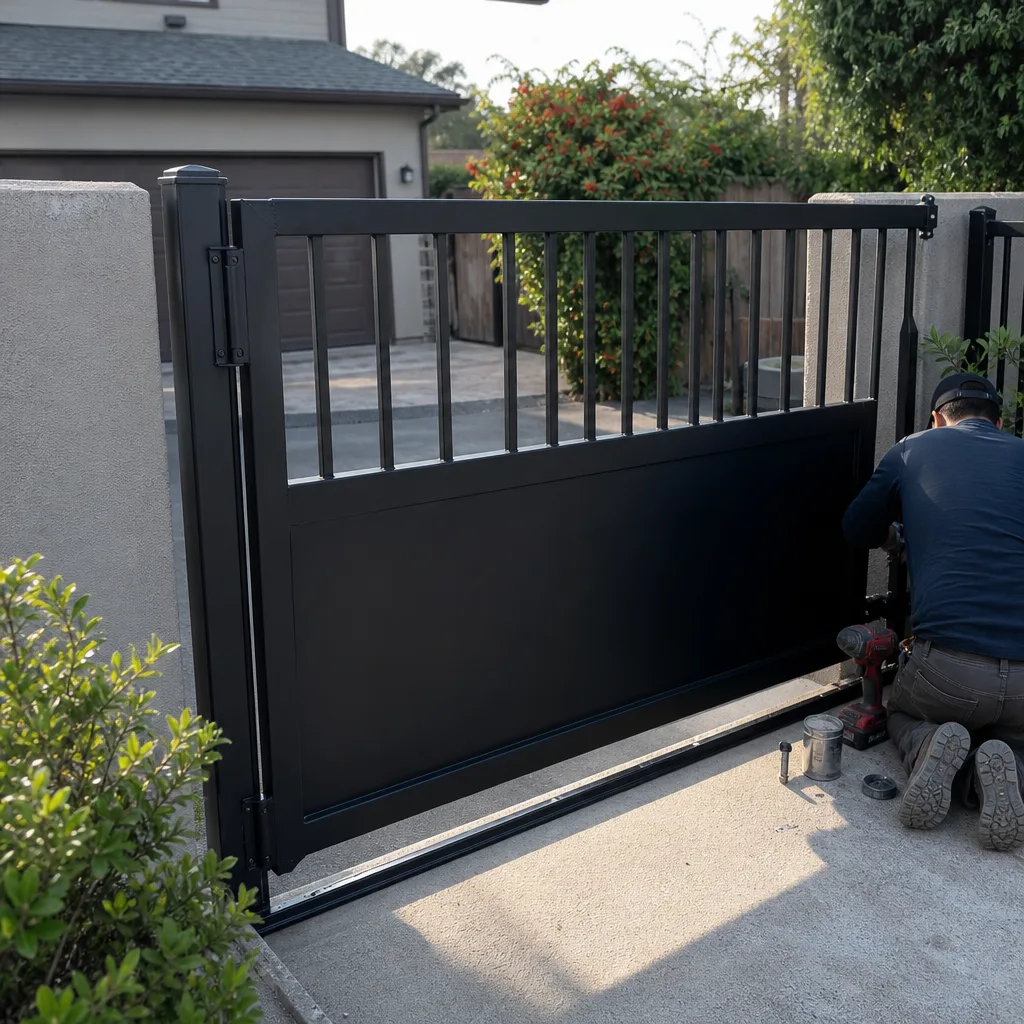 After
When to Call a Professional
Call a gate professional the moment you notice any of these: the gate reverses without cause, makes grinding or screeching sounds, opens noticeably slower than before, sags or drags, or trips a breaker. Any of these indicate a fault that will get worse, not better, and continuing to operate the gate accelerates the damage. If you can see the operator but the gate won’t move at all, and you hear humming or clicking, disconnect power to the unit and stop attempting to open it. High-tension springs and gate operators can cause serious injury if handled incorrectly. Gate systems are designed to move heavy loads, and when they malfunction, the safest move is to let someone who works on them daily handle the repair. Kensington Gate Repair offers free estimates in Montclair. Call (833) 320-4513 and we’ll schedule a time to assess your gate properly. Check our more guides & resources for additional maintenance tips.
Frequently Asked Questions
Gate repair in Montclair typically ranges from $185 for a simple sensor or hinge fix to $2,400 for a full operator replacement. The price depends on what’s failed, the gate’s weight and type, and whether structural work is required before electrical work can be done. We provide exact quotes after inspection, and the price is always agreed upon before work begins. Call (833) 320-4513 to book a free estimate at your Montclair property.
Many repairs can be completed in a single visit, but same-day availability depends on our schedule in Montclair and the specific parts your system needs. Common electrical repairs may be completed same-visit, while structural repairs or operator replacement may require a second trip to complete after parts are confirmed.
We work on virtually every major gate brand, including LiftMaster, FAAC, BFT, Linear, Viking, Ghost Controls, DoorKing, Elite, and Mighty Mule. Our multi-brand experience means we repair what you have, not what we sell, and our recommendations are driven by your system’s actual condition and configuration.
A gate is worth repairing when its frame and posts are structurally sound and the failure is isolated to the operator or a component like a sensor or limit switch. Replacement is generally the better call when the gate frame is compromised, posts have shifted, or the cost of repair approaches 60 percent of a new installation. We’ll show you the comparative costs during inspection.
In Montclair, a gate that opens on its own is typically caused by post or hinge movement from expansive clay soils, not an operator problem. Over time, soil expansion and contraction tilts the post enough that gravity pulls the gate open. The fix is structural correction first, and if the operator has been fighting the misalignment, its condition should be assessed too.
Yes, we service both residential and commercial gate systems in Montclair and across the Inland Empire, including slide gates, swing gates, and automated access systems with loop detectors, safety edges, and access control peripherals. The same diagnostic process applies, scaled to the higher cycle rates and duty requirements of commercial operators.
The Bottom Line
Most gate failures in Montclair come down to three causes: foundation shift from the area’s expansive soils, operator neglect, or mismatched hardware that was never right for the gate. Understanding which one you’re dealing with is the single most important step, and it’s why structural assessment comes before electrical work in any legitimate repair sequence. A good specialist finds the root cause and fixes it once. A guess leads to repeat failures. If your gate is failing, call us at (833) 320-4513 and we’ll assess it properly, explain what’s wrong in plain terms, and quote the repair before any work begins. For more on our specialized electrical work, see Electric Gate Repair in Montclair, or visit the Kensington Gate Repair home page for our full service scope.
Written by the team at Kensington Gate Repair, serving Montclair since 2011.