
Last updated October 31, 2026
 Wrought iron
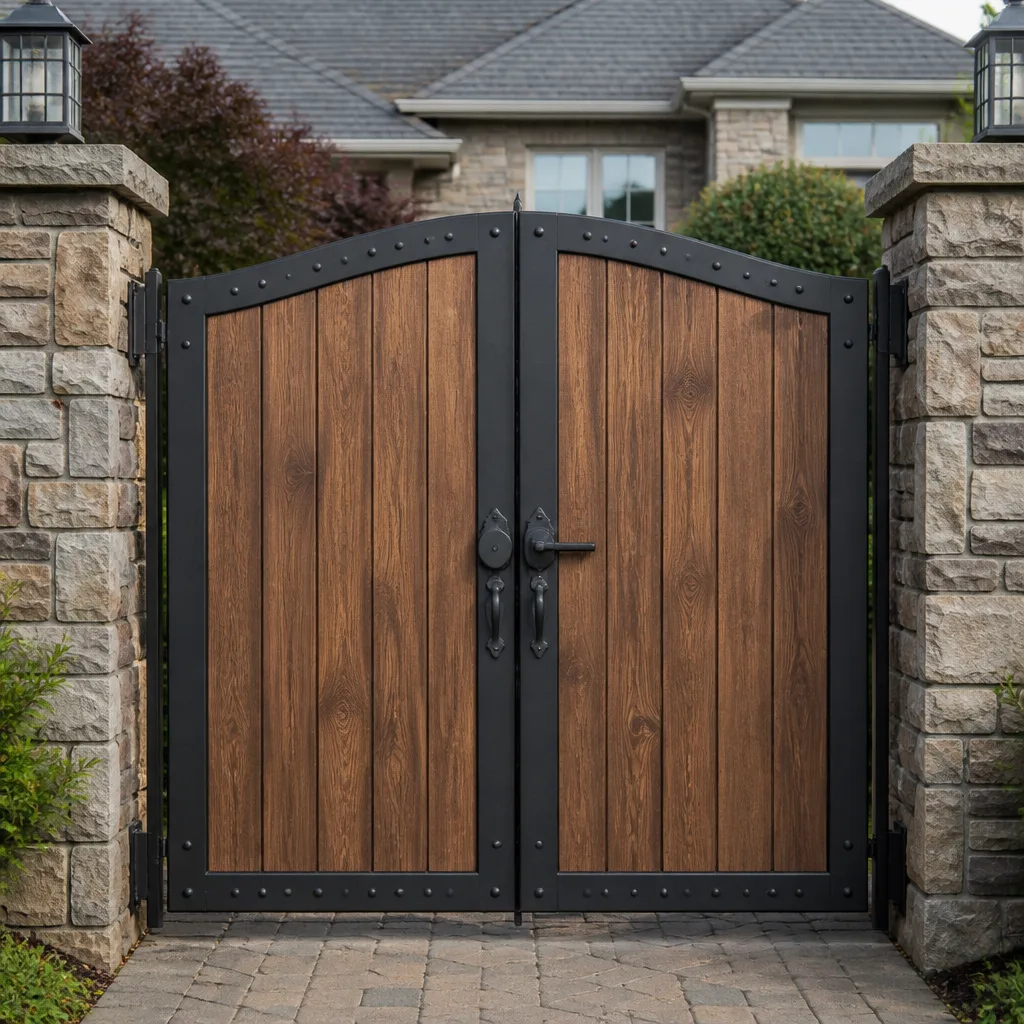 Wood & steel frame
 Farm & ranch
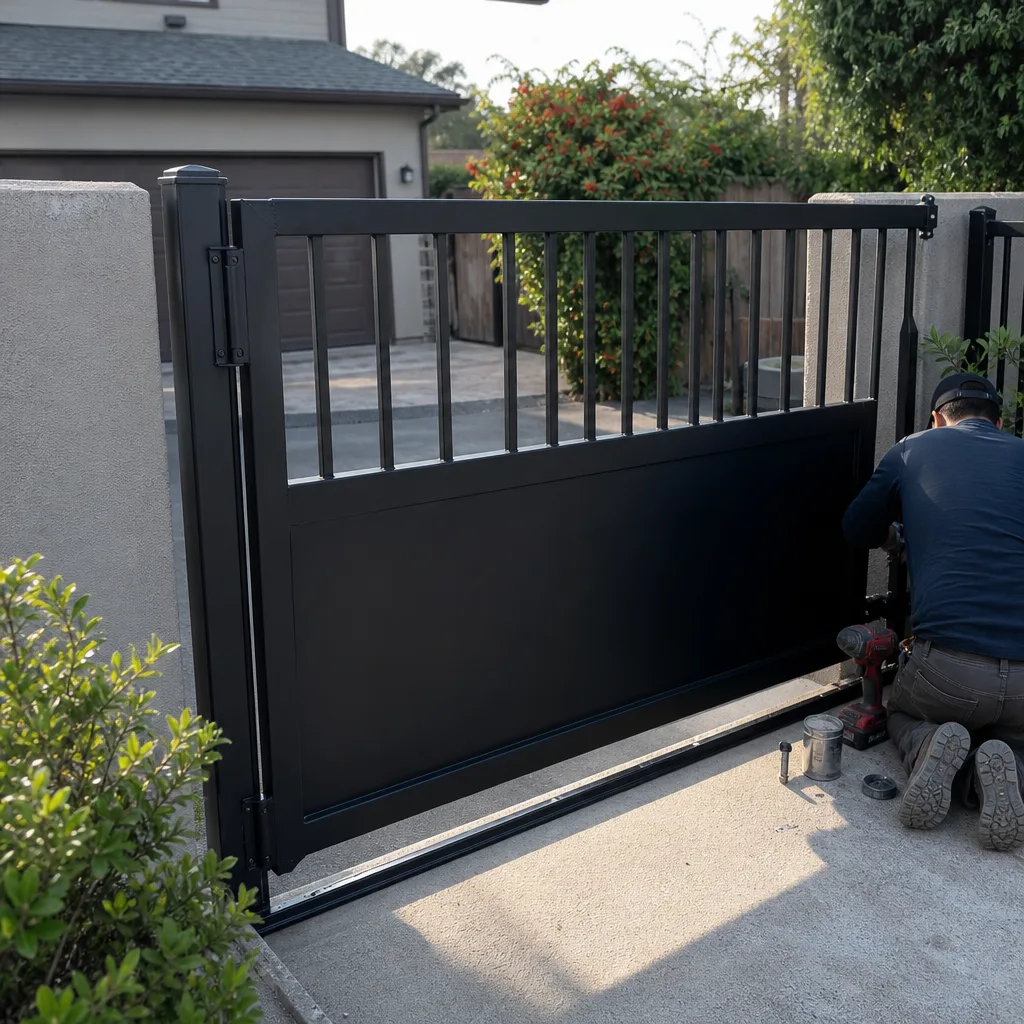
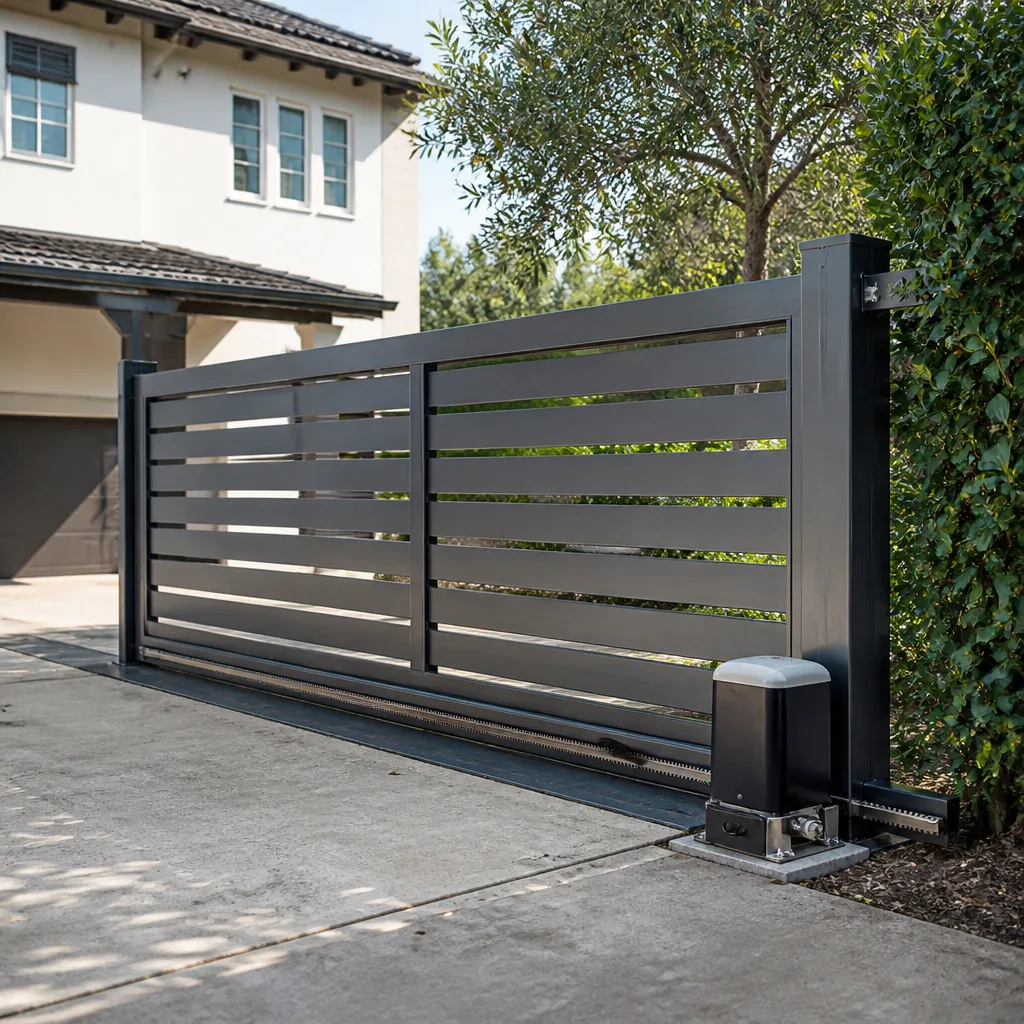 Sliding driveway gates
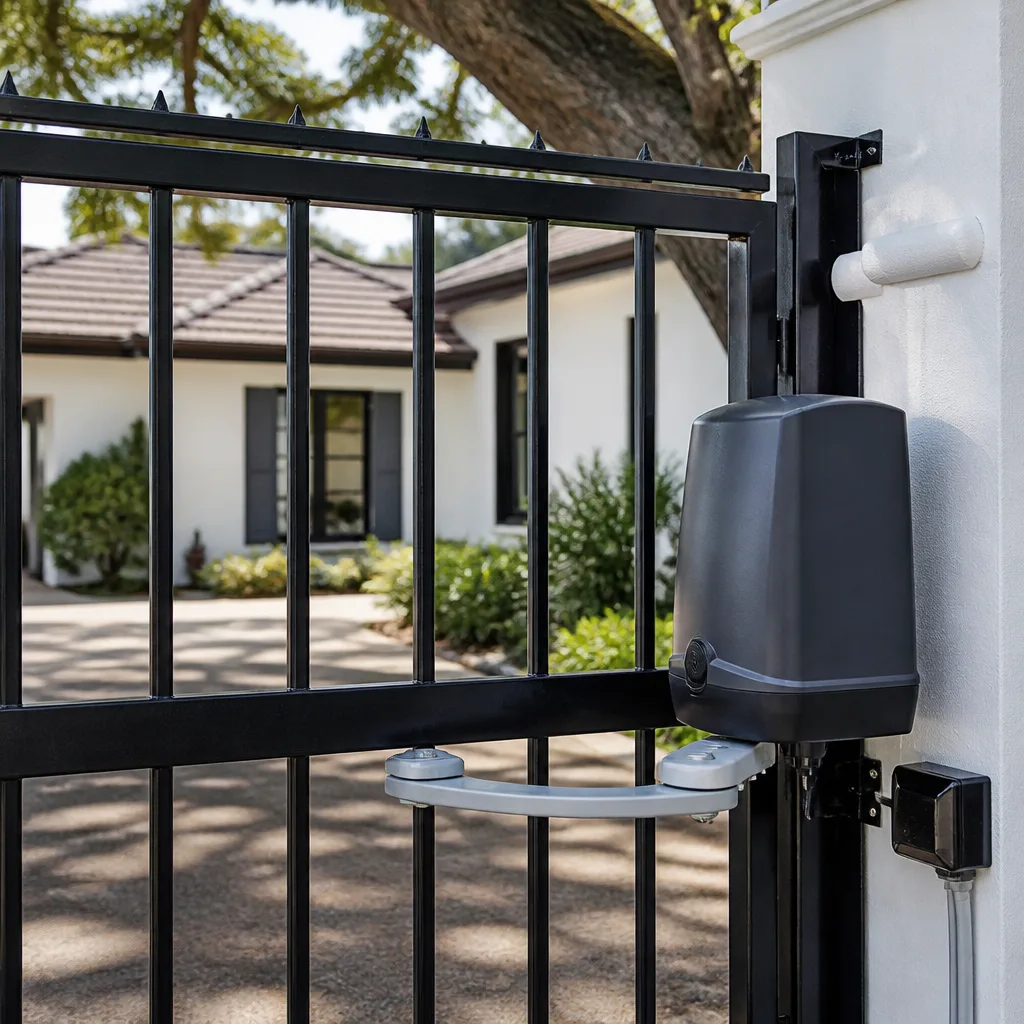 LiftMaster operators
Free on-site gate assessment - hinges, posts, and your LiftMaster or Nice gate operator checked before anything is quoted
The assessment is free and the quote is the invoice.
Get your free estimateSeasonal Gate Repair Care for Montclair: Year-Round Homeowner’s Guide
Most seasonal gate maintenance advice you’ll find online was written for places like Chicago or Minneapolis, where the dominant concern is freeze-thaw cycles and snow load. Montclair doesn’t have that problem. What we do have is a July heat wave that can push an operator circuit board beyond its rated temperature range, and Santa Ana winds that turn a slightly loose hinge bracket into a bent track by October. This guide walks through what actually fails on Montclair gates, when it fails, and what to check before it does. You’ll learn which months demand attention, which components fail in which season, and which tasks you can handle yourself versus which ones need a gate specialist.
Styles & brands we work with
Quick Answer
Seasonal gate care in Montclair CA means preparing for summer heat above 100°F, Santa Ana wind events in fall, and occasional heavy winter rain, with each season stressing different gate components. The core tasks are lubricating hinges and checking operator cooling in spring, monitoring thermal expansion and circuit board temperatures in summer, inspecting hardware after wind events in fall, and clearing drainage plus weather-sealing components in winter. Our Complete Gate Repair Guide for Montclair Homeowners and this month-by-month checklist keep an automated gate running reliably through Montclair’s actual climate calendar.
Table of Contents
- Why Montclair’s Climate Demands a Different Gate Care Schedule
- Spring Reset: Assessing Wear Before Summer Heat Amplifies Problems
- Summer Heat: Thermal Expansion, Lubricant Breakdown, and Circuit Board Stress
- Santa Ana Season: Wind Stress on Gate Hardware and What to Check After a Blow
- Winter Rain Prep: Drainage, Sealing, and Moisture Checks for Montclair’s Wet Season
- Month-by-Month Gate Maintenance Calendar for Montclair
- What a Homeowner Can Do vs. What Needs a Gate Specialist
- Common Mistakes to Avoid
- When to Call a Professional
- Frequently Asked Questions
- The Bottom Line
Why Montclair’s Climate Demands a Different Gate Care Schedule
Montclair sits at the eastern edge of the San Gabriel Valley, where the marine layer burns off early and summer temperatures routinely climb past 100°F. That heat is the single biggest seasonal stressor on gate hardware here, and it works in ways that generic maintenance guides never mention. Metal expands when it’s hot. An iron gate that swings freely at 8:00 AM can bind or drag by 3:00 PM because thermal expansion has closed the clearance gap at the latch post. We’ve seen this on gates across Montclair, from single-family driveways near Monte Vista Avenue to commercial entry gates off Central Avenue. The gate didn’t suddenly go out of alignment. The metal grew.
Santa Ana winds are the second Montclair-specific factor. These downslope winds, typically strongest between September and November, can sustain gusts over 50 mph in the foothill corridors around Montclair. A gate leaf acts like a sail. If the hinges, brackets, or track have any play, wind will accelerate the wear dramatically. And our winter, while mild by national standards, brings periodic heavy rain that tests drainage around gate posts and exposes any seal that’s been dried and cracked by the preceding summer.
Here’s the key insight: these seasons stack on each other. Summer heat dries lubricant and expands metal. Fall winds stress the already-dry hardware. Winter rain finds every microfracture and rusts it. By the time spring arrives, problems that started as small issues in July have compounded. A seasonal maintenance schedule that accounts for this progression is what keeps a Montclair gate running for years without an emergency gate repair in Montclair.
Spring Reset: Assessing Wear Before Summer Heat Amplifies Problems
Spring in Montclair is deceptively calm. Temperatures hover in the 70s and 80s, rain tapers off, and nothing about the weather seems urgent. That makes it the ideal time for a thorough gate inspection, because any problem you find and fix now will be dramatically magnified once temperatures cross 95°F in June or July. A hinge with slight play in April becomes a sagging gate leaf by August. A control board running warm in May can overheat and fail in the middle of a July afternoon, leaving your gate stuck halfway open.
Here’s a step-by-step spring reset we recommend for any gate in the Montclair area:
- Clean and inspect the full track and roller hardware. Remove debris, leaves, and dust that accumulated over winter. Look for flat spots on rollers or elongated bolt holes in brackets. Any of these indicates the gate has been taking impact load, and summer heat will only make the metal more prone to further deformation.
- Check hinge play with the gate in both open and closed positions. Lift upward on the gate leaf at the latch end. More than a quarter inch of vertical movement means hinge bushings or bearings need attention. Thermal expansion in summer will amplify that play into visible sag.
- Test the operator in both directions, paying attention to speed changes. An operator that slows noticeably in one direction or makes a grinding sound has a developing problem. Document it now. A Montclair electric gate repair call in April is far cheaper than an emergency visit in July.
- Inspect all wiring connections at the operator, keypad, and safety devices. Winter moisture can corrode terminals even in our relatively dry climate. Tighten loose connections and replace any that show green corrosion or white oxidation.
- Lubricate hinges, rollers, and the operator chain or belt with a high-temperature lubricant. Standard household oil will cook off in Montclair’s summer. Use a lubricant rated for at least 140°F continuous exposure.
- Run a full safety test. Place an object in the gate path and verify the auto-reverse or safety loop triggers. This matters year-round, but it’s especially critical before summer when gates get used more frequently with kids and visitors coming and going.
This spring reset takes a homeowner about an hour and costs nothing beyond a can of lubricant and some basic tools. What it buys is a baseline of knowledge about your gate’s condition, before the real stress season starts.
Summer Heat: Thermal Expansion, Lubricant Breakdown, and Circuit Board Stress
Summer is when Montclair gates fail at the highest rate. The reason isn’t complicated: sustained temperatures above 95°F push several gate components past their operating limits. Let’s break down exactly what happens.
Thermal expansion on metal gates. Steel and iron expand at roughly 6 to 7 millionths of an inch per inch per degree Fahrenheit. For a 12-foot iron gate, a 40°F temperature swing from morning to afternoon means nearly a quarter inch of growth along the gate’s length. That growth has to go somewhere. It shows up as binding at the latch post, drag on the track, or a gate that refuses to close all the way in the heat but works fine after sunset. If your gate behaves differently at 2:00 PM than it does at 9:00 PM, thermal expansion is the likely culprit, and the fix is usually minor hinge adjustment or latch post realignment, not a new gate.
Lubricant breakdown. Standard lithium grease starts to thin and run at around 120°F to 140°F. On a 105°F Montclair afternoon, the metal surface of a dark-colored gate can hit 150°F or higher. The lubricant drips out, leaving hinges and rollers metal-on-metal. The result is noisy operation, increased friction, and accelerated wear on hinge pins and roller bearings. The solution is not just more frequent lubrication. It’s using a high-temperature synthetic grease rated for the kind of sustained surface heat Montclair gates actually see.
Circuit board and motor thermal stress. This is the failure mode most homeowners don’t see coming. Electric gate operator circuit boards are typically rated for continuous operation at ambient temperatures up to 104°F to 122°F, depending on the manufacturer. But the operative phrase is “continuous operation,” and the rating assumes the operator enclosure has adequate ventilation. In Montclair, direct sun on a metal operator box can push the internal temperature 20°F to 30°F above ambient. That means a 105°F day creates a 125°F to 135°F environment inside the operator enclosure. At that temperature, electrolytic capacitors degrade rapidly, solder joints can microfracture, and the motor’s thermal overload protection may trip, shutting your gate down entirely. We work on FAAC, BFT, Linear, and Viking operators among others, and we see the same pattern across brands: heat-related electronic failures cluster in July and August. If your operator is mounted on a south-facing or west-facing surface without shade, it’s at elevated risk. A simple shade panel or a switch to a ventilated enclosure is a cheap preventive measure compared to replacing a fried control board.
For Montclair homeowners with electric gates, the single best thing you can do before summer is one thorough pre-season inspection. Call it a July insurance policy. You can reach the Kensington Gate Repair home team to schedule that inspection, or if you’re handy, at minimum remove any debris around the operator enclosure, confirm the cooling vents aren’t blocked, and re-lubricate all moving metal with high-temperature grease.
Santa Ana Season: Wind Stress on Gate Hardware and What to Check After a Blow
Santa Ana winds in Montclair usually arrive between late September and November, and they are not a gentle breeze. Gusts over 40 mph are common near the foothills, and stronger events can exceed 60 mph. For a gate, wind means one thing: repetitive load cycling on every hinge, bracket, and track fastener. The problem isn’t that a single gust will snap a properly installed gate. The problem is that hours of repeated buffeting will work-harden metal at stress concentration points, stretch bolt holes, and loosen fasteners.
After any significant wind event in Montclair, we recommend this checklist:
- Open and close the gate fully, listening for new squeaks or grinding. A noise that wasn’t there before the wind event means something shifted. Track down the source before it becomes permanent damage.
- Inspect every hinge bolt, bracket bolt, and track fastener for tightness. Wind-induced vibration loosens hardware even on gates that were properly torqued. A loose hinge bolt under repeated wind load will eventually wallow out the bolt hole, and at that point the repair changes from a five-minute tightening job to a bracket replacement.
- Check the gate leaf for visible warping or twist. This matters especially on lighter-weight tube-frame gates. If the gate appears twisted when viewed end-on, the wind has yielded the metal. That’s a structural issue, not a hardware issue.
- Verify that the operator’s limit switches still stop the gate at the correct open and closed positions. Wind can flex the gate enough to throw off limit calibration, especially on sliding gates with long unsupported spans.
- Re-check safety loop sensors at the driveway. Debris blown by the wind can shift or cover loop wires, causing false triggers or no-trigger situations. A safety loop that fails to detect a vehicle is a serious issue for an electric gate.
For Montclair homeowners with gates that face east-west streets, wind load is a year-round conversation. But the Santa Ana season is when the real stress hits. If you notice your gate vibrating or rattling during Santa Ana gusts, that vibration is doing damage even if the gate keeps working. The fix is often as simple as adding a wind-rated guide roller, a sturdier latch, or in some cases a wind strut. A gate installation in Montclair with proper wind bracing costs more upfront, but it’s the difference between a gate that lasts 20 years and one that needs structural work after its third Santa Ana season.
Winter Rain Prep: Drainage, Sealing, and Moisture Checks for Montclair’s Wet Season
Montclair’s rainy season, typically December through March, doesn’t bring the kind of sustained downpour that other regions get, but it brings enough. And the months of preceding heat have usually done a number on the gate’s weather seals by the time the first real rain arrives. Rubber degrades rapidly in sustained UV and high heat. By January, a two-year-old seal can be hard, cracked, and functionally useless at keeping water out of the operator enclosure or motor housing.
Here’s what to check before and during the wet months in Montclair:
Post-base drainage. Walk around each gate post after the first heavy rain and look for standing water. Clay-heavy soil in parts of Montclair drains poorly, and water pooled at a post base will eventually wick up into the hinge hardware and rust it from the inside. If you see standing water, regrade the area slightly so water moves away from the post, or add gravel to improve percolation.
Operator enclosure seal. Open the enclosure cover on your electric gate operator and look for any sign of water intrusion: rust, water stains, or mineral deposits. If the gasket is cracked or hard, replace it. A water-damaged control board from a failed $8 gasket is one of the most avoidable electric gate repairs we see in Montclair each winter.
Keypad and intercom seals. Entry keypads and intercom stations mounted on exterior posts take direct rain. Verify the faceplate gasket is intact and the housing is properly closed. If the keypad is clouded with internal moisture, it needs a new seal before the electronics corrode.
Hinge and roller lubrication after rain. Rain strips away light lubricants. If you used a high-temperature grease in spring as recommended, it should have survived. But after each significant rain, re-check hinge pins and add grease if they appear dry or if you hear any squeaking.
Winter is also the season when gates that were already marginal in summer show their true condition. Moisture accelerates corrosion at every existing stress point. A hinge that was binding slightly in July will be audibly grinding by February. If you catch that grinding in winter, fix it then. Waiting until spring means fighting both the corrosion and the upcoming thermal expansion at the same time.
Month-by-Month Gate Maintenance Calendar for Montclair
Here’s the complete year mapped to Montclair’s actual weather pattern. This is not a generic national calendar. It reflects when Montclair heat arrives, when Santa Ana winds are most likely, and when rain actually falls.
January
- Inspect post bases for standing water after any rain. Regrade if needed.
- Check operator enclosure for moisture intrusion. Dry and re-seal if necessary.
- Listen for grinding or squeaking at hinges, which indicates corrosion is setting in.
February
- Reapply high-temperature grease to hinges, rollers, and operator chain or belt (winter rain strips lubricant).
- Test the auto-reverse safety function after any period of high moisture.
- Inspect keypad and intercom faceplates for internal fogging or water droplets.
March
- Perform the full spring reset checklist (above): hinge play, track inspection, wiring checks.
- Look for any corrosion that developed over winter and address it before summer heat arrives.
- Schedule a professional inspection if you noticed any operational changes over winter.
April
- Test the operator under load (with the gate attached) on a warm day, noting any thermal-related slowdown.
- Check that cooling vents on the operator enclosure are clear and unblocked.
- Lubricate all pivot points with high-temperature grease rated for 140°F+.
May
- Verify gate clearance at the latch post on a hot afternoon. If it’s already binding at 90°F, it will be worse at 105°F.
- Inspect sun exposure on the operator enclosure. Consider a shade panel if it gets direct afternoon sun.
- Check safety loops and sensors for proper operation.
June
- Monitor operator behavior on days above 95°F. Any intermittent shutdowns or auto-reverse anomalies indicate heat stress.
- Re-check gate latch clearance at maximum afternoon temperature.
- Confirm lubricant is still present on hinges; if it has thinned and run, switch to a heavier high-temp grease.
July
- Peak thermal expansion month. Watch for binding, dragging, or latch misalignment in the afternoon.
- Keep operator enclosure area clear of debris and vegetation that could restrict airflow.
- If the gate fails to close in afternoon heat but works in the evening, call a specialist. This is a solvable alignment issue that will not fix itself.
August
- Second-hottest month in Montclair. Continue monitoring operator thermal behavior.
- Inspect hinge bolts and bracket bolts for any that have loosened under thermal cycling.
- Re-check all wiring connections if the operator has been running hot all summer.
September
- First Santa Ana winds typically arrive. Start checking wind-induced rattles or vibration.
- Inspect all hinges and brackets for loose fasteners before wind season peaks.
- Check gate leaf for any twist or distortion from heat that could make it more wind-sensitive.
October
- Peak Santa Ana month. After each significant wind event, run the full wind checklist (above).
- Verify operator limit switches after any major wind event.
- Check safety loops for debris that wind has blown into the detection zone.
November
- Final Santa Ana checks of the season. Tighten any hardware that loosened during October events.
- Begin winter prep: drain any low spots near gate posts, clean out track channels.
- Inspect operator enclosure gasket and replace if hardened or cracked from summer UV exposure.
December
- First wet-season rain checks. Walk the gate area after any storm for standing water or erosion.
- Verify all exterior seals (operator, keypad, intercom) are intact before the heaviest rain months.
- Annual review: note any repairs made during the year and plan for larger replacements if needed.
What a Homeowner Can Do vs. What Needs a Gate Specialist
We’re often asked where the line is between a weekend DIY task and something that genuinely requires a trained gate technician. The honest answer is that most cleaning, inspection, and lubrication tasks are within reach of any Montclair homeowner with basic mechanical aptitude. The things that go wrong with those tasks are usually errors of judgment, not errors of skill: using the wrong lubricant, overtightening hardware, or failing to recognize a developing problem during an inspection.
Here’s a simple breakdown.
Reasonable homeowner tasks:
- Cleaning the track and removing debris from the gate path
- Lubricating hinges, rollers, and chains with the correct high-temperature grease
- Inspecting for loose bolts and tightening with hand tools
- Checking post-base drainage and regrading shallow areas
- Monitoring gate operation at different times of day and noting changes
- Testing auto-reverse and safety loops
Tasks that need a gate specialist:
- Any repair involving the gate operator motor, gearbox, or control board. These components carry significant electrical and mechanical energy. A mistake in the control wiring can destroy the board or, worse, cause injury.
- Hinge or bracket replacement on a heavy gate leaf. Gate leaves are surprisingly heavy, and a marginally supported gate under tension is dangerous to remove.
- Latch post realignment. If thermal expansion has caused binding, the fix may require welding or post resetting, not just loosening and retightening bolts.
- Any repair involving gate springs or counterbalance assemblies. These are under high tension and can cause serious injury if released incorrectly.
- Electrical diagnostics on safety devices, loops, or access control systems. This includes keypad programming, intercom integration, and loop troubleshooting.
- Any time you’re not sure what’s wrong. Guessing at a repair on an electric gate system often makes the problem more expensive to fix correctly later.
For electric gate issues specifically, the repair environment is unforgiving. A wrong wire connection on a control board can cascade into multiple component failures. This is where working with someone who services only gate systems, across multiple manufacturers, matters. The brand-agnostic approach we use at Kensington Gate Repair, where our Gate Repair services focus on what your gate actually needs, means the diagnostic leads the solution, not a preference for a particular manufacturer’s parts inventory.
Common Mistakes to Avoid
- Using standard household oil on hinges and rollers. In Montclair’s summer, it thins, runs out, and leaves metal-on-metal contact. High-temperature synthetic grease is the only appropriate choice for gate hardware in this climate.
- Ignoring a gate that binds only on hot afternoons. Many homeowners assume the gate is “mostly fine” because it works in the morning. That afternoon binding is metal expansion, and it’s stressing hinges, rollers, and the operator every single time it happens.
- Skipping the post-wind inspection after Santa Ana events. A loose hinge bolt found in October is a five-minute fix. The same bolt left loose through a full Santa Ana season can destroy the bolt hole by December, turning a simple repair into bracket replacement or welding.
- Blocking operator enclosure vents to keep out dust or insects. The enclosure needs airflow to cool the control board. Blocking vents, even partially, turns a northern Montclair operator that would have survived the summer into a thermal failure waiting to happen.
- Replacing a failed control board without addressing why it failed. If a board failed from heat stress, the replacement will fail the same way unless the enclosure ventilation or sun exposure is fixed. Identify and correct the root cause, not just the symptom.
- Neglecting safety sensor testing. A gate that doesn’t auto-reverse when it encounters an obstacle is dangerous. Test safety functions monthly, regardless of season. Sensors can fail quietly and without any visible symptom until someone or something is in the gate’s path.
- Delaying post-base drainage fixes until spring. Standing water at a post base during January and February is actively rusting hinge hardware every day it sits there. This is a quick fix that prevents expensive corrosion damage.
When to Call a Professional
Some gate problems announce themselves loudly: the gate won’t move, the operator hums but nothing happens, or the control board is visibly fried. Others are quieter, like a gate that runs slightly slower each week or an operator that intermittently trips its thermal cutoff on hot afternoons. Both categories deserve a professional evaluation. If you’ve noticed your gate behaving differently, or if your seasonal inspection turned up loose hinges, binding, moisture in the operator enclosure, or erratic safety sensor behavior, don’t wait for the problem to escalate. Kensington Gate Repair offers free estimates in Montclair, call (833) 320-4513 to schedule an inspection. A gate specialist can identify the underlying issue, not just the visible symptom, and recommend the right fix before a small problem becomes a full replacement.
Frequently Asked Questions
A seasonal inspection and lubrication from a gate specialist in Montclair typically ranges from $85 to $150 for a standard single-leaf electric gate, with the price going up for double-leaf or sliding gate configurations. If the inspection uncovers parts that need replacement, such as hinge bushings, weather seals, or safety loop wiring, the total cost depends on the specific components involved and is always quoted before work begins. Call (833) 320-4513 for an exact quote, estimates are free.
That afternoon binding is thermal expansion of the metal gate leaf. As the gate heats up throughout the day, it grows slightly longer and wider, which can close the clearance gap at the latch post or create drag in the track. The fix is usually a minor hinge or latch post adjustment, but it should be done by a gate professional who can account for expansion at peak temperature, not just set the gate level when it’s cool. If you’re seeing this pattern in Montclair, it’s worth addressing before the summer heat makes it worse.
You can lubricate your own gate hinges, rollers, and chain if you use the right product: a high-temperature synthetic grease rated for at least 140°F continuous exposure. Standard household oil will cook off in Montclair’s summer. The three key areas are hinge pins, roller bearings (if accessible), and the operator chain or belt. If you’re unsure which lubricant to use on your specific gate type, a gate specialist can recommend one or handle it during a routine service visit.
Test your electric gate’s safety sensors and auto-reverse function at least once a month, year-round. More frequent testing is smart during winter when moisture can interfere with sensor connections and during summer when thermal expansion can move sensors slightly out of alignment. Place a rigid object, like a trash can, in the gate path and confirm the gate either reverses or stops before making contact. If the gate doesn’t respond correctly, stop using the automatic function and call a specialist, a non-functioning safety sensor is a serious hazard.
Before Santa Ana season starts, typically in September, tighten every hinge bolt, bracket bolt, and track fastener on your gate and inspect each one for elongated bolt holes or stress cracks. Check the gate leaf for any existing twist or distortion that wind could amplify. After each significant wind event, re-check fastener tightness and verify that the operator’s limit switches still stop the gate correctly. Loose hardware vibrates more under wind load, and the damage compounds quickly. Call (833) 320-4513 for a free wind-readiness inspection in Montclair.
Rain can damage an electric gate operator if the enclosure seal is compromised, if the enclosure vents are blocked, or if water pools at the operator’s mounting base. Montclair’s winter rain is not extreme, but it follows a long dry season that cracks and hardens rubber seals. Check the operator enclosure gasket every fall for hardness or cracking, and confirm that drainage around the operator post moves water away. A failed seal that lets water reach the control board is one of the most avoidable electric gate repairs we see each winter.
The Bottom Line
Seasonal gate care in Montclair is not about following generic four-season advice. It’s about understanding the specific sequence of stressors our climate delivers: summer heat that expands metal and cooks electronics, fall winds that hammer loose hardware, and winter rain that exploits every crack the dry season created. The month-by-month calendar in this guide maps directly to those realities. Most of the tasks are simple: lubricate with the right grease, tighten bolts, check seals, test sensors. A few require a professional, especially anything involving the operator, control board, or structural hardware. Do the simple things consistently, address problems when they’re small, and your Montclair gate will outlast the ones that only get attention when they stop working. For help with any of it, from a single inspection to a full gate installation in Montclair, call Kensington Gate Repair at (833) 320-4513 for a free estimate.
Written by the team at Kensington Gate Repair, serving Montclair since 2011. For more guides & resources, visit our blog.
See the difference
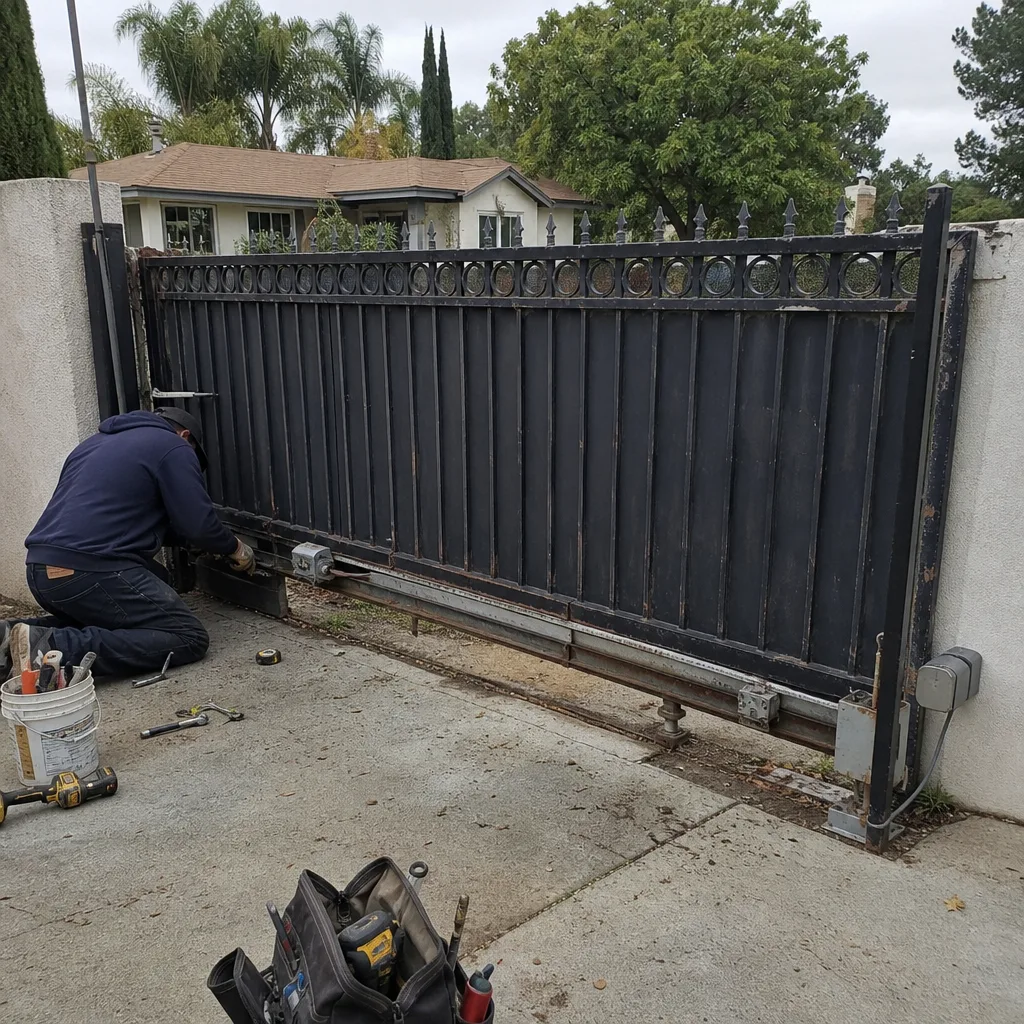 Before
 After
 Before
 After
 Before
 After