
Last updated October 31, 2026
 Wrought iron
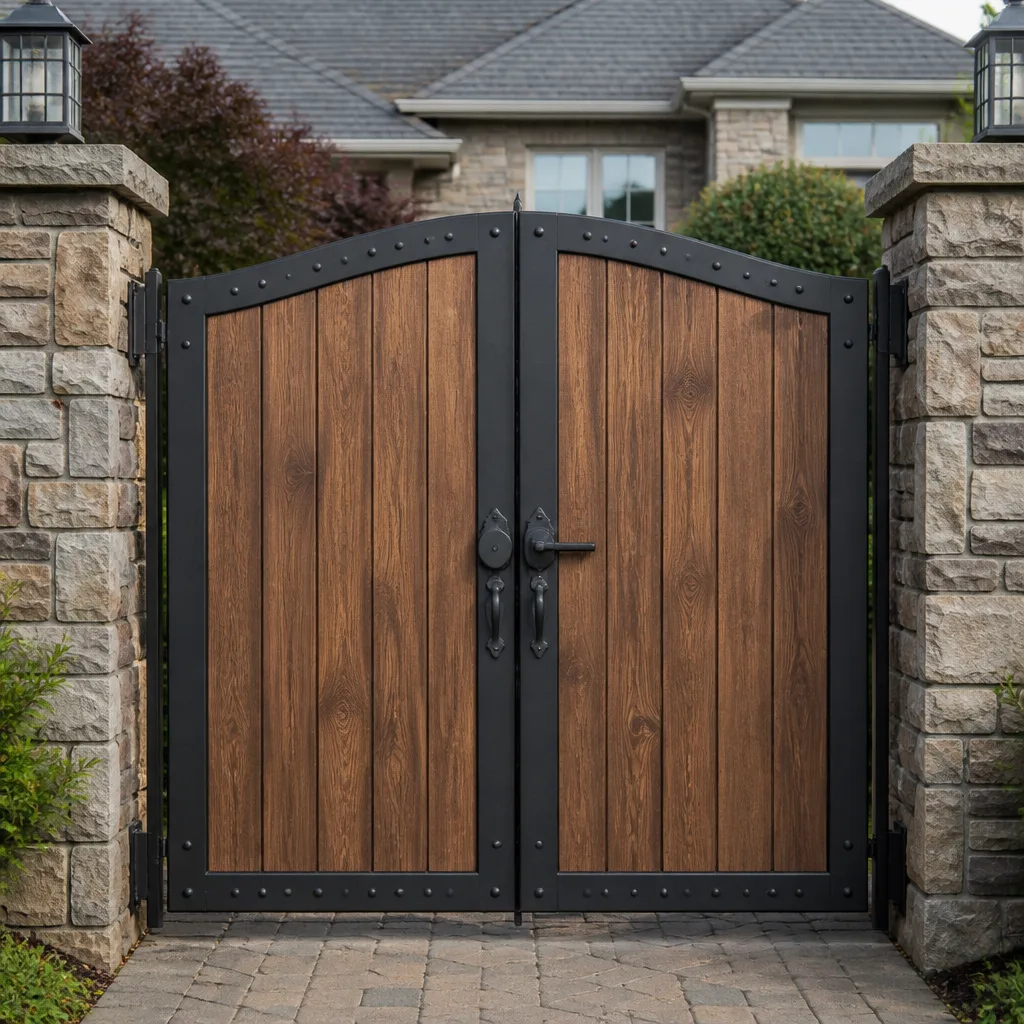 Wood & steel frame
 Farm & ranch
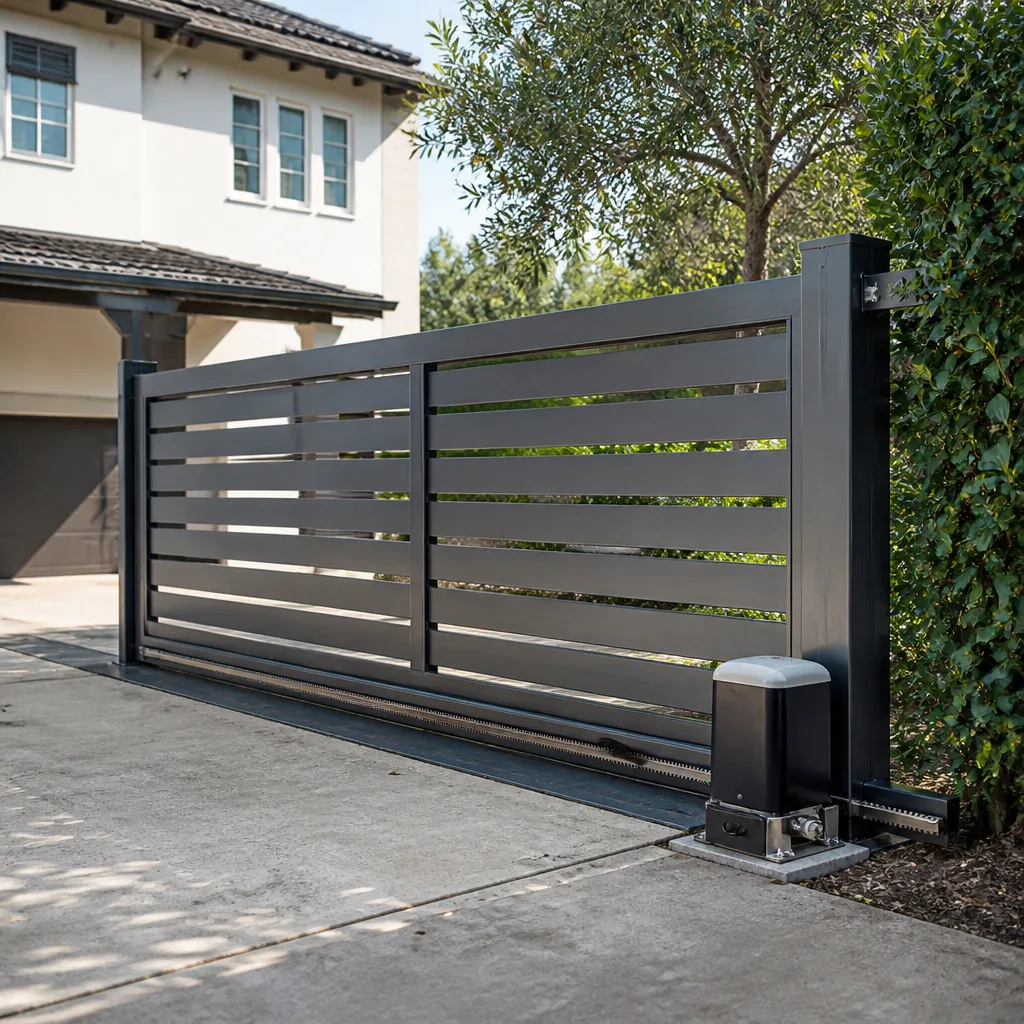 Sliding driveway gates
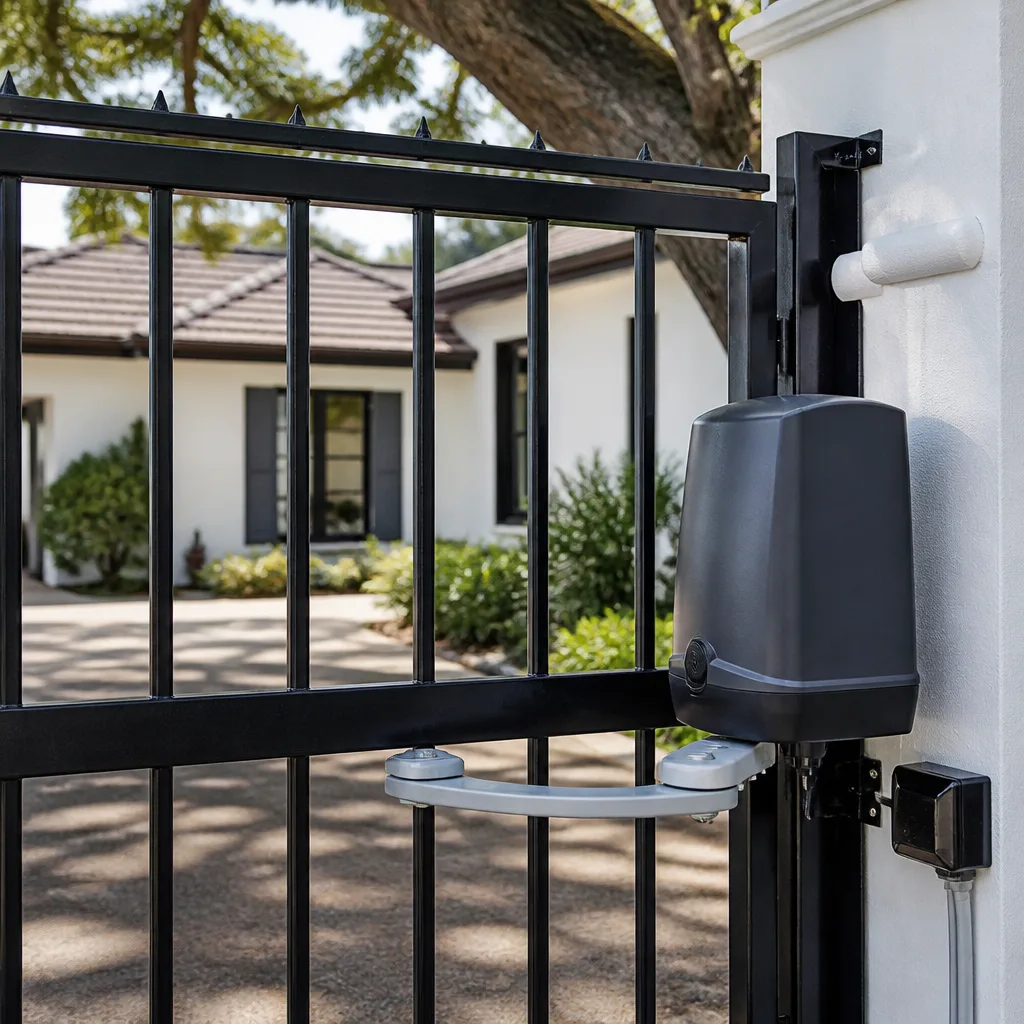 LiftMaster operators
Free on-site gate assessment - hinges, posts, and your LiftMaster or Nice gate operator checked before anything is quoted
The assessment is free and the quote is the invoice.
Get your free estimateDIY vs Professional Gate Repair: The Montclair Homeowner’s Decision Guide
A gate that won’t close isn’t like a dripping faucet. A dripping faucet wastes water. A gate that won’t close leaves your Montclair property open to whoever walks by, and if that gate is automated, it may also be holding enough tension or electrical current to hurt someone. Most homeowners don’t realize that Gate Repair services split into three distinct categories: jobs you can safely do yourself, jobs where a DIY attempt actively makes the professional repair more expensive, and jobs that are genuinely unsafe to touch without training. This guide draws those lines clearly, so you know exactly which category your gate problem falls into before you pick up a wrench or a phone.
Styles & brands we work with
Quick Answer
DIY gate repair in Montclair makes sense for mechanical adjustments like latch alignment, hinge lubrication, and track clearing. It does not make sense for anything involving operator electronics, control boards, safety sensors, or high-tension springs, because a wrong move can damage components worth hundreds of dollars or leave a gate that fails to stop when a person or car is in its path. The deciding factor is not your general handiness. It’s whether the failure involves safety systems or circuit boards.
Table of Contents
- Repairs That Are Genuinely DIY-Appropriate
- Repairs Where DIY Attempts Make Professional Work More Expensive
- Repairs That Are Unsafe to Attempt Without Training
- UL 325 and Why Safety Device Tampering Is a Liability Problem
- The Hidden Cost of DIY Work on Automated Systems
- What a Specialist Does in 90 Minutes That a Weekend Can’t Match
- When DIY Makes Complete Sense and We Won’t Talk You Out of It
- Montclair-Specific Factors: Climate, Code, and Common Local Failures
- Common Mistakes to Avoid
- When to Call a Professional
- Frequently Asked Questions
- The Bottom Line
Repairs That Are Genuinely DIY-Appropriate
Some gate problems are mechanical, visible, and low-stakes. If you can see the problem, reach it without a ladder or a tool that requires special training, and fix it without disabling a safety feature, it’s generally fair game for a Montclair homeowner. These fixes rarely take more than an hour and they don’t touch the parts of the gate that can injure you or destroy expensive equipment.
Here’s what falls into the genuinely DIY-appropriate category:
- Latch and strike plate alignment: A gate that won’t latch is usually a misaligned strike plate. Loosen two screws, reposition the plate, tighten. If the gate is a manual swing gate, this is a Saturday-morning job.
- Hinge lubrication: Squealing or stiff movement on a manual gate usually means dry hinges. A spray lubricant rated for outdoor metal parts solves most cases. Montclair’s dry summers and dusty conditions accelerate hinge wear, so we recommend doing this twice a year.
- Track clearing on sliding gates: Debris collecting in the track is the single most common cause of a sluggish slide gate in this area. Leaves, gravel, and the fine dust that blows through Montclair in the fall collect in the V-track and make a gate work harder than it should. Clear the track, check the rollers for visible damage, and test the gate by hand before turning the operator back on.
- Photo eye cleaning: Electric gate safety sensors get dirty. A film of dust on the lens can cause false reversal or refusal to close. Wipe the lens with a dry cloth. That’s it. Don’t adjust the alignment unless you know what you’re doing, because misalignment triggers the same symptoms and can’t be fixed by cleaning.
- Battery replacement in wireless keypads: If your keypad stops responding but the gate still opens from a hardwired button or remote, it’s usually a dead 9-volt or AA battery. Replace it and test. This is a five-minute job with no risk.
These are the repairs where DIY makes sense, and we’re not going to tell you otherwise. The rule of thumb: if the part you’re touching is mechanical, visible, and doesn’t attach to a spring, cable, or electrical component, you’re probably safe to proceed. If you’re unsure whether a part qualifies, look for the line where metal meets tension or wires begin. That’s where the DIY conversation ends.
Repairs Where DIY Attempts Make Professional Work More Expensive
This is the category most online advice gets wrong. There’s a set of gate repairs that look simple, fail tolerantly enough that a homeowner will try to fix them, and then leave behind a mess that a professional has to untangle before doing the work that was actually needed. In Montclair, where many homes have automated driveway gates installed years ago with no documentation, we see this pattern constantly.
Here’s what happens in practice with each type:
- Adjusting gate operator limit switches: When a gate stops three inches short of fully closed, the natural instinct is to open the operator and turn the limit adjustment screw a little. What homeowners don’t know is that on many operators, including models from LiftMaster and Mighty Mule, the limit-setting procedure is a sequence, not a single adjustment. Turning the wrong screw or pressing buttons in the wrong order puts the operator into programming mode, erases the stored travel limits, and now the gate won’t stop at the right place at all. The professional call that could have been a $150 limit adjustment is now a control board reprogramming or replacement call at three times the cost.
- Re-wiring a keypad or intercom at the wrong voltage: Gate access systems run on low voltage, usually 12V or 24V DC, but some older Montclair properties have line-voltage feeds running to the gate post. Homeowners who wire a new keypad by matching colored wires to the old ones can cross a 24V line into a 12V circuit and smoke a $300 – $600 control board in under a second. The keypad was a $50 part. The repair is now a board replacement plus rewiring.
- Replacing gate hinges on a heavy iron gate without support: A solid iron driveway gate weighs 400 to 800 pounds. If you remove both hinges without supporting the gate with a jack or a helper, the gate drops, twists the frame, and can pull the post out of alignment. Now you need hinge replacement, post repair, and possibly gate re-welding. The hinge job was manageable. The recovery is not.
- “Fixing” a gate operator that hums but doesn’t move: A humming operator usually means a failed capacitor or a seized gear train. Homeowners who open the operator housing to look, and in the process disconnect the manual release or knock the chain off the sprocket, leave the gate unable to be moved by hand in either direction. The professional who arrives then has to reassemble the operator internals before diagnosing the original problem. Each DIY step added billable time.
The pattern isn’t that homeowners lack skill. It’s that the skill they have applies to the wrong part of the problem. A gate operator is a system, not a collection of independent parts, and changing one variable without understanding the others creates cascading failures. If you’re looking at a repair and thinking “I’ll just take this apart and see what’s wrong,” you’re in the category where DIY costs more than calling first.
Repairs That Are Unsafe to Attempt Without Training
Some gate components store energy. Not metaphorically. A tension spring on a cantilever gate or a counterbalance spring on a vertical-lift gate holds hundreds of pounds of stored force. A gate operator capacitor holds a charge even after the power is cut. A chain drive under tension can take off a finger if it releases while you’re in the housing. These aren’t gray areas, and Montclair homeowners should treat them with the same respect they’d give an electrical panel or a gas line. Our Gate Repair Emergency Preparedness Guide for Montclair Homes covers how to handle these hazards safely.
Here’s the list. If your gate problem involves any of these, stop and call someone who works on gates for a living:
- Tension and counterbalance springs: Cantilever slide gates and some swing gates use heavy torsion springs to assist movement. Removing or adjusting these springs without the correct winding tools and procedures can result in a spring releasing at speed. The energy in a wound gate spring is enough to break bones and crush fingers. We will not give step-by-step instructions for spring work, and neither should any responsible website.
- Gate operator capacitors: The capacitor inside an electric gate operator stores charge even when the operator is unplugged. Touching the wrong terminals discharges it through you. Discharge a capacitor incorrectly and the operator board may also be damaged. This is trained electrical work, not mechanical tinkering.
- Entrapment protection devices (safety edges, photo eyes, contact sensors): UL 325 requires all automated gates to have entrapment protection that reverses or stops the gate when a person or object is detected. Adjusting, bypassing, or disconnecting these devices to stop a gate from falsely reversing is dangerous and, in many cases, illegal. We cover the specifics in the next section.
- Heavy gate panels off the track: A slide gate that has jumped its track weighs hundreds of pounds and can shift unpredictably as you try to lift it back. The same applies to a swing gate that has come off a hinge and is leaning. Without proper lifting equipment and a second person who knows where to stand, this is a crush-injury waiting to happen.
- High-voltage feed lines to the gate: Some older Montclair gate installations run 120V AC from the house to the operator post. If you’re opening a junction box and don’t know whether you’re looking at low-voltage control wiring or the line feed, you’re one wrong touch away from a shock. Test first, or leave it to someone who will.
The common thread is stored or flowing energy. Mechanical work on a static part is one thing. Work on a part that can move, shock, or release is another. If the part you’re about to touch is under tension, carries current, or holds charge, the window for safe DIY has closed.
UL 325 and Why Safety Device Tampering Is a Liability Problem
UL 325 is the national safety standard for automated gate operators. It requires every automated gate to have an entrapment protection system that reverses the gate when it encounters a person or object in its path. That means a contact sensor on the leading edge, a photo eye across the opening, or both, depending on the installation. These devices are not optional accessories. They are mandated safety equipment.
Here’s why this matters for the DIY conversation. When a Montclair homeowner’s gate starts reversing for no visible reason, the most common cause is a misaligned photo eye or a failing safety edge. The DIY temptation is to bypass the sensor or disconnect the safety edge so the gate stops reversing and starts closing reliably. That “fix” takes ten minutes and makes the visible symptom disappear.
What it also does is turn your gate into an unguarded moving wall. If that gate closes on a person, a child, a pet, or a vehicle and causes injury, the absence of functioning entrapment protection shifts liability onto you. Your homeowner’s insurance provider will ask questions. If the injury is serious, so will a lawyer. “I disconnected the safety sensor because it was annoying” is not a defense. It’s an admission.
The correct response to a gate that falsely reverses is not to defeat the safety system. It’s to find out why the safety system is triggering. Often the cause is a dirty lens, a misaligned photo eye, a failing safety edge, or a loop detector picking up interference. None of those fixes require bypassing anything. Each one is a straightforward diagnostic task for someone who works on gate operators for a living.
We see this pattern enough in Montclair to say it plainly: a homeowner who bypasses a safety edge has traded a reversible, inexpensive sensor repair for a permanent liability exposure. Do not do it. If your gate won’t close because the safety system is triggering, call a gate specialist and get the actual problem fixed. The sensor replacement will cost less than you expect. The liability you’re avoiding is worth far more than the service call.
The Hidden Cost of DIY Work on Automated Systems
The most expensive single component in an electric gate system is usually the operator control board. On systems from brands like DoorKing, Elite, and LiftMaster, a replacement board costs anywhere from $300 to $900, and that’s before labor. Here’s what most DIY gate repair guides don’t tell you: the board is also the component most easily destroyed by an inexperienced hand.
Control board damage typically happens in one of three ways:
- Cross-wiring during a “simple” repair: Homeowners often assume all gate wiring is low voltage and interchangeable. It’s not. Running 24V AC into a 12V DC terminal fries the board instantly. Reversing polarity does the same. The wire colors on older Montclair installations are faded and inconsistent, which makes guessing a dangerous game.
- Incorrect programming sequence: Most modern gate operator boards are programmed through a sequence of button presses and LED codes. Pressing buttons without understanding the sequence can reset the board to factory defaults, erase the learned limits, or activate features that conflict with the physical gate setup. Recovery requires a service call to reprogram from scratch, and in some cases, the board needs to be replaced because the programming port was damaged.
- Static discharge while handling the board: Control boards are sensitive to static electricity. A homeowner who removes a board to inspect it and touches the wrong pin without grounding themselves can damage a component that isn’t visibly blown. The board now fails intermittently, and the gate works, then doesn’t, then works, then doesn’t, until the board finally dies. Intermittent board failures are among the most frustrating and expensive problems to chase.
The economics waste is what stings. A $50 keypad replacement becomes a $600 board replacement because a wire landed in the wrong terminal. A $30 capacitor swap becomes a $400 board swap because the old capacitor was removed while the board was still connected. We’ve walked into Montclair homes where the homeowner had already spent more on DIY parts than the professional repair would have cost, and the gate still didn’t work. That’s the hidden cost of DIY on automated systems, and it’s not theoretical.
If your gate has an operator, the control board is the brains of the system. Treating it like a light switch you can rewire on a hunch is a fast way to turn a small repair into a large one. Our Electric Gate Repair in Montclair service exists specifically because these systems require specialist attention, not general handiness.
What a Specialist Does in 90 Minutes That a Weekend Can’t Match
The time argument is where the DIY calculation breaks down for most Montclair homeowners. A gate specialist who works on these systems every day carries three things a homeowner with YouTube access doesn’t: a diagnostic process, the right parts on the truck, and the experience to recognize failure patterns the first time they see them.
Here’s a concrete example from the field. A homeowner in northern Montclair calls us about a swing gate that opens but won’t close. On a Saturday, the homeowner had spent four hours watching videos, testing the remote, checking the keypad, and concluding the problem was the operator’s limit switch. He’d ordered a replacement part online and was waiting for it to arrive. When we showed up Monday, the diagnostic took eleven minutes. The issue was a photo eye that had been knocked out of alignment by a lawn service blower, sending a constant obstruction signal to the operator. The gate opened because opening doesn’t require the safety circuit to clear. It wouldn’t close because the safety circuit was reporting a blockage. The fix was a two-minute realignment. The homeowner’s ordered part was returned, and his gate worked that afternoon.
That’s not a story about superior intelligence. It’s a story about pattern recognition. Gate specialists see the same failure modes dozens of times a year across Montclair, the Inland Empire, and the surrounding area. A homeowner sees their gate’s failure mode once every few years. No amount of video-watching closes that gap on the first attempt.
Here’s what the 90-minute specialist visit typically includes:
- System-wide diagnostic: We don’t just confirm the symptom. We trace the entire signal path, from the remote or keypad through the receiver, to the control board, through the limit and safety circuits, to the motor, gear train, and gate movement. The goal is to find the root cause, not the first plausible explanation.
- Parts on hand: A specialist truck carries common replacement parts for gates from LiftMaster, DoorKing, Elite, Mighty Mule, and other major brands. When the diagnosis identifies a failed component, the replacement is often installed in the same visit, not ordered online with a week of lead time.
- Safety verification after the repair: After the fix, we run the gate through its full cycle and test every entrapment protection device to confirm the system still meets UL 325 requirements. A DIY repair doesn’t include this step because most homeowners don’t know it’s needed. It’s the step that keeps your gate safe for the people who use it.
The weekend DIY project sometimes works. When it doesn’t, it spends two days producing the same outcome a 90-minute service call produces. The difference is that one of those options also exposes you to safety risks during the process and leaves you without a gate if the repair goes sideways. For a thorough walkthrough of professional repair scope, see our Gate Repair in Montclair page.
When DIY Makes Complete Sense and We Won’t Talk You Out of It
This guide exists to draw the line honestly, and we’d be doing you a disservice if we claimed every gate problem needs a professional, though our more guides & resources can help you decide. Some of them don’t. In fact, there are several common gate tasks that a thoughtful Montclair homeowner should absolutely do themselves, both to save money and to build the baseline familiarity that helps you notice when something is actually wrong.
Here are the scenarios where we’ll flat out tell you to skip the service call:
- Routine maintenance on a manual gate: Lubricating hinges, tightening bolts, clearing track debris, and checking for rust spots on a manual gate are all homeowner work. Do it twice a year, and your manual gate will last significantly longer. Montclair’s dry climate is forgiving on rust but hard on rubber parts and lubricants, so use a lubricant rated for outdoor use in high-dust environments.
- Clearing photo eye lenses and obvious track debris on an electric gate: If your electric gate is reversing unexpectedly and you can see dust on the photo eye lenses, clean them. If the slide track is full of leaves and gravel, clear it. These are maintenance tasks, not repairs, and a clean lens fixes a lot of false reversal problems. What you shouldn’t do is then decide the sensor itself is faulty and start disconnecting things. The line is cleaning what you can see, not rewiring what you can’t.
- Replacing a wireless keypad or remote battery: We covered this earlier, but it bears repeating: a dead battery is a battery problem, not a gate problem. Replace it. If the keypad still doesn’t work with a fresh battery, then it’s a programming or wiring issue, and now you call us.
- Documenting your gate’s behavior before calling: The single most useful thing a homeowner can do is keep a simple log. When the gate misbehaves, note the day, the time, the weather, whether it opened or closed, what mode it was in, and any unusual sounds. That information cuts diagnostic time significantly and helps us arrive at the right fix faster. This is DIY work that genuinely helps and costs you nothing.
The principle is straightforward: DIY is for maintenance and observation. Once the problem requires diagnosis, disassembly, or disconnection of a safety device, the math changes. We work on virtually every major gate brand, and we’d rather see a Montclair homeowner do their own maintenance well than attempt a repair poorly. The guide at Gate Installation in Montclair covers what a full replacement involves if your gate has reached the end of its serviceable life.
Montclair-Specific Factors: Climate, Code, and Common Local Failures
Montclair’s environment shapes the gate failures we see most often. The inland climate, the dust, the temperature swings, and the mix of older and newer housing stock all create predictable patterns. Understanding these patterns helps homeowners know what to watch for and when a problem is likely to escalate.
Dust and fine grit are the biggest environmental factor in Montclair. The same winds that blow through the foothills carry fine particulate that works its way into gate tracks, roller bearings, and operator housings. We regularly see slide gates in Montclair that have accumulated enough grit in the track to double the load on the operator. That excess load shortens motor life and causes the operator to trip its thermal overload. The homeowner notices a gate that moves slower than it used to, or one that stops midway and won’t restart until it cools down. The root cause is preventable with routine track cleaning.
Temperature swings across the seasons put stress on wire connections and plastic components. The expansion and contraction cycle loosens terminal screws over time, creating intermittent electrical faults that are notoriously hard for a homeowner to trace. A gate that works in the morning but not in the afternoon is often showing a loose connection that only fails when the temperature rises and the wire expands. This is a classic “intermittent” problem that DIY methods rarely resolve, because the homeowner is testing the gate at the wrong time of day.
Local code and permitting apply to gate installations in Montclair, particularly automated gates that cross a property line or affect access to a public right-of-way. The city and county requirements vary by zone and parcel. A professional gate installer is familiar with the local process, but a homeowner who installs an automated gate without the proper review can face a stop-work order or a fine. This is not the fun part of gate ownership, but it’s a real part, and it’s one more reason the DIY math gets complicated for full installations.
Older Montclair housing stock often includes gates installed decades ago with undocumented wiring. When a homeowner opens the junction box on one of these installations, the wire colors don’t match any modern standard, and the operator may be a discontinued model with no available documentation. Attempting a repair by trial and error on this kind of system is how control boards get destroyed. The professional approach in this scenario is to map the wiring before touching anything, which requires a multimeter and the experience to interpret the readings.
If you’re dealing with an electric gate problem in Montclair, the local context matters. We’ve seen enough of these failures across the city to recognize the patterns quickly, and that pattern recognition is exactly what shortens the time from diagnosis to repair.
Common Mistakes to Avoid
- Bypassing a safety sensor to stop false reversals: This is the fastest way to solve a symptom and create a liability. The false reversal has a cause, and disconnecting the sensor doesn’t fix it; it just removes the one thing protecting people from a moving gate. Fix the sensor, never the symptom.
- Assuming wire colors match modern standards: On older Montclair installations, wire colors are faded, non-standard, or reused across circuits. Matching a new part by color alone is how boards get fried. Test voltage and continuity before connecting anything.
- Ordering a replacement part before a diagnosis is confirmed: Homeowners regularly order limit switches, remote receivers, and capacitors based on an internet search before the actual problem has been identified. When the part arrives and doesn’t fix the gate, the money is gone and the real problem remains. Diagnose first, purchase second.
- Disassembling an operator housing “just to look”: The inside of a gate operator contains tensioned chains, charged capacitors, and circuit boards sensitive to static. Opening it up without a plan exposes you to injury and leaves the operator vulnerable to damage even if you put it back together. If you can’t diagnose from the outside, it’s time for a professional.
- Ignoring a gate that makes a new noise: Grinding, chattering, or a change in pitch while the gate moves is an early warning sign of a failing gear, a worn roller, or a misaligned chain. Montclair homeowners who wait until the gate stops completely turn a $200 repair into a $1,200 replacement. New noises mean something changed. Pay attention.
- Using the wrong lubricant on the wrong surface: Spraying WD-40 into an operator motor or onto a control board is not a repair and can attract dust that makes the problem worse. Gate tracks need a dry lubricant. Bearings need a light machine oil. Plastic gears need a synthetic grease. The wrong product in the wrong place creates more problems than it solves.
- Attempting to adjust gate travel limits after a power outage: Power outages in Montclair during the summer months can reset operator limits. The fix looks like a simple adjustment sequence, but on many operators the reprogramming process is specific and unforgiving. A homeowner who enters the programming mode without knowing the sequence can erase the factory settings and make the gate inoperable until a professional restores it.
When to Call a Professional
Call a gate specialist when the problem involves any of the following: automated operator failure, control board error codes, safety sensor or safety edge malfunction, tension spring repair, a gate that has come off its track, wiring problems you can’t identify by voltage testing, or any repair where the gate is currently not secure. These are the scenarios where the risk of DIY exceeds the reward, and where a specialist saves you time and money in the outcome rather than the quote.
Kensington Gate Repair works on virtually every major gate brand, including LiftMaster, DoorKing, Elite, and Mighty Mule, and we approach every repair with brand-agnostic diagnostics. That means our recommendation is based on what your system actually needs, not which brand we happen to stock. We’re electric gate specialists, diagnosing and fixing the problem right the first time, and one call covers both repair and installation. Kensington Gate Repair offers free estimates in Montclair. Call (833) 320-4513 to schedule one.
Frequently Asked Questions
You can do maintenance on a gate opener, like cleaning photo eye lenses and replacing keypad batteries, but repairing the opener itself is not DIY work. Gate openers contain control boards that are easily damaged by incorrect wiring or static discharge, and the safety systems inside the operator are mandated by UL 325 and should not be altered by anyone without proper training.
Professional gate repair in Montclair ranges from roughly $125 to $350 for common mechanical fixes like latch alignment, hinge repair, and photo eye realignment, while control board replacement and operator rebuilds typically run $400 to $1,200 including parts and labor. The price depends on the failure type and your specific operator brand. Call (833) 320-4513 for an exact quote; estimates are free.
The most common gate problem in Montclair is a slide gate track clogged with dust and grit. The dry, dusty climate means tracks accumulate debris faster than homeowners expect, and the resulting load causes operators to work harder and trip thermal overloads. Routine track clearing prevents most of these failures.
An electric gate that opens but won’t close is usually seeing an obstruction signal from the photo eye or safety edge. The safety system is designed to prevent closing when something is in the path, and a misaligned sensor or dirty lens can send that signal constantly. Cleaning the lens is a good first step; if the problem persists, the sensor alignment or wiring needs professional diagnosis.
No. Bypassing a gate’s safety sensors removes the entrapment protection that UL 325 requires on all automated gates, and it creates serious liability for you if the gate injures a person or pet. The correct response to a falsely reversing gate is to repair the sensor that’s causing the problem, not to defeat the safety system. A gate specialist can fix the sensor properly.
Most common gate repairs take between 60 and 120 minutes once a technician is on site, assuming parts are on hand. Diagnostics typically take 10 to 30 minutes, and many mechanical fixes like latch alignment or photo eye realignment are completed within the first hour. More involved repairs like control board replacement can take longer depending on access and wiring condition.
We work on virtually every major gate brand, including LiftMaster, DoorKing, Elite, and Mighty Mule, across both residential and commercial installations. Rather than being locked into one manufacturer, we diagnose each system on its own terms and repair what’s actually failing. If you’re not sure what brand your operator is, we’ll identify it during the initial assessment.
The Bottom Line
The DIY vs. professional gate repair question isn’t answered by your confidence level. It’s answered by the failure type. Mechanical maintenance on manual components is homeowner territory. Electrical, spring, safety, and operator-related failures are professional territory, and crossing that line carries costs far beyond the service call. A resident with a clear track and a working latch needs no professional help. A Montclair homeowner with an automated gate that reverses, hums without moving, or sets off safety alerts needs a specialist who can diagnose the system correctly and fix it right the first time. Know which category you’re in, and the decision makes itself.
Whether you need a repair or a full Gate Installation in Montclair, call (833) 320-4513 for a free estimate. We’re Kensington Gate Repair home, your Montclair gate specialists.
Written by the team at Kensington Gate Repair, serving Montclair since 2011.
See the difference
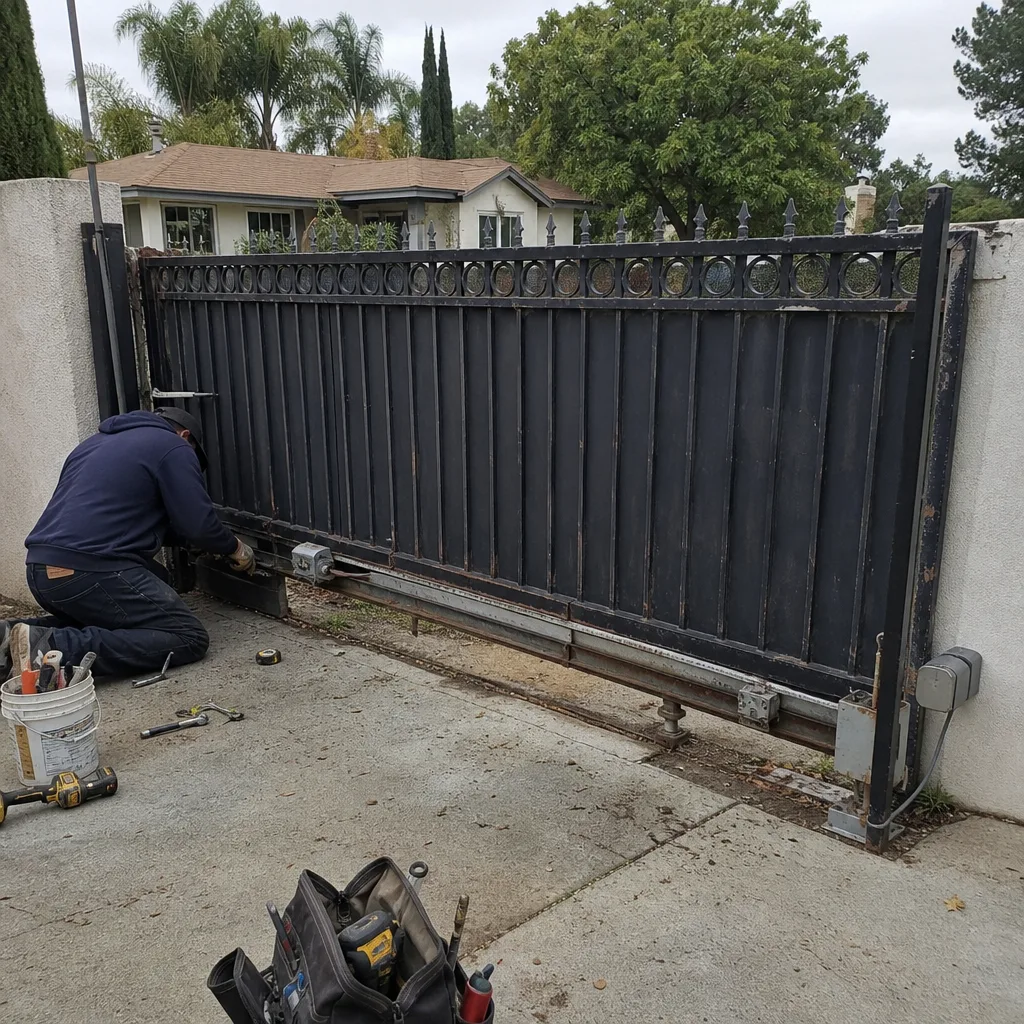 Before
 After
 Before
 After
 Before
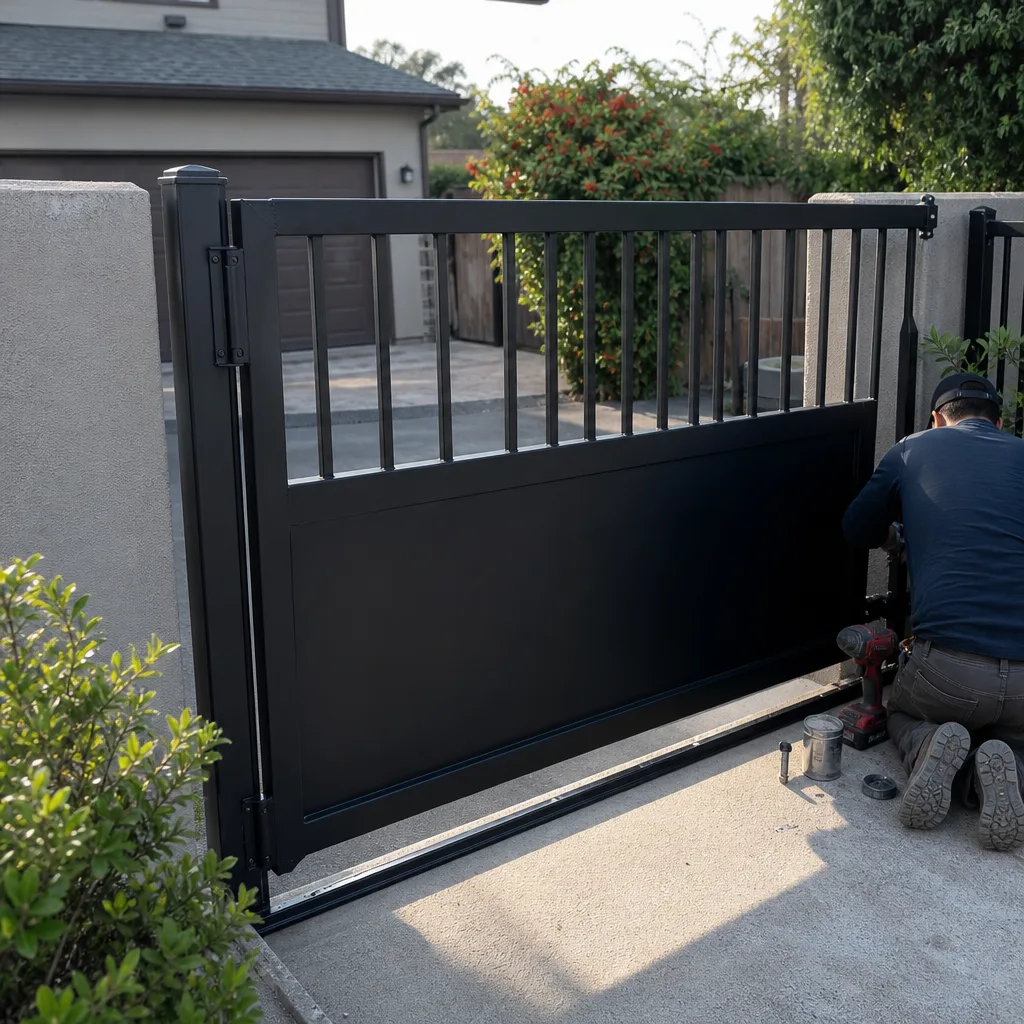 After