
Last updated October 31, 2026
 Wrought iron
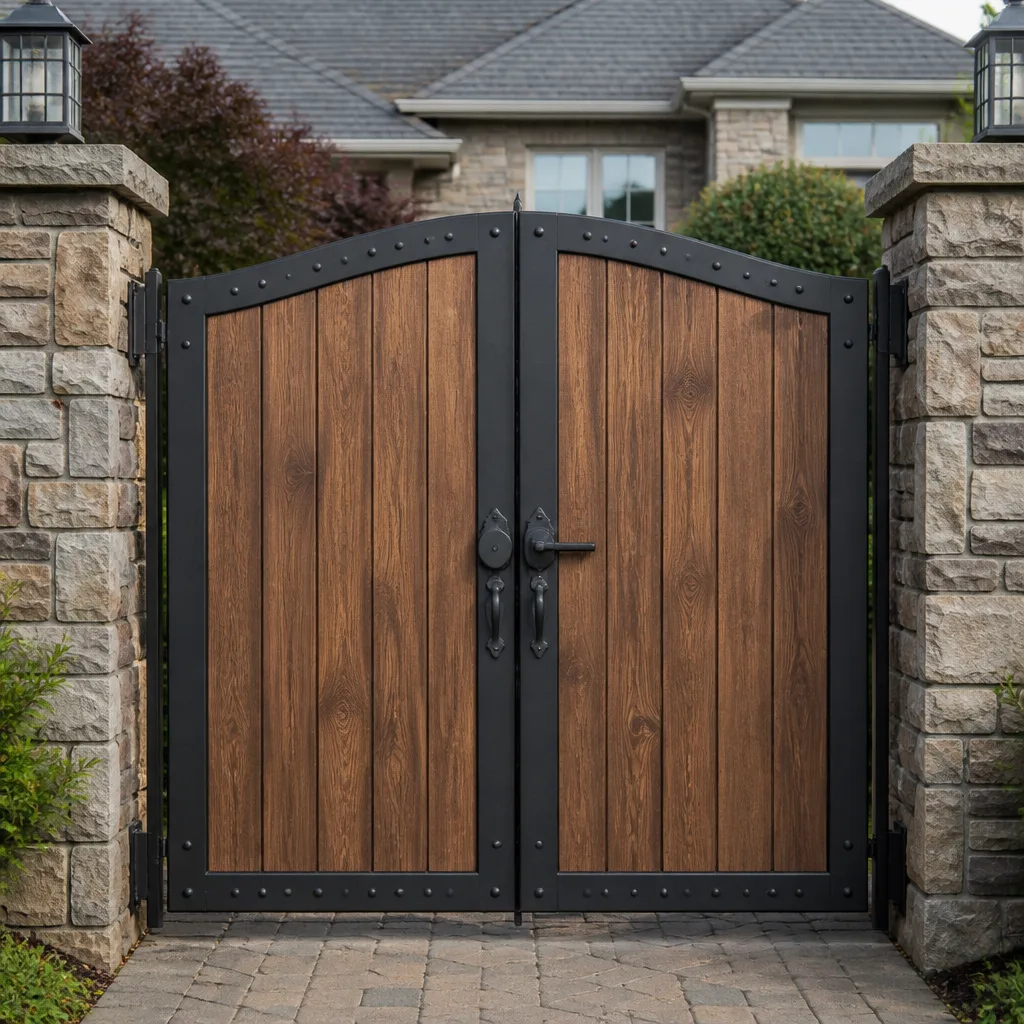 Wood & steel frame
 Farm & ranch
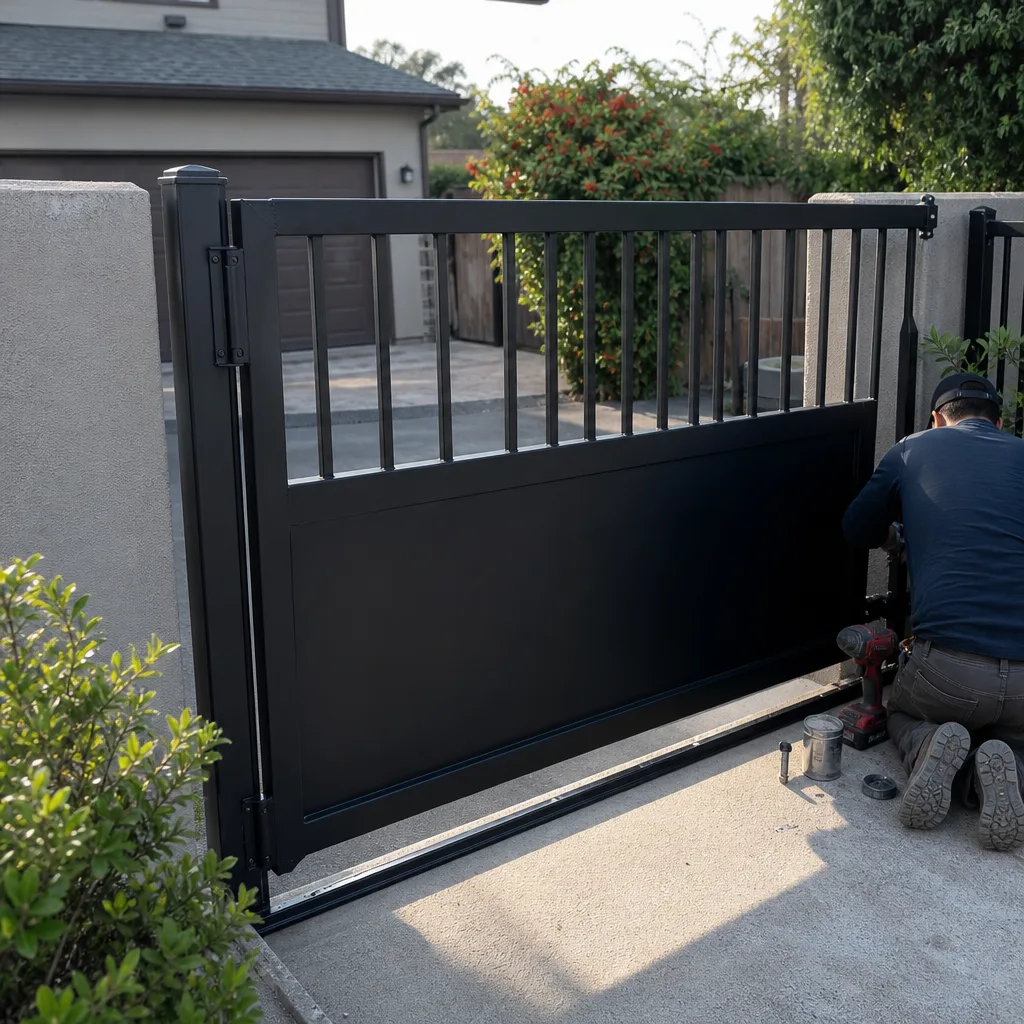
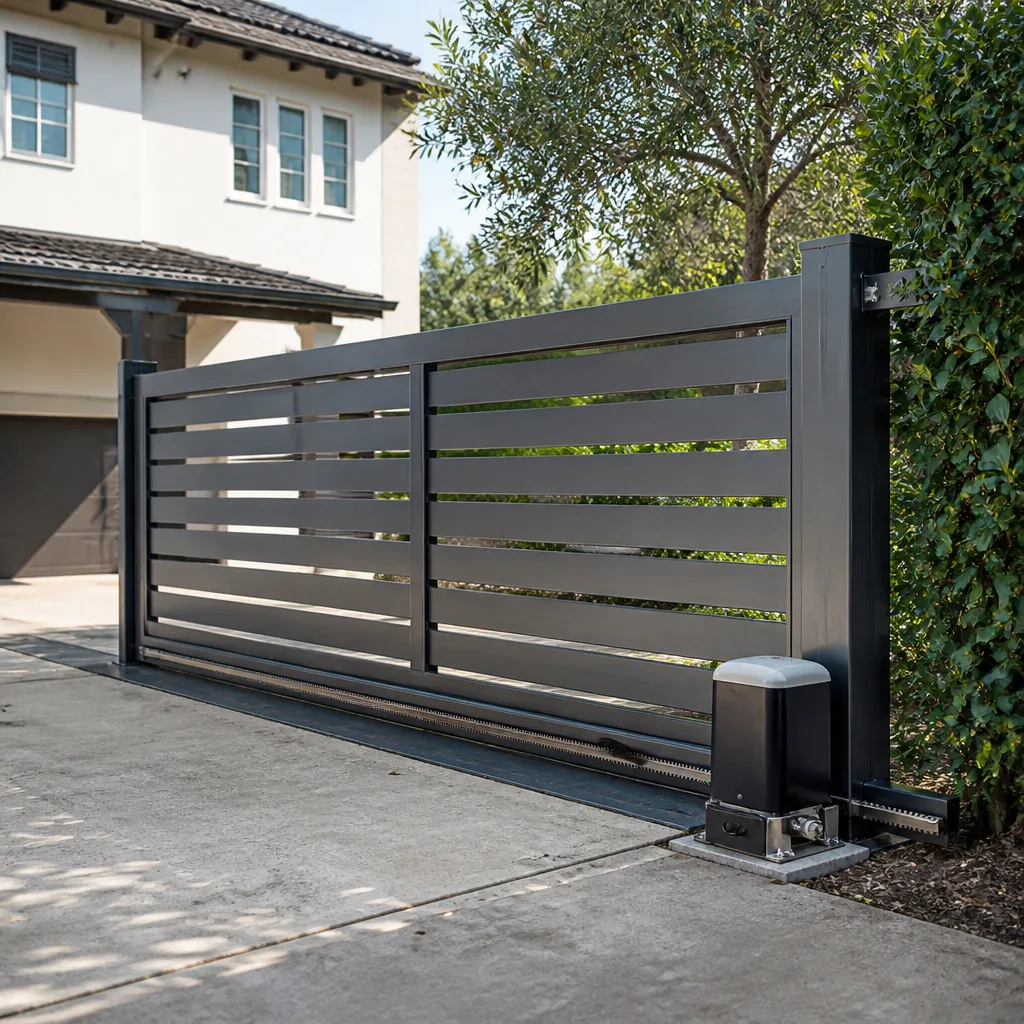 Sliding driveway gates
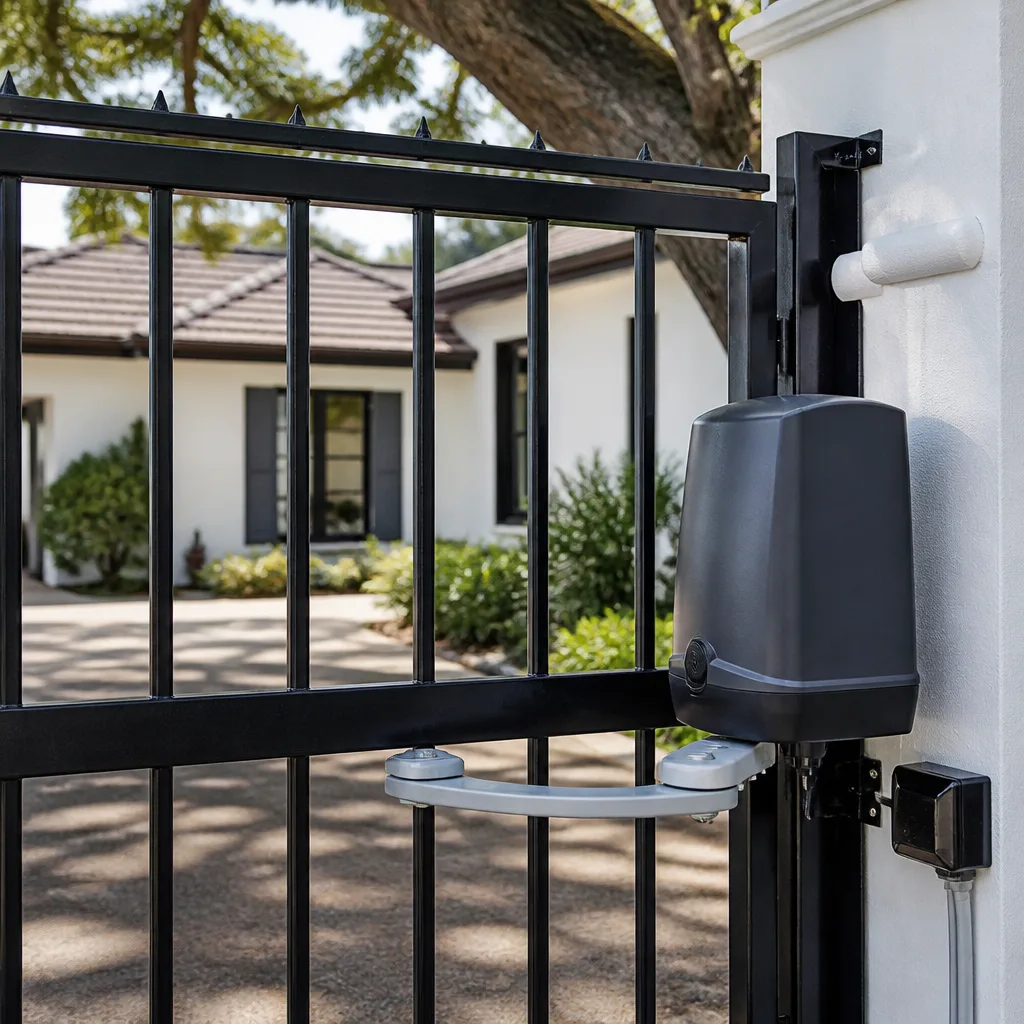 LiftMaster operators
Free on-site gate assessment - hinges, posts, and your LiftMaster or Nice gate operator checked before anything is quoted
The assessment is free and the quote is the invoice.
Get your free estimateThe Complete Gate Repair Guide for Montclair Homeowners
A gate that works perfectly in coastal San Diego will behave differently on a Montclair hillside property. The soil shifts, the temperature swings, and the dust load are all higher here, and most repair guides ignore every one of those variables. This guide is different. We’ll walk through every major gate system component, explain what fails in Montclair specifically, and give you the framework to decide whether a repair will last six months or a decade. By the end, you’ll know exactly what to ask any gate technician before they touch your property.
Quick Answer
Gate repair in Montclair CA typically costs between $180 and $1,400 depending on whether you’re dealing with a manual hinge, a sliding gate track, or an electric operator control board. Most common repairs (hinge replacement, sensor realignment, track adjustment) can be diagnosed in under an hour. The real question isn’t whether a gate can be fixed – it’s whether the fix addresses the root cause tied to Montclair’s seismic micro-movement, dry heat, and hillside grading, or just patches the symptom until the next failure. See our DIY vs Professional Gate Repair breakdown to decide which path fits your situation.
Styles & brands we work with
Table of Contents
- Why Montclair Gates Fail Differently Than Coastal Gates
- Component-by-Component Breakdown: What Each Part Does and How It Fails
- The Six-Month Repair vs. the Decade Repair
- Repair vs. Replace: A Decision Framework for Montclair Properties
- When Montclair Requires a Permit for Gate Work
- Hillside Grading and Gate Geometry: What Montclair Properties Face
- Common Mistakes to Avoid
- When to Call a Professional
- Frequently Asked Questions
Why Montclair Gates Fail Differently Than Coastal Gates
Montclair sits in the Pomona Valley, east of the San Gabriel Mountains, where summer temperatures routinely cross 100 degrees and the Santa Ana winds push dry, abrasive dust through every mechanical gap. That combination does specific things to gate hardware that you won’t find in coastal repair manuals.
First, the heat. Steel and aluminum expand at different rates. A gate installed in January will have a different physical dimension in August. When hinges, tracks, and gate frames are bolted together from dissimilar metals, the expansion and contraction cycle works those fasteners loose over time. We see this constantly on older swing gates in Montclair’s northern neighborhoods, where the temperature swing between a cold winter morning and a 105-degree August afternoon can be forty degrees or more in a single day.
Second, the seismic micro-movement. Montclair sits near the Chino Fault and the San Jose Fault. Even without a major earthquake, the region experiences constant low-level ground movement. Gates anchored to concrete pads or posts set in shifting soil develop misalignment slowly over time. A gate that closed perfectly two years ago may now drag on its latch post by a quarter inch. That’s not a hinge problem. That’s a ground movement problem.
Third, the dust. Santa Ana winds carry fine particulate from the high desert straight into the Inland Empire. That dust gets into operator housings, coats limit switches, and grinds against roller bearings. For electric gates, dust accumulation on photocell lenses causes false obstruction readings, which is why Montclair electric gates sometimes reverse for no visible reason.
Understanding these three forces – heat cycling, seismic drift, and dust loading – changes how you approach any gate problem. A technician who treats a misaligned gate as a simple hinge wear issue will be back in six months. A technician who understands the ground beneath the gate will fix it for a decade.
Component-by-Component Breakdown: What Each Part Does and How It Fails
Every gate, whether manual or electric, is a system of interconnected parts. Here’s what each component does, what its failure looks like, and the Montclair-specific conditions that accelerate that failure.
Hinges and Pivot Points
Hinges bear the full weight of the gate leaf and translate that load into the post or column. A residential swing gate in Montclair might weigh 200 to 600 pounds. Over thousands of open-close cycles, hinge pins wear, bushings deform, and mounting bolts elongate their holes. The first sign is a gate that sags or drags. The second sign is a gate that swings freely in one direction but binds in the other.
On hillside properties, hinge failure happens faster. A gate installed on a slope carries uneven load distribution, which means one hinge takes more stress than the other. When that overloaded hinge fails, it often pulls the mounting bolts out of the post. Fixing that properly means repairing the post, not just swapping the hinge.
Track and Rollers (Sliding Gates)
Sliding gates ride on a ground track or hang from an overhead track, depending on the system. Ground tracks in Montclair collect dust, leaves, and debris year-round. When a V-track fills with compacted dirt, the gate’s rollers climb out of the groove, the gate shudders, and eventually the rollers damage the track itself.
The fix is not just cleaning the track. A track that has been run with debris in it for months will have deformed edges. Replacing rollers without resurfacing the track means the new rollers fail faster than the old ones. We check track wear with a straight edge before recommending any roller replacement.
Gate Operators (Electric Gates)
The operator is the motor and gearbox assembly that moves the gate. LiftMaster, FAAC, BFT, and Elite all make solid operators, but they fail in predictable ways in Montclair. The most common failure we see is capacitor degradation from heat exposure. A capacitor inside an operator housing that bakes at 140 degrees all summer will lose its ability to start the motor. The symptom is a gate that hums but doesn’t move, or moves slowly, or works in the morning but not in the afternoon.
The second most common operator failure is limit switch drift. Limit switches tell the operator when the gate has reached its open or closed position. In dusty environments, micro-switch contacts get fouled or the adjustable cams slip. The gate opens too far or not far enough, which then triggers the safety reverse mechanism.
Control Boards
The control board is the brain of an electric gate system. It reads inputs from the loop detector, the photocells, the keypad, and the remote receiver, then sends commands to the operator. Control board failures in Montclair are frequently caused by power surges during summer thunderstorm season or by ant colonies nesting inside the housing. Ants are attracted to the warmth and build nests that short out circuits.
A failed control board rarely shows physical damage. The gate simply stops responding to commands, or responds intermittently, or cycles through safety reversals without cause. Diagnosing a control board issue requires testing each input independently to isolate whether the board is bad or whether a sensor is sending a false signal.
Loop Detectors and Vehicle Sensors
Loop detectors sense a vehicle over an inductive loop wire buried in the driveway. When a car passes over the loop, the metal changes the loop’s inductance, and the detector triggers the gate to open or stay open. Loop failures in Montclair happen two ways: the loop wire breaks from ground movement, or the loop detector’s sensitivity drifts out of calibration.
A broken loop is often indistinguishable from a bad detector until you test for continuity. We see many cases where a technician replaced a working detector because the loop wire was the actual failure point. That’s a $400 repair that should have been a $60 wire splice.
Photocells and Safety Edges
Photocells are the small transmitter-receiver pairs mounted on either side of the gate opening. They project an invisible beam; if anything breaks the beam while the gate is closing, the gate reverses. In Montclair, dust and spider webs on the lenses cause more false reverses than any actual obstruction. Cleaning the lenses is a maintenance item, not a repair. But if a photocell lens is scratched or the internal LED has dimmed, the beam weakens and the system becomes unreliable. Replacement is the only fix.
Safety edges are pressure-sensitive strips on the leading edge of the gate. When the gate contacts something, the edge deforms and sends a stop signal. Over time, the rubber edge hardens in the heat and cracks. A cracked safety edge is a genuine safety hazard and should be replaced immediately.
Intercom and Access Control Systems
Montclair HOAs and multi-unit properties use intercom systems, keypads, or telephone entry systems to control gate access. These systems fail in specific ways: keypad membranes crack from UV exposure, intercom speakers degrade from moisture ingress, and telephone entry modules lose programming after power outages.
Access control failures are often misdiagnosed as operator failures. A gate that won’t open from the keypad but opens fine from the remote is not an operator problem – it’s a keypad or wiring problem. Isolating which input has failed is the core of accurate diagnostics.
The Six-Month Repair vs. the Decade Repair
Here’s the difference that matters. A six-month repair fixes the symptom. A decade repair fixes the root cause. Both might cost $300 today, but the six-month repair will cost another $300 in six months, and another $300 after that.
Example from a Montclair HOA property: a sliding gate was binding mid-travel. The previous technician had adjusted the chain tension, which helped for a while. When we inspected the gate, we found the rear track support had settled three-eighths of an inch because the concrete pad underneath was cracking. Adjusting the chain masked the misalignment. Replacing the track support and repairing the pad fixed the underlying problem. The HOA had spent $700 on chain adjustments over two years. The actual fix cost $1,200 once.
Another example: a residential swing gate on a hillside lot kept blowing the operator fuse. A technician replaced the fuse twice, then the operator. The problem was the gate leaf had drifted out of balance on its hinges from seismic movement, causing the operator to work harder and draw more current. Once the hinges were repaired and the gate rebalanced, the new operator worked normally. The lesson: replace the part that failed, but always ask why it failed.
This principle applies across brands. A Mighty Mule operator on a 400-pound gate will burn through its gearbox if the gate is out of balance. An Elite operator on a properly balanced gate will run for a decade with routine maintenance. The operator brand matters less than whether the mechanical foundation is sound.
Repair vs. Replace: A Decision Framework for Montclair Properties
Here’s a practical framework we use when advising Montclair homeowners whether to repair or replace a gate. There are five questions.
- How old is the gate? A well-built steel gate can last 20 to 30 years in Montclair’s climate. But the operator, control board, and access peripherals typically last 8 to 15 years. If your gate is 25 years old and the operator has failed, replacing the entire system may cost less in the long run than repairing a legacy operator with discontinued parts.
- What is the cumulative repair history? If you’ve spent $500 or more on gate repairs in the past two years, add up the total. If you’re approaching 50% of a new gate’s installed cost, replacement becomes the better financial decision. A new gate resets all the wear components at once.
- Is the gate structurally sound? Surface rust, minor dents, and cosmetic wear don’t justify replacement. But if the gate frame has significant rust-through, if the posts are leaning, or if the gate leaf has sagged more than a half inch from original geometry, patching structural problems will not hold. Structural failures always recur.
- Does the gate still meet your needs? Montclair households change over time. If you’ve added a second car, a wider driveway, or need a gate that opens faster for a busy household, that’s a different calculation. Upgrading an old gate to a new system with modern access control may be worth more than repeated patch jobs.
- Which drive type is it? Swing gates are generally simpler and cheaper to repair than sliding gates because they have fewer moving parts. But swing gates on hillside properties in Montclair require more frequent hinge maintenance. Sliding gates handle slopes better but cost more to repair when the track fails. Factor your specific geometry into the decision.
If the gate is less than 10 years old, structurally sound, and the repair cost is under $800, repair makes sense in most cases. If the gate is over 15 years old with two or more significant repairs in the last three years, start getting quotes for full Gate Installation in Montclair.
When Montclair Requires a Permit for Gate Work
Montclair requires a permit for certain gate projects. Understanding which ones saves you from fines and failed inspections.
A permit is generally required when a gate installation involves new concrete footings, electrical work, or changes to a driveway approach near the public right-of-way. The City of Montclair planning department reviews projects that affect setback requirements, height restrictions, and pedestrian access. Electric gates that include vehicle loop detectors cut into the driveway, which triggers a public works review if the driveway connects to a city street.
A permit is typically not required for direct replacement of an existing operator, control board, or hinge set when no structural or electrical changes are involved. Replacing an existing gate with a gate of the same dimensions and footprint usually falls under routine maintenance. But if you’re changing the gate’s height, width, setback, or adding a new electrical run, that’s a project that needs city review.
HOA-governed properties in Montclair add another layer. Many Montclair HOAs have their own architectural review process that runs parallel to city permitting. We’ve seen HOAs require gate style approvals even when the city permit process doesn’t apply. If you’re in an HOA, check your CC&Rs before scheduling any gate work.
For new electric gate installations, the electrical portion requires a licensed electrician or a gate contractor working under a licensed electrician. Montclair’s building department inspects the final installation to verify safety edges, photocell placement, and emergency release mechanisms meet current code.
Hillside Grading and Gate Geometry: What Montclair Properties Face
Montclair’s hillside neighborhoods create gate geometry challenges that flat-land properties never encounter.
The first challenge is gate swing direction on a slope. A swing gate that opens uphill requires significantly more operator force than one that opens on flat ground. If the gate is undersized for the grade, the operator strains on every cycle. We calculate gate weight and grade angle before recommending any operator for a hillside property.
The second challenge is drainage. Montclair’s winter rains channel water down slopes and through gate openings. Gates that sit in the water path develop rust at the bottom rail faster than gates on flat lots. Proper installation includes drainage provisions so water doesn’t pool at the base of the gate or the operator pad.
The third challenge is post stability. Posts on hillside properties are set into ground that moves. Deeper footings, steel-reinforced concrete, and proper drainage around the post base all extend gate life. A post that shifts half an inch changes the entire gate’s alignment and stresses every hinge and latch point.
For sliding gates on slopes, the track must be graded consistently or the gate will drift when the operator releases. A sliding gate on a grade that varies more than half an inch across its run will bind at the transition points. Leveling a sliding gate track on a Montclair hillside is precision work, not a rough adjustment.
These factors explain why Gate Repair in Montclair often requires more involved fixes than comparable work on flat Inland Empire lots. The gate itself may be identical, but the ground it sits on is not.
Common Mistakes to Avoid
- Adjusting the symptom instead of the cause. Tightening a chain, adjusting a limit switch, or re-aligning a latch without investigating why the gate drifted in the first place is a temporary fix. In Montclair, the cause is usually ground movement, heat expansion, or dust contamination. Fix the cause, not the symptom.
- Replacing the operator before checking the gate mechanics. A new operator on an unbalanced or misaligned gate will fail prematurely. The operator is the last component to replace, not the first. Check hinges, tracks, rollers, and gate balance before condemning a motor.
- Ignoring photocell and safety edge maintenance. In Montclair’s dust, photocell lenses need regular cleaning. A dirty lens triggers false safety reversals, which many homeowners interpret as a failing operator. Clean the lenses before calling a technician.
- Buying parts based on price rather than compatibility. Universal-fit parts are a gamble. A universal remote, a generic control board, or an off-brand hinge set may work briefly but fail under Montclair’s heat and dust conditions. Match parts to the specific gate system, not to the lowest bid.
- Skipping the permit when one is required. Unpermitted gate installations in Montclair can trigger code enforcement, especially when the gate affects the public right-of-way or creates a safety hazard. Verify permit requirements before any structural or electrical work begins.
- Treating a gate as a static object. Gates move, settle, and wear. A gate that was aligned perfectly at installation will drift over time in Montclair. Schedule a basic inspection every 12 to 18 months to catch hinge wear, track deformation, and sensor misalignment before they become failures.
- Assuming all gate technicians understand electric gates. Manual gate repair and electric gate repair are different skill sets. Electric gates involve control boards, loop detectors, safety circuits, and programming. A technician who only adjusts manual gates is not equipped to diagnose an electric gate problem. Ask whether the company specializes in Electric Gate Repair in Montclair.
When to Call a Professional
There are situations where a gate problem is beyond inspection and adjustment. If your electric gate trips its circuit breaker repeatedly, that’s an electrical fault that needs professional diagnosis. If the gate has come off its track, forcing it back into place can cause further damage and creates a falling hazard. If the operator is making grinding noises, the gearbox is failing and continued operation will destroy the motor. If a safety edge is cracked or a photocell is not functioning, the gate is not safe for use until repaired. Any gate that weighs more than 300 pounds, any spring-loaded mechanism under tension, or any problem involving live electrical connections should be handled by a trained technician with proper equipment. Kensington Gate Repair offers free estimates in Montclair – call (833) 320-4513.
Frequently Asked Questions
Gate repair in Montclair typically costs between $180 and $1,400 depending on the component. Hinge replacement runs $180 to $400, track and roller replacement $250 to $600, operator replacement $600 to $1,400 including labor, and control board replacement $300 to $700. Electric gate diagnostics add $75 to $150 when the problem isn’t immediately obvious. Call (833) 320-4513 for an exact quote – estimates are free.
For most common gate repair jobs in Montclair, yes. Hinge replacements, sensor realignments, remote programming, and many operator repairs can be completed the same day when parts are in stock. Control boards for less common brands may require a 2 to 3 day parts order. We’ll tell you the timeline before any work begins.
Kensington Gate Repair works on virtually every major gate brand, including LiftMaster, FAAC, BFT, Linear, Viking, Ghost Controls, DoorKing, Elite, and Mighty Mule. For more guides & resources on maintaining any of these systems, visit our blog. That breadth matters because recommendations are made for your system, not for a brand we happen to sell.
A gate that reverses for no visible reason in Montclair usually has a dirty photocell lens, a misaligned photocell, a failing safety edge, or a loop detector that’s picking up interference. Dust from Santa Ana winds coats the lenses and weakens the beam. Cleaning the lenses fixes about 40% of false reverse problems. If cleaning doesn’t resolve it, the next step is testing each safety input individually.
No permit is required in Montclair for direct replacement of an existing gate operator when no electrical changes are involved. If the replacement requires a new electrical run, an upgraded circuit, or changes to the gate’s safety system, a permit and inspection may be required. We’ll determine that during the estimate and handle the paperwork.
A properly diagnosed and executed gate repair in Montclair should last 5 to 10 years for mechanical components and 8 to 15 years for electric operators. Repairs that address symptoms rather than root causes fail within 6 to 18 months. The difference comes down to whether the technician understood why the part failed, not just what part failed.
Yes. One call covers repair and installation. That means you don’t need to coordinate between a repair contractor and a separate installation company. When a gate reaches end of life, the same technicians who diagnosed its failures can specify and install its replacement with full knowledge of the property’s history.
Kensington Gate Repair serves Montclair and the surrounding Inland Empire communities, including Ontario, Upland, Pomona, Chino, and Claremont. If you’re in the Montclair area and need gate service, we can help. Start at our Kensington Gate Repair home page to see our full coverage details.
The Bottom Line
Montclair gate failures follow predictable patterns. Heat cycling loosens fasteners and degrades operator capacitors. Seismic micro-movement shifts posts and misaligns gates over time. Dust contaminated sensors and causes false safeties. Understanding these root causes changes how you evaluate every repair quote. A technician who fixes the symptom will be back. A technician who fixes the cause – the ground, the heat, the dust – will give you a gate that works reliably for years. Whether you’re dealing with a manual gate that drags or an electric gate with a mind of its own, start by understanding which of Montclair’s specific conditions is driving the failure. Then call someone who diagnoses gates for a living, not as a side job. Kensington Gate Repair offers free estimates in Montclair – call (833) 320-4513.
Written by the team at Kensington Gate Repair, serving Montclair since 2011.
See the difference
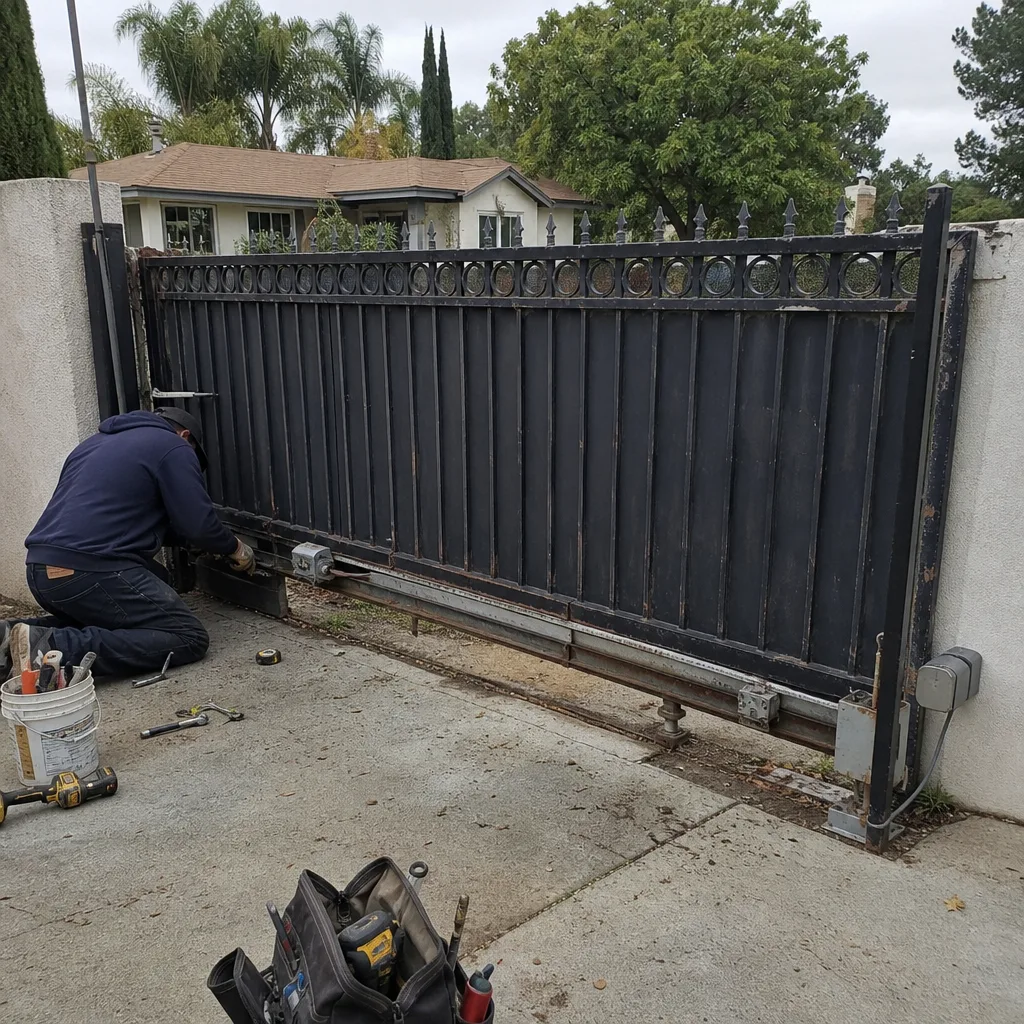 Before
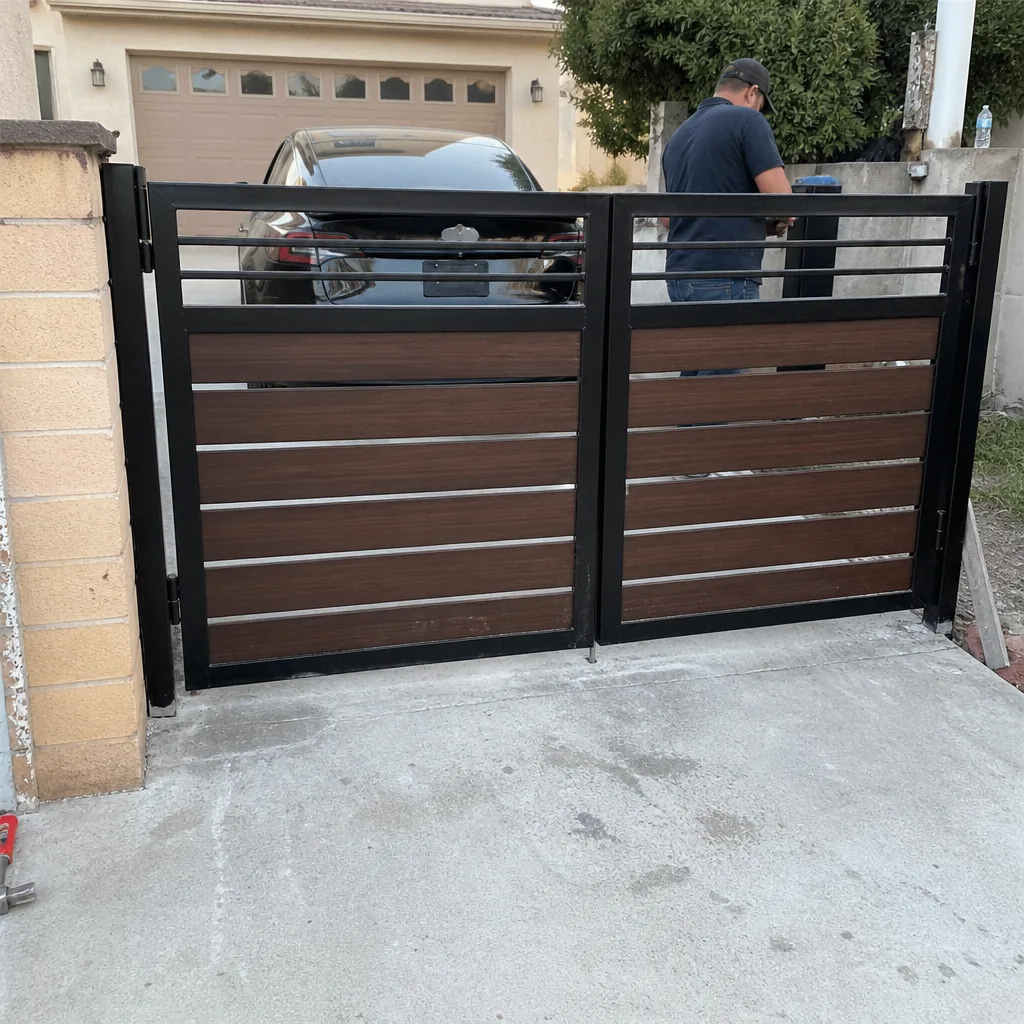 After
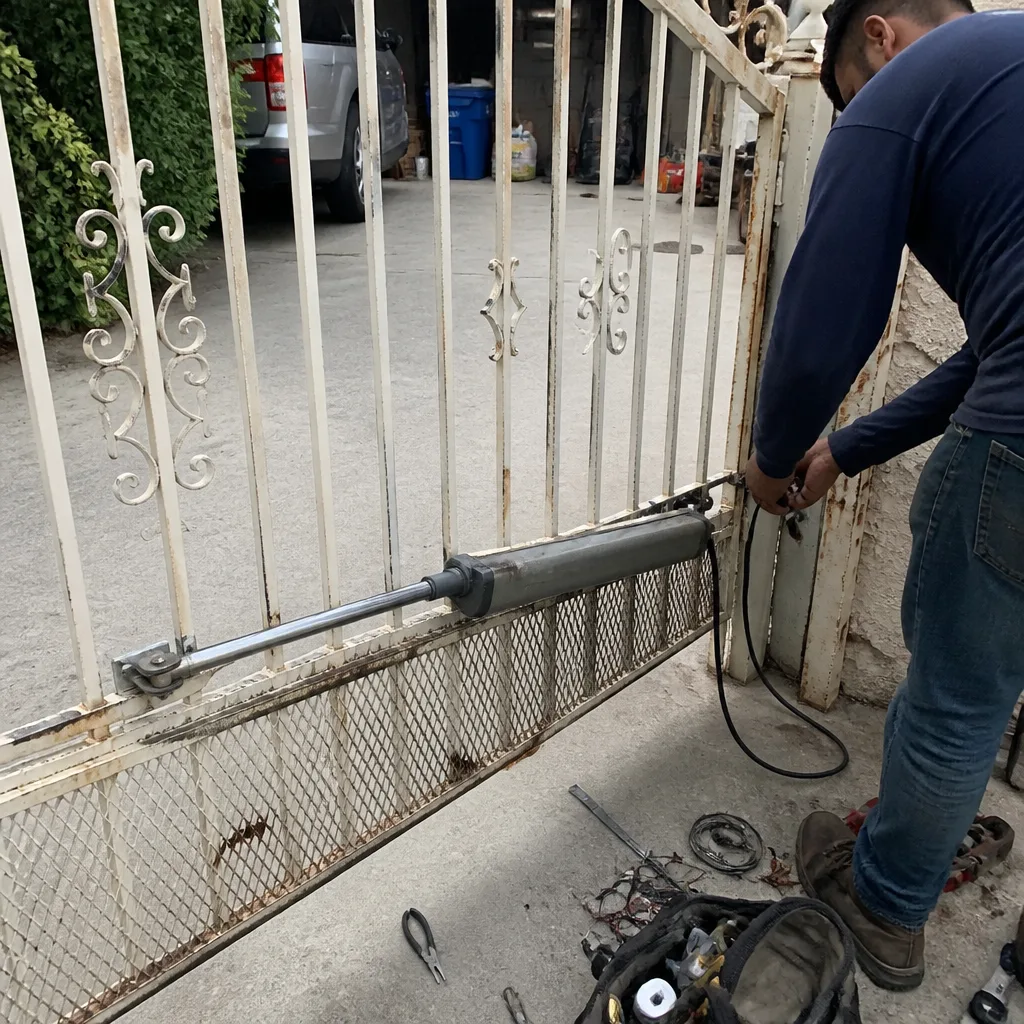 Before
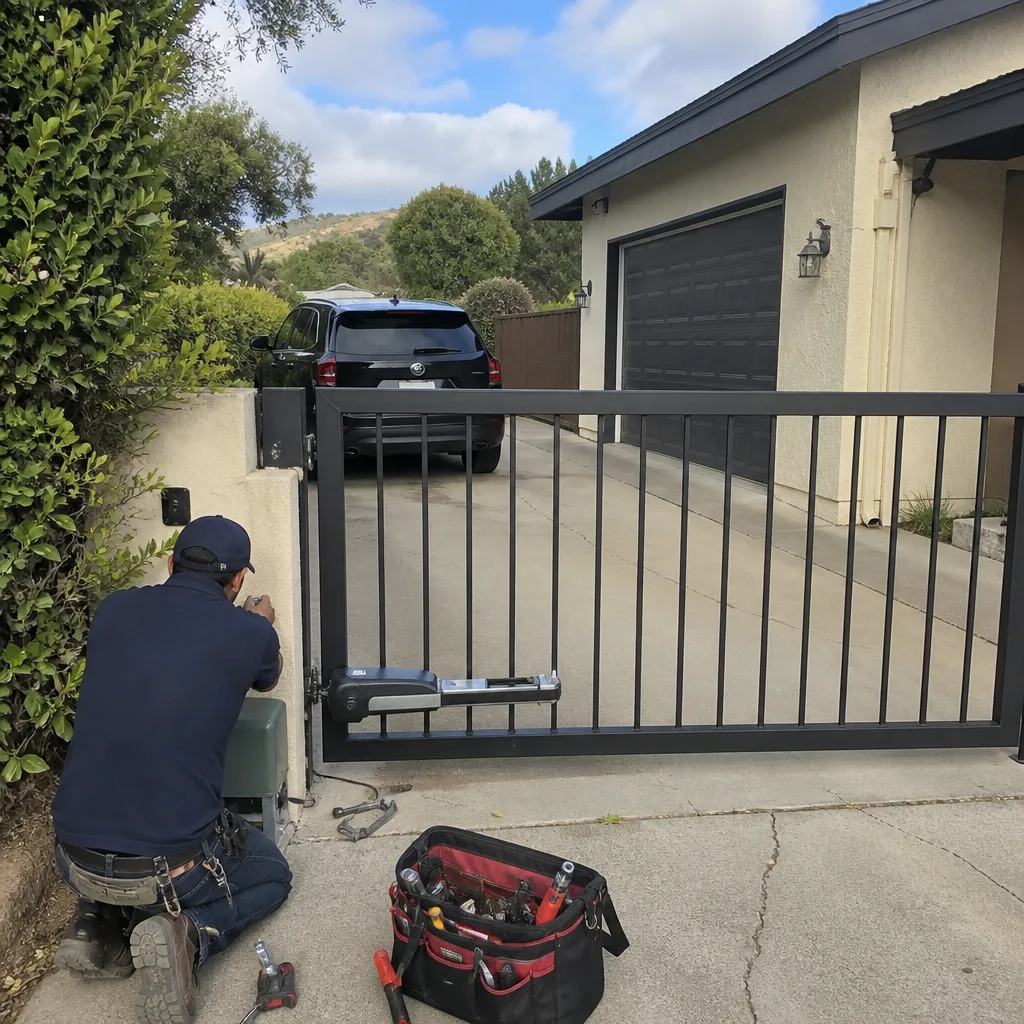 After
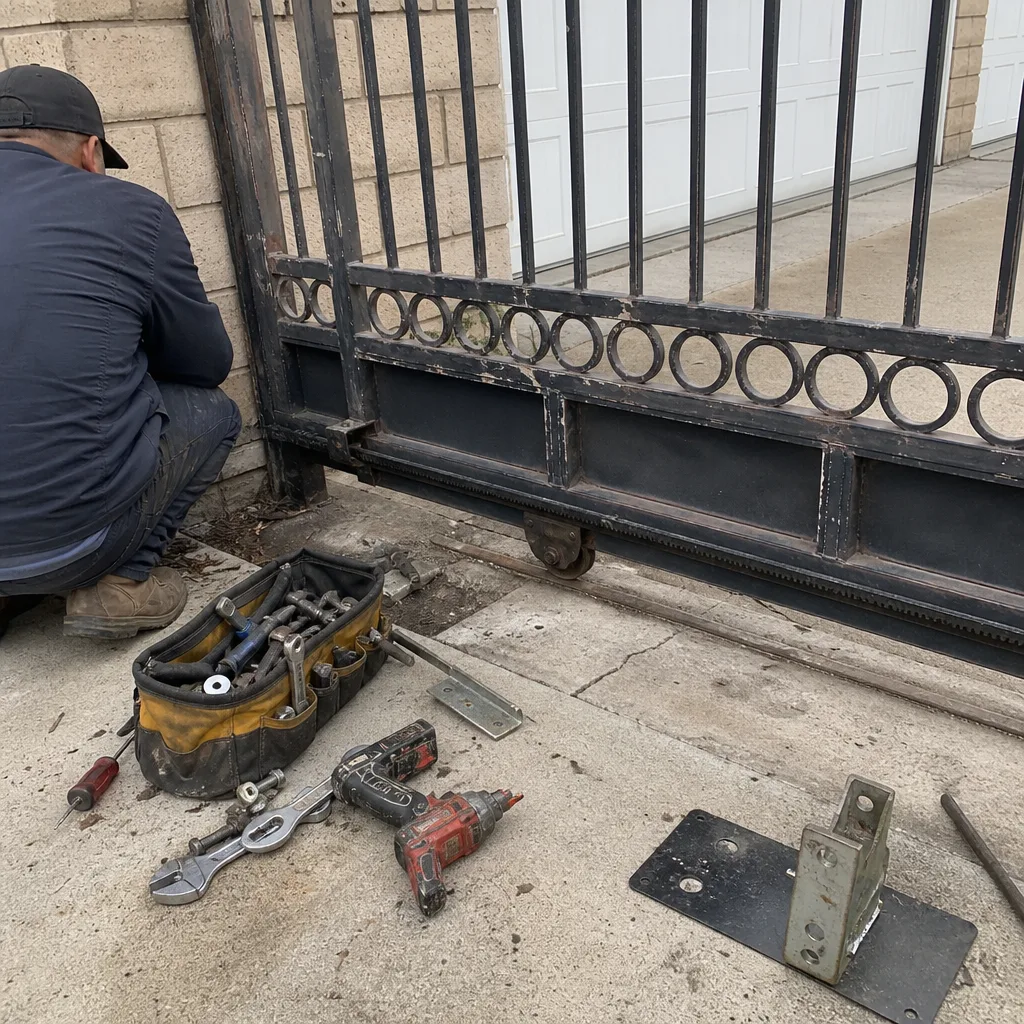 Before
 After