
Last updated October 31, 2026
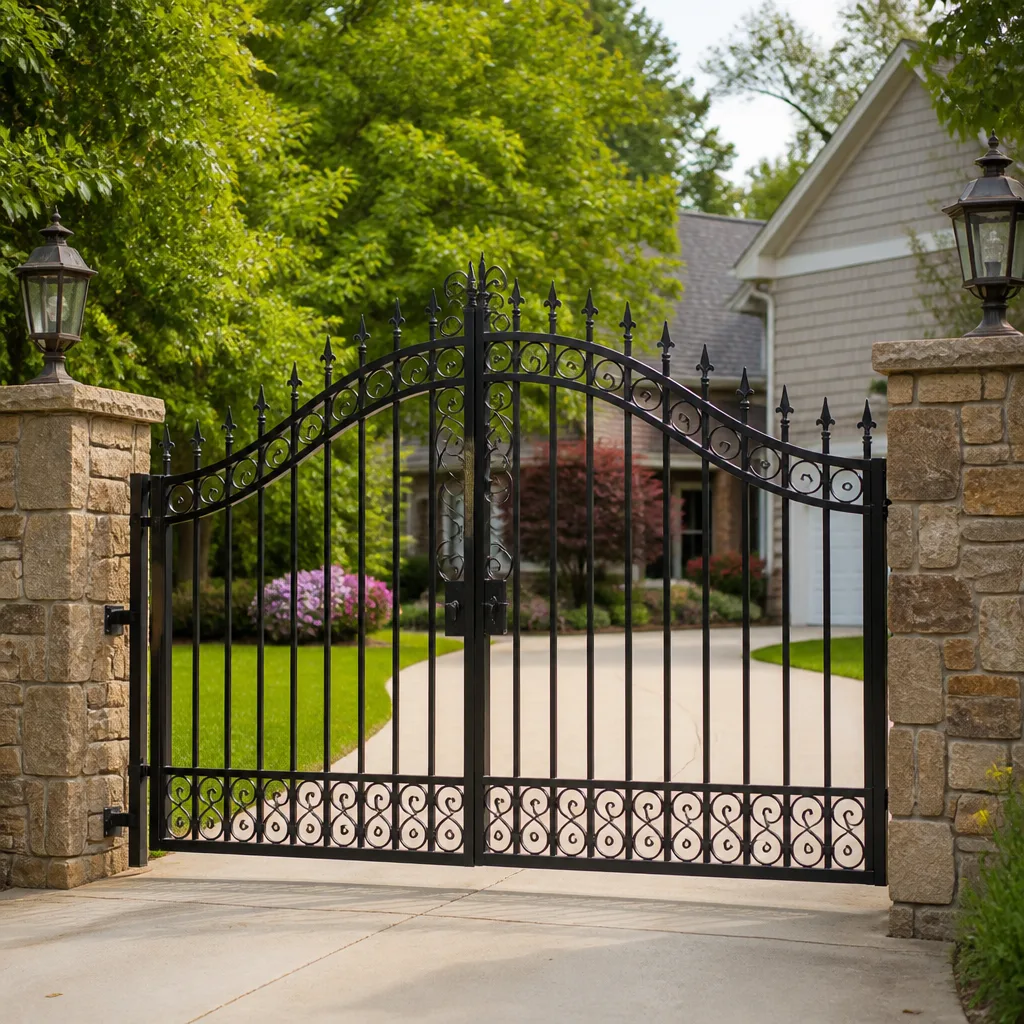 Wrought iron
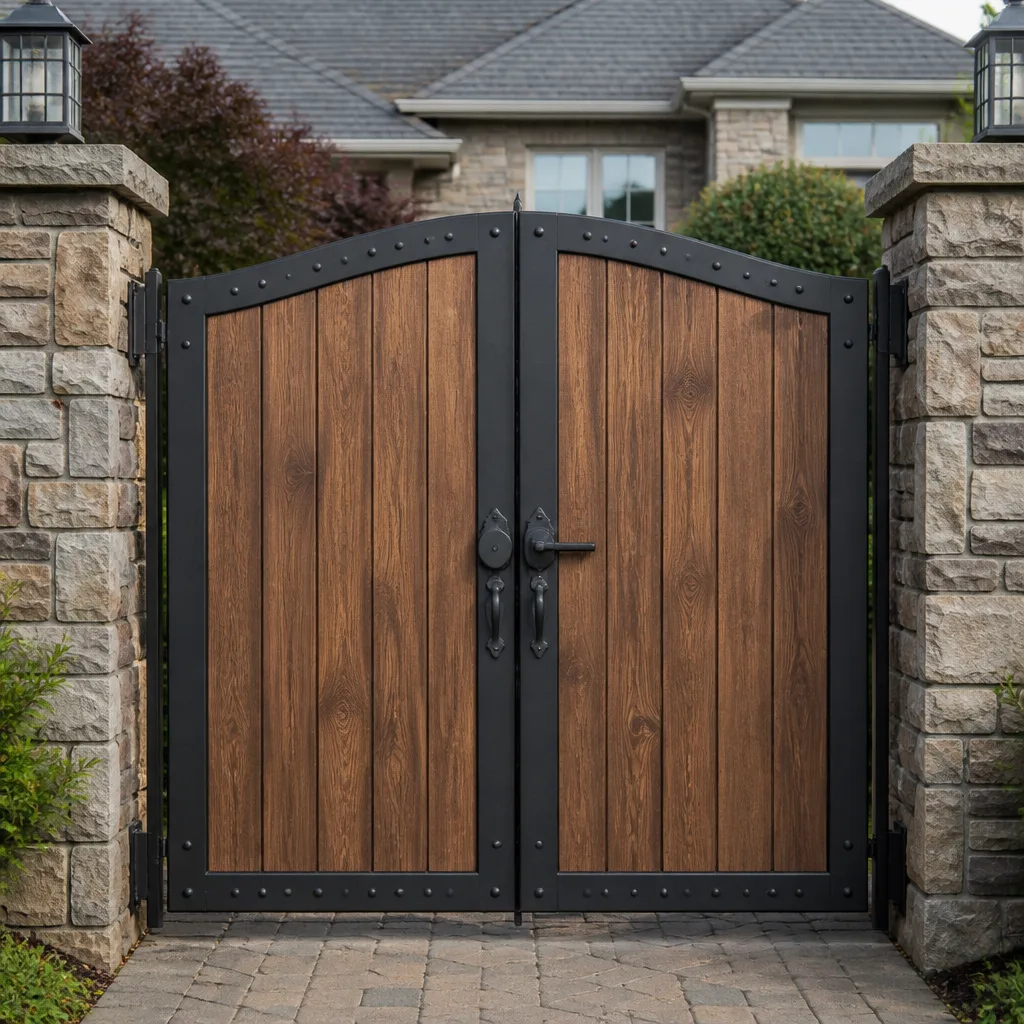 Wood & steel frame
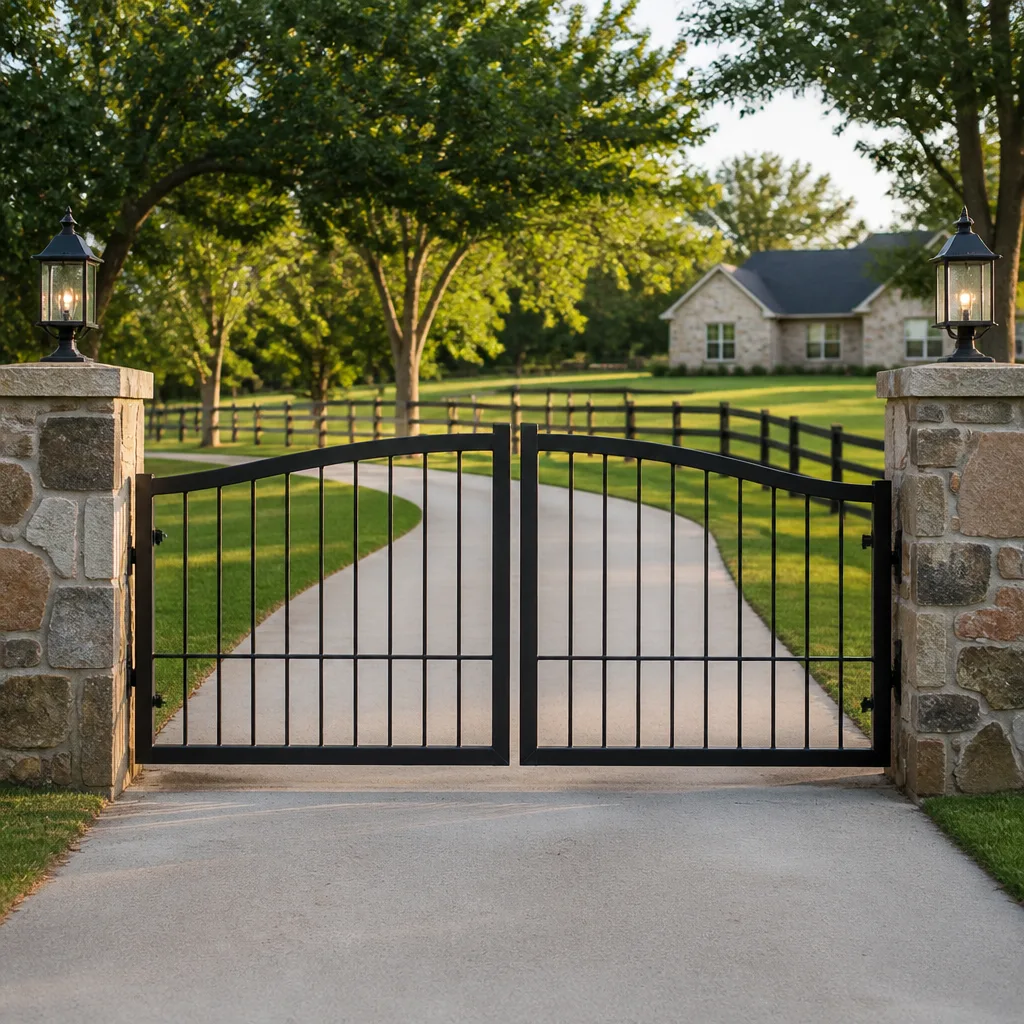 Farm & ranch
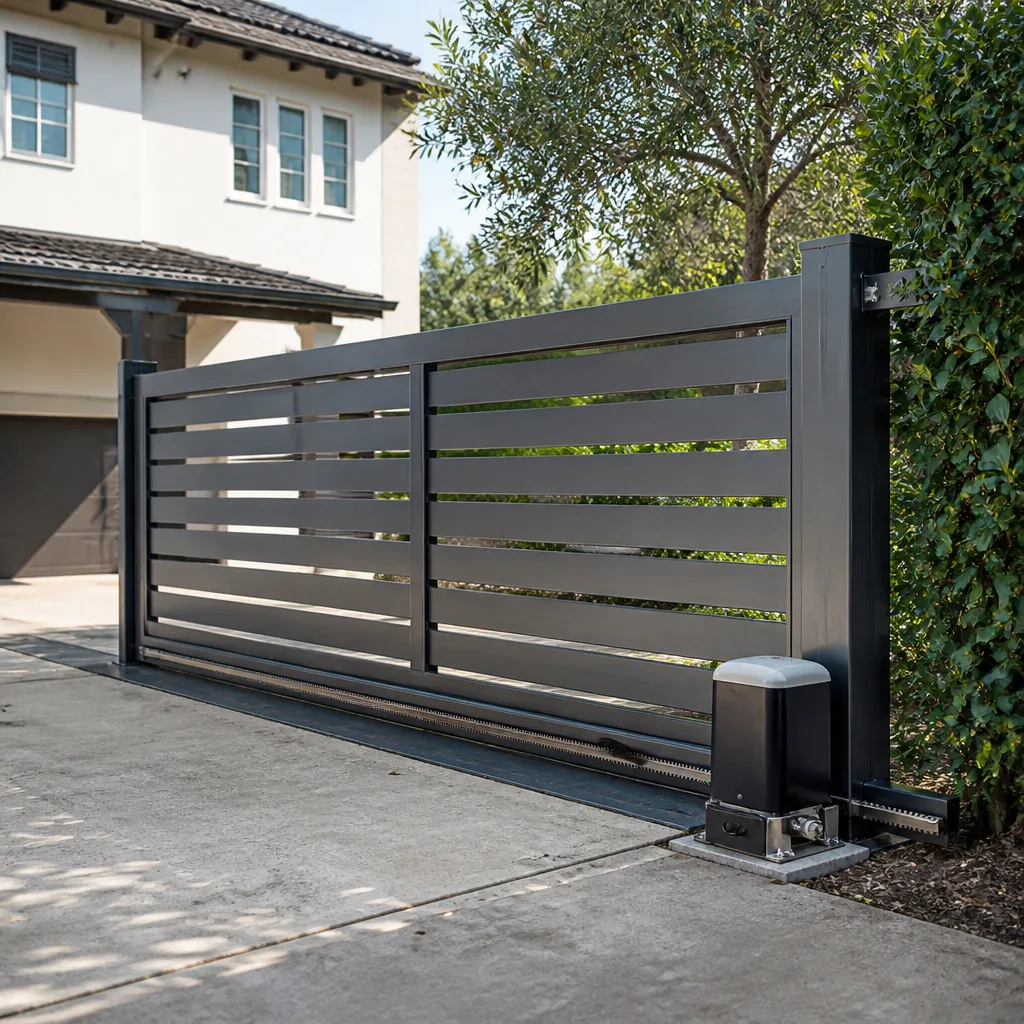 Sliding driveway gates
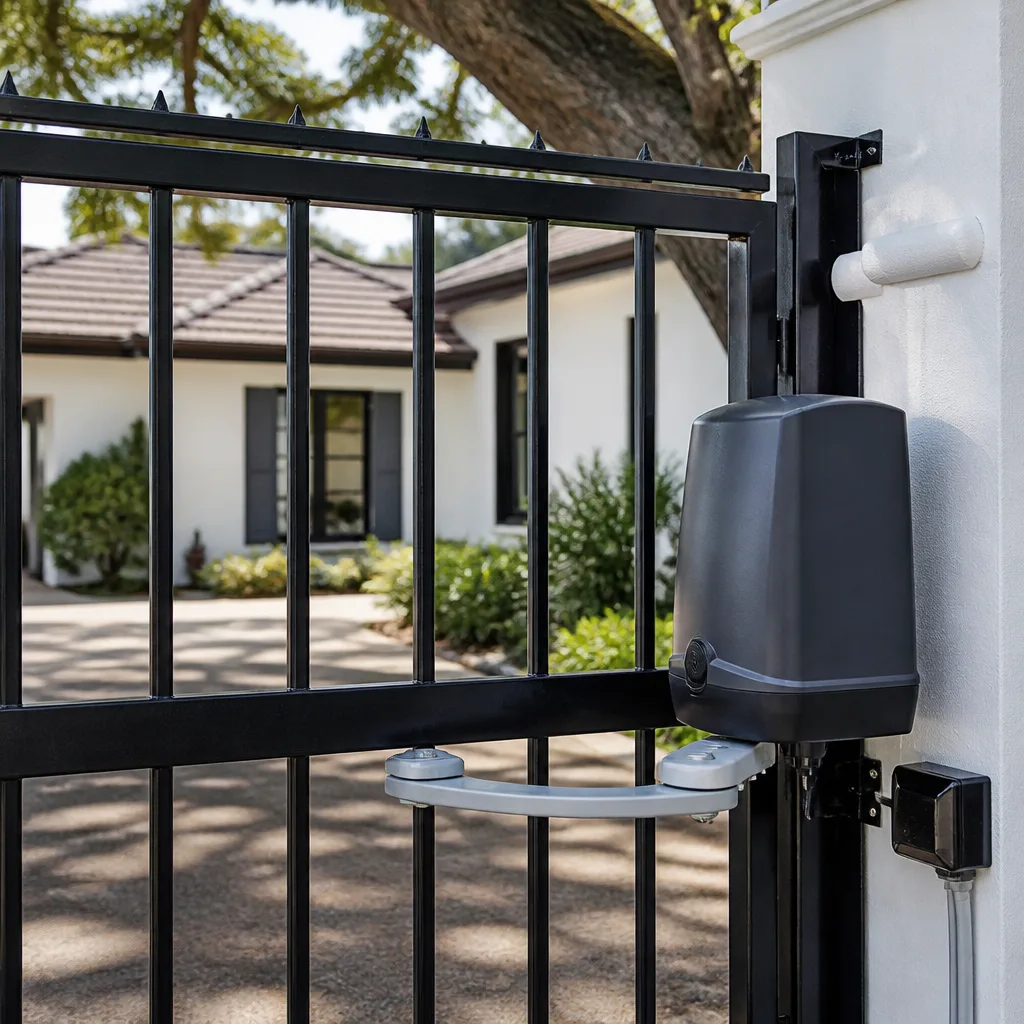 LiftMaster operators
Free on-site gate assessment - hinges, posts, and your LiftMaster or Nice gate operator checked before anything is quoted
The assessment is free and the quote is the invoice.
Get your free estimateGate Repair Permits, Codes & Inspections in CA: What You Need to Know
Most gate repairs in California never see a permit, and that’s usually legal. But the line between a simple fix and a code-triggering modification is sharper than most homeowners realize. If your installer swapped in a new automated operator without pulling a permit, you may be sitting on an unpermitted electrical modification that resurfaces at resale, during an insurance claim, or after an injury on your property. We see this pattern regularly in Montclair, where older homes built in the 1950s and 60s often have gate systems that predate modern safety standards. This guide draws the exact line between what requires a permit, what doesn’t, and what happens when you get it wrong. For related reading, see our Gate Repair Warning Signs: A Montclair Homeowner’s Reference Guide.
Quick Answer
Most routine our Gate Repair services in California, including replacing hinges, welding a sagging frame, swapping a control board, or replacing an operator with the same type, do not require a building permit. New gate installations, new automated operators wired to your electrical panel, and any project involving a new footing or structural post typically do require one. The trigger is usually electrical work or structural change, not the gate itself.
Styles & brands we work with
Table of Contents
- Repair, Replacement-in-Kind, or New Installation: Where the Permit Line Falls
- When California Requires a Permit for Gate Work
- UL 325 Compliance: The Safety Standard Behind Automated Gates
- Montclair & San Bernardino County: What Local Building Departments Actually Require
- HOA Architectural Guidelines vs. Municipal Code: When They Conflict
- The Inspection Process for Permitted Gate Work: What Inspectors Check
- What Happens If You Have Unpermitted Gate Work
- Permit Costs and Timelines in San Bernardino County
Repair, Replacement-in-Kind, or New Installation: Where the Permit Line Falls
California building code draws a three-way distinction that most contractors never explain clearly. Understanding it saves you from either pulling permits you don’t need or skipping ones you do. The distinction matters because it determines whether your project is a maintenance item or a construction project in the eyes of the city, your insurer, and a future buyer’s inspector.
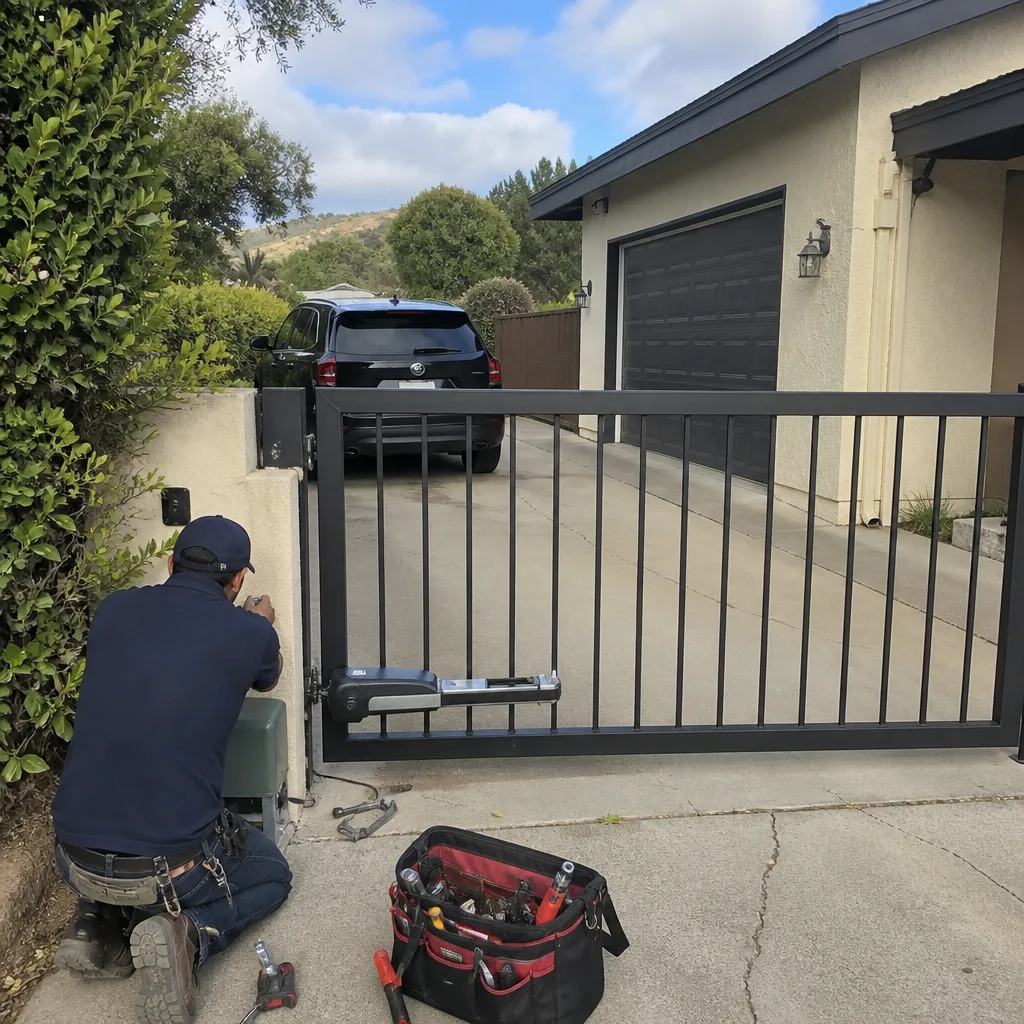
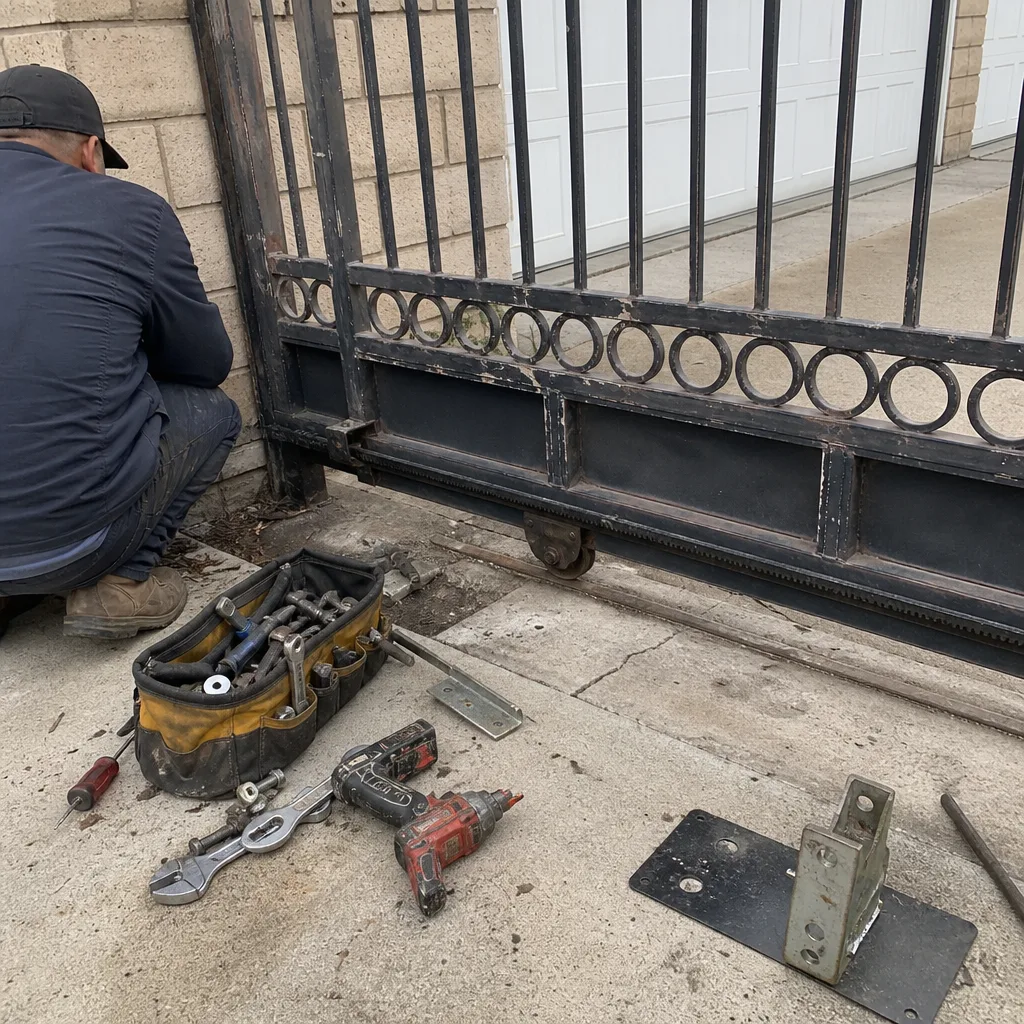
Repair means fixing an existing component without changing its function or footprint. Replacing a worn hinge, welding a crack in a steel frame, swapping a failed control board, or installing new rollers on a sliding gate are all repairs. No permit required. The gate does the the same thing it did before; you’re just restoring it to working condition. In Montclair, we regularly replace gate wheels and bearings on properties in the older neighborhoods north of the 10 freeway without permit involvement because nothing about the structure or electrical system changes.
Replacement-in-kind means removing a worn component and installing a new one that is functionally identical. Replacing an existing LiftMaster slide operator with a newer LiftMaster model of the same type, or swapping a manual gate for a manual gate of the same dimensions, falls into this category. The key question an inspector will ask is whether the new part matches the old part’s function, voltage requirements, and mounting configuration. If it does, most jurisdictions treat it as maintenance. If your new operator draws more amperage or requires a different circuit, you’ve crossed into modification territory.
New installation means adding something that was not there before: a gate where no gate existed, an automated operator on a previously manual gate, or a new electrical circuit powering the system. This is where permits enter the picture. A manual gate becoming automated is the most common trigger we see because it adds both electrical work and safety-equipment requirements that did not previously apply.
When California Requires a Permit for Gate Work
The California Building Code (CBC) and California Electrical Code (CEC) govern gate work, but neither has a chapter titled “gates.” Instead, gate projects fall under the same rules as fences, accessory structures, and electrical installations. The permit triggers are specific and worth memorizing:
- New electrical circuit installation. If powering a new automated operator requires a new branch circuit from your panel, the CEC requires an electrical permit. This is the most common permit trigger for gate automation. Running conduit, pulling wire, and adding a breaker are all regulated work.
- New concrete footing or structural post. Gate posts embedded in concrete are structural elements. Pouring a new footing for a post, especially for a heavy sliding or cantilever gate, falls under the CBC’s foundation provisions. A gate post that fails at its base is a life-safety hazard, which is why inspectors care about footing depth, diameter, and concrete strength.
- New gate installation where none existed. Adding a driveway gate changes your property’s access pattern and often its required setbacks. The gate’s location relative to the property line and the street matters. Montclair’s municipal code, like most cities in San Bernardino County, requires a permit for any new fence or gate structure over a certain height (typically 7 feet for side and rear, lower for front-yard installations).
- Modification that changes structural loads. Converting a light aluminum pedestrian gate to a heavy steel driveway gate anchored to the same post changes the load on that post. If the post or its footing needs upgrading, that’s structural work.
What does NOT require a permit: replacing a failed control board, realigning a sagging gate leaf, adjusting limit switches, replacing photo-eye sensors, swapping a keypad, or replacing an operator with a same-spec model on an existing circuit. These are the repairs that make up most of what we do for gate repair in Montclair.
UL 325 Compliance: The Safety Standard Behind Automated Gates
UL 325 is the nationally recognized safety standard for automated gate operators. It is not a California-specific code, but it is incorporated by reference into the state’s building and electrical codes, which means non-compliant systems are code violations. The standard was written after a series of fatalities involving entrapment by automated gates, and its requirements are specific about what a compliant system must include.
Every automated gate operator installed after 2000 must have two independent entrapment protection systems. For a sliding gate, that typically means a combination of a contact sensor (an edge that reverses the gate when it touches something) and a non-contact sensor (photo eyes that reverse the gate when the beam is broken). For swing gates, the same dual requirement applies, though the exact configuration differs based on the gate’s geometry and travel path.
Why this matters in California specifically: the state’s climate means gates are exposed to temperature swings from below freezing in the high desert to 110-plus in the Inland Empire summer. Photo-eye alignment drifts with thermal expansion. Edge sensors crack in UV exposure. A system that was UL 325 compliant when installed in 2010 may not be compliant today because the safety devices have degraded. We service BFT and FAAC operators across Montclair and consistently find that the operator itself is fine while the safety edges have failed silently. The operator still opens and closes, which lulls property owners into thinking everything works. It doesn’t. A failed entrapment sensor means the gate will not reverse when it should.
The liability exposure is not theoretical. If a child or pet is injured by a gate that lacks functioning entrapment protection, the property owner’s insurance may deny the claim on the grounds that the system was not code-compliant. This is a conversation we have with HOA property managers in Montclair more often than any other single safety topic.
Montclair & San Bernardino County: What Local Building Departments Actually Require
Montclair is a general-law city that enforces the California Building Standards Code, with local amendments adopted by the City Council. The city’s Building and Safety Division handles permitting, plan checks, and inspections. Because Montclair is small, its application of the code is more uniform than in larger cities where different inspectors develop different interpretations.
Residential properties in Montclair: For a standard driveway gate installation, you’ll need a building permit if the gate exceeds 7 feet in height, if it includes a new automated operator requiring electrical work, or if you’re pouring new footings. A residential gate under 7 feet with no automation is generally exempt, unless it’s in a front-yard setback. Montclair’s zoning code addresses front-yard fences and gates specifically because they affect sight lines at driveway entrances. A gate that obstructs visibility at the street creates a traffic safety issue, and the city will not approve a permit for a design that blocks the driver’s view of approaching pedestrians.
Commercial properties in Montclair: The bar is higher. Any automated gate on a commercial property, whether a parking structure, industrial yard, or multi-tenant facility, requires permits for both the gate structure and the operator’s electrical connection. Commercial operators fall under additional Cal-OSHA access requirements, and many commercial systems include vehicle detection loops that are embedded in pavement, which adds a separate layer of electrical work. We’ve seen property managers in Montclair’s industrial districts surprised by the requirement that fire access gates meet specific operation and override standards.
San Bernardino County unincorporated areas: The county has its own building department and its own interpretations. If your property sits in an unincorporated pocket near Montclair, the county’s requirements apply, and they can differ from the city’s in subtle ways. The county tends to be more rigorous about requiring engineered drawings for gates over a certain weight, particularly cantilever slide gates, which create large lateral loads on their support posts.
HOA Architectural Guidelines vs. Municipal Code: When They Conflict
In Montclair, many residential communities have HOAs with architectural review committees. Their authority covers aesthetics: gate style, color, height, and whether a gate is permitted at all in the community’s design. The city’s authority covers safety and code compliance. These two layers sometimes point in opposite directions.
A common conflict: the HOA wants a gate design that the city will not permit because it violates setback or sight-line rules. Or the HOA approves an automated gate, but no one checks whether the electrical scope requires a city permit until a neighbor complains or the property goes on the market. HOAs are private entities; their approval does not substitute for a building permit. But the reverse is also true: a city permit does not override an HOA’s design restriction. You need both.
In practice, we recommend homeowners in Montclair’s HOA-governed communities do this sequence: get HOA architectural approval first, since their review timelines are often slow (30 to 60 days is common), then submit for a city permit if one is required. Doing it in reverse risks spending money on a city permit for a design the HOA will reject. We’ve handled gate installations in Montclair where the HOA’s approval letter specifically referenced UL 325 compliance, signalling that the association’s attorney had reviewed the liability exposure. That’s becoming more common as HOAs absorb the lessons of entrapment lawsuits.
The conflict that causes the most trouble is the one no one talks about: the HOA requires the gate for security, the city requires the gate to have a fire access override for emergency vehicles, and the security requirement and the fire requirement point toward different hardware. The resolution is a gate operator with an emergency release that meets both, which is standard on commercial-grade operators but often omitted on residential-spec hardware to save cost.
The Inspection Process for Permitted Gate Work: What Inspectors Check
If you do pull a permit for gate work in Montclair, the inspection process follows a predictable pattern. Understanding what the inspector is looking for saves you a failed inspection and a repeat visit fee. Here’s the sequence for a typical automated gate installation with electrical work:
- Underground inspection. If you’re running conduit from the house to the gate, the inspector checks the trench depth, conduit type, and burial method before it’s covered. In Montclair’s sandy loam soil, trenching is straightforward, but the inspector will still verify that the conduit is buried to the required depth (typically 18 inches for PVC conduit under the CEC, deeper under driveways).
- Footing inspection. Before concrete is poured, the inspector verifies the footing depth, width, and rebar configuration. Gate post footings in San Bernardino County generally need to extend below the frost line, which in this climate is shallow, but the bigger concern is lateral stability. A heavy cantilever gate needs a footing that can resist overturning, and the inspector may ask for the engineer’s calculation if the gate exceeds standard prescriptive limits.
- Electrical rough inspection. The inspector checks the wiring, the disconnect means, and the grounding. Automated gate operators require a dedicated circuit, not a tap off an existing outlet circuit. A disconnect switch must be within sight of the operator so that service can be performed with the power verifiably off. Missing or improperly placed disconnects are the most common rough-in failure we see.
- Final inspection. Here the inspector tests the gate’s entrapment protection, the manual release function, and the operation of safety devices. For a swing gate, they’ll check that the gate reverses on contact and on photo-eye interruption. For a slide gate, they’ll check the same plus the leading edge. The inspector will also verify that the gate does not encroach on the public right-of-way at any point in its travel.
One point owners miss: the final inspection is when the inspector checks the gate’s speed. Automated gates in California must not exceed certain travel speeds, and an operator adjusted too aggressively can fail inspection. This is a tuning issue, not a hardware issue, and it’s avoidable if the installer tests speed before the inspector arrives.
What Happens If You Have Unpermitted Gate Work
The honest answer is that most unpermitted gate work never gets discovered until the property sells. At that point, it becomes a negotiation line item. A buyer’s inspector flags the unpermitted electrical work, the lender may condition the loan on retroactive permits, and you pay a premium to fix it under time pressure. Or the buyer walks. We’ve been called to Montclair properties in escrow with gates that were installed years ago without permits, and the retrofit cost is often double what the original permit would have required because the inspector wants to see the existing work exposed for verification before they’ll sign off.
Retroactive permitting is possible in San Bernardino County, but it’s not a rubber stamp. You’ll need to document the existing installation, possibly expose buried conduit or footings for inspection, and correct any code deficiencies the inspector finds before the permit is closed. If the original work is not UL 325 compliant, the corrections can be significant. If you’re selling, the cleanest path is to disclose and negotiate, but the buyer’s lender may not allow that. If you’re buying, an unpermitted gate operator should be priced into the offer or made a condition of closing.
Insurance is the other vector. A claim involving a gate injury on a system that was never permitted or inspected is more likely to be scrutinized, denied, or used to reduce a payout. Property managers in Montclair know this risk well; homeowners less so. The asymmetry is that residential gate systems are the ones most likely to be installed by handymen or generalists who don’t understand UL 325 requirements, and therefore the most likely to have unpermitted, non-compliant work.
Permit Costs and Timelines in San Bernardino County
What should you budget for a gate permit in Montclair? The fees are not the expensive part; the time and the drawings are. Here’s a realistic breakdown based on current fee schedules in San Bernardino County, keeping in mind that fees adjust annually:
- Residential building permit for a gate with no electrical: $150 to $400, depending on valuation. Most simple gate installations fall at the lower end.
- Electrical permit add-on for automation: $100 to $250. This covers the new circuit and operator connection.
- Plan check fee: 65% of the building permit fee, typically. Most residential gates with automation require a simple plan check. Commercial gates require full plan review, which costs more.
- Inspection fees: Usually included in the permit fee for the first inspection. Repeat inspections due to failure incur a re-inspection fee, typically $100 to $150 per visit.
- Engineered drawings (if required): $500 to $2,000. Most residential gates don’t need them unless the gate is unusually tall, heavy, or a cantilever design. Commercial gates almost always do.
Timelines in Montclair run faster than in larger cities. A simple residential over-the-counter permit can be issued in the same week if the plans are complete. A permit requiring plan check typically takes two to four weeks. Commercial permits with plan review can take six to eight weeks, longer if corrections are required. In our experience at Kensington Gate Repair home, the biggest timeline variable is drawing quality. Permits submitted with complete, accurate drawings move; permits submitted with vague sketches stall in review.
Common Mistakes to Avoid
- Assuming all gate work is permit-exempt. Repairs are exempt; new installations and automation are generally not. The distinction is function, not size. A small automated gate with new electrical work requires a permit where a large manual gate repair does not.
- Accepting a contractor’s verbal “you don’t need a permit” without verification. Some installers say this because they’re not licensed to pull one, not because the work is exempt. Call the Montclair Building and Safety Division and ask directly. They’ll tell you plainly.
- Omitting entrapment protection to save cost. A gate without functioning photo eyes and contact edges is a liability, not a bargain. This is the single most common code deficiency we find on existing Montclair systems.
- Skipping the HOA review. Installing a gate that violates your HOA’s design standards is a costly error to undo, and the HOA can compel removal regardless of whether a city permit was issued.
- Buying a gate and operator online, then hiring the cheapest installer. Online operators are often built for markets with different code requirements. If the operator is not UL 325 listed for the application you’re using it in, no competent inspector will sign off, and no responsible installer will stand behind it.
- Running gate electrical from an existing outlet circuit. The CEC requires a dedicated circuit for automated gate operators. Tapping a garage outlet circuit is a code violation that an inspector will catch, and it’s also a practical problem: a GFCI trip elsewhere on the circuit kills your gate.
- Pouring gate post footings without an inspection. Once the concrete cures, the inspector cannot verify depth or reinforcement. If a permit was required and you skipped the footing inspection, you’ll be digging out the footing or paying for an engineer’s letter, neither of which is cheap.
See the difference
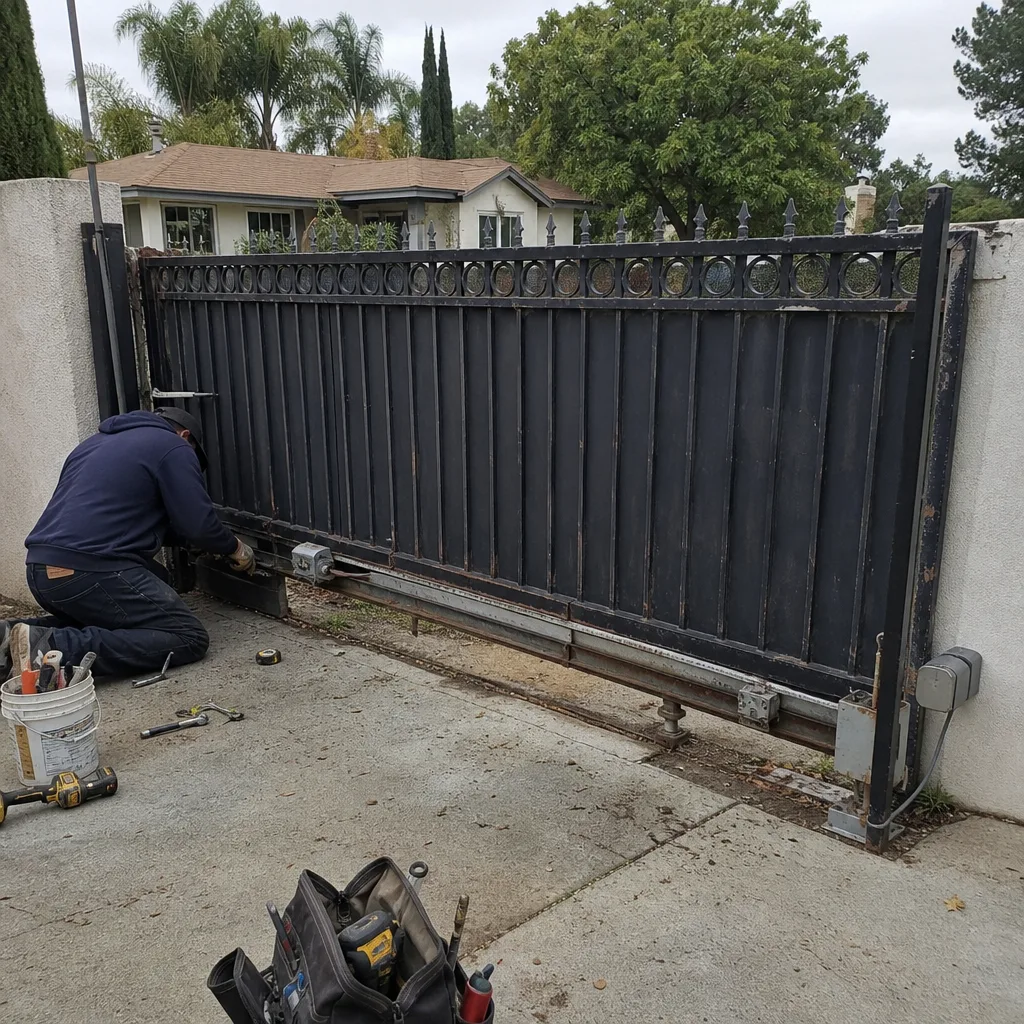 Before
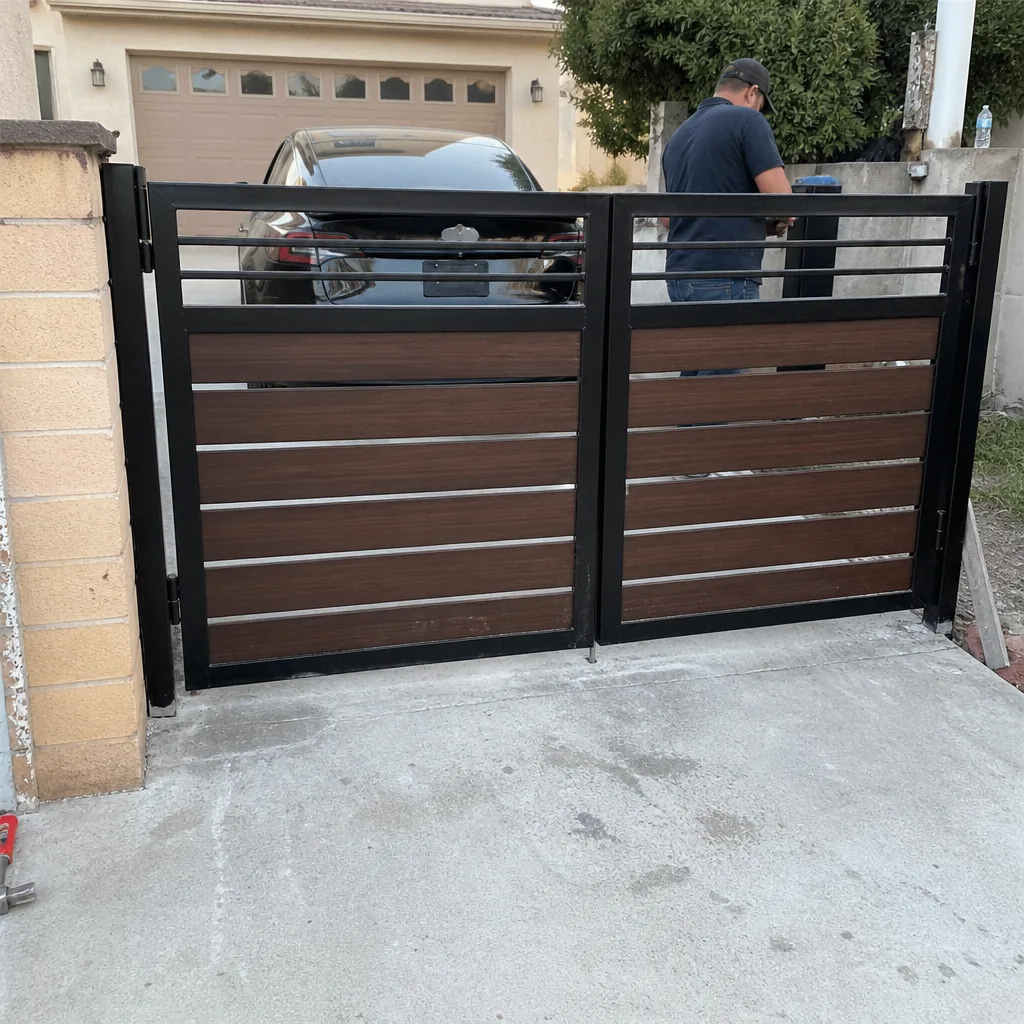 After
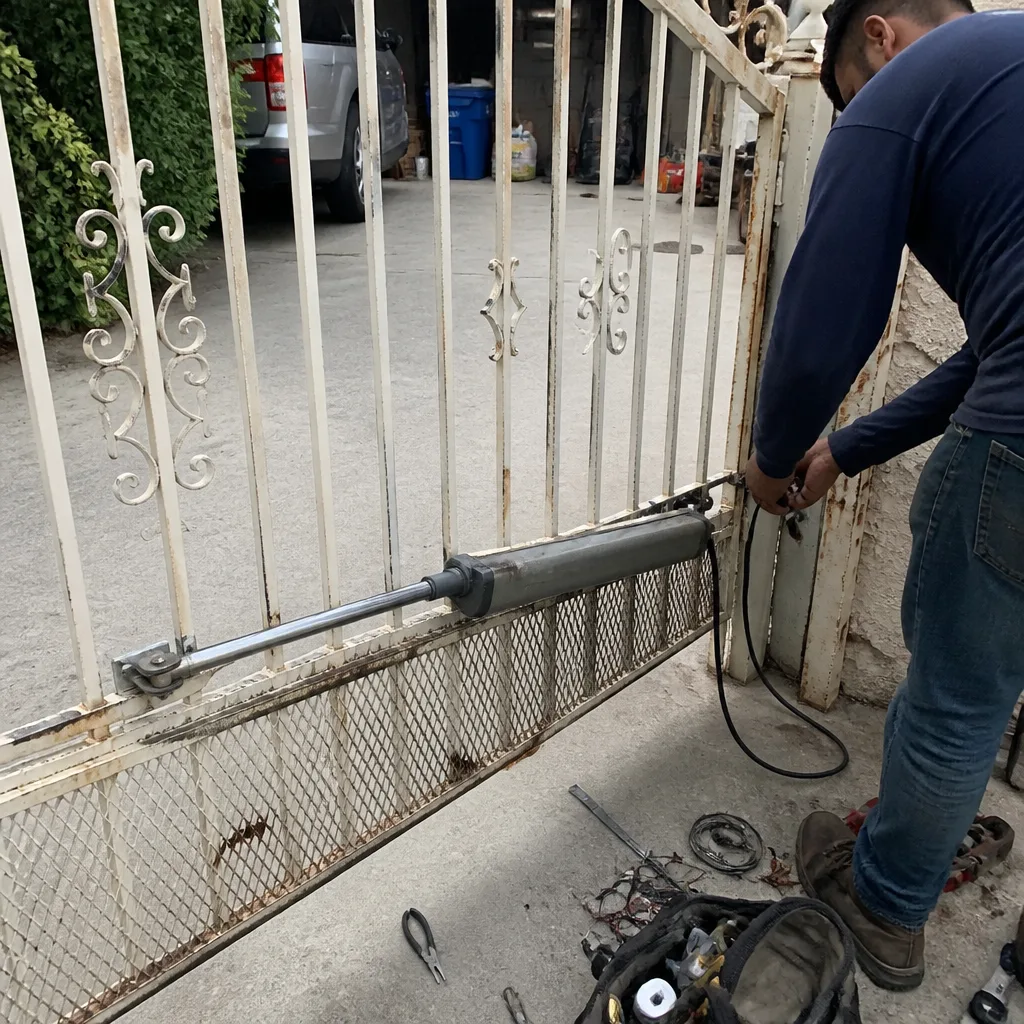 Before
 After
 Before
 After
When to Call a Professional
You should call a gate specialist rather than a general handyman any time the project involves automation, electrical work, or structural changes. If your gate operator is failing, if you’re adding automation to a manual gate, or if you’ve been told that your existing system is not code-compliant, that’s a specialist’s job. We are brand-agnostic on purpose: we service FAAC, BFT, Linear, and Viking operators alongside the other major brands, so our recommendations are based on what your system needs, not what we happen to keep in stock. Electric gate repair in Montclair is the core of what we do, and we’ve seen enough botched installations to know that the cheap route is rarely cheap in the end. Kensington Gate Repair offers free estimates in Montclair. Call (833) 320-4513 and we’ll tell you honestly whether your project needs a permit, and we’ll handle the process if it does.
Frequently Asked Questions
No permit is required for repairs that restore your gate to its original function, including hinge replacement, frame welding, roller replacement, control board swaps, and operator replacement with a same-spec model. The moment the repair changes the gate’s function, adds electrical capacity, or alters structure, permit requirements apply. Call (833) 320-4513 if you’re unsure whether your specific repair crosses the line.
A residential gate permit with electrical work typically costs between $250 and $650 in total fees, including plan check. Engineered drawings, if required, add $500 to $2,000. The permit itself is rarely the expensive part of gate work; the drawings and any code corrections are what drive cost. For an exact quote on your project, call (833) 320-4513, and we’ll break down the full permit picture.
You can install it, and it may operate for years without issue, but the unpermitted work becomes a problem at resale, during insurance claims, and if anyone is ever injured. Retroactive permits cost more than proactive ones because the inspector will require you to expose buried work and fix every deficiency found. In Montclair, we’ve seen unpermitted gate work stall home sales repeatedly.
UL 325 is the safety standard for automated gate operators, requiring two independent entrapment protection systems on every automated gate installed after 2000. Non-compliant systems are code violations and create serious liability exposure if someone is injured. Many gates in Montclair have operators that work fine while their safety edges and photo eyes have silently failed. That’s a dangerous combination.
No. HOA architectural approval covers design and aesthetics; a city permit covers safety and code compliance. You need both when your gate project requires them, and neither substitutes for the other. HOAs in Montclair increasingly reference UL 325 in their approval letters because their attorneys understand the liability landscape.
A simple residential gate permit with complete drawings can be issued in the same week; a permit requiring plan check typically takes two to four weeks. Commercial permits run six to eight weeks or more. The timeline variable we see most often is drawing quality: incomplete plans stall in review regardless of how quickly the city moves. Call (833) 320-4513 and we can tell you which timeline applies to your specific scope.
The Bottom Line
California’s gate permitting requirements are not as onerous as most people believe, but they are also not as forgiving as some contractors suggest. Repairs are exempt. New installations, automation, and structural changes are not. UL 325 compliance is a safety requirement that follows every automated gate, whether or not a permit was pulled. In Montclair, the local process is relatively fast and inexpensive when done correctly, and the cost of doing it wrong, discovered at resale or after an injury, dwarfs the cost of doing it right. If you’re planning gate work in Montclair, call (833) 320-4513 for a free estimate, or browse more guides & resources on gate safety and permitting. We’ll tell you what requires a permit, handle the paperwork if it does, and install the system to code the first time.
Written by the team at Kensington Gate Repair, serving Montclair since 2011.